
Why Does Artificial Intelligence Meet Energy Opening?
Automatically translated
 Writer
Artificial intelligence systems today not only produce text or compile code blocks; they model complex scientific simulations, solve protein structures and rebuild industries. But in the background of this head rotator leap in the software layer, there is a gigantic reality that is directly multiplier to the physics world: a power appetite, which pushes the limits of the grids, locking the transmission lines, pulling up electrical bills and wrapped up the global energy policy from the root.
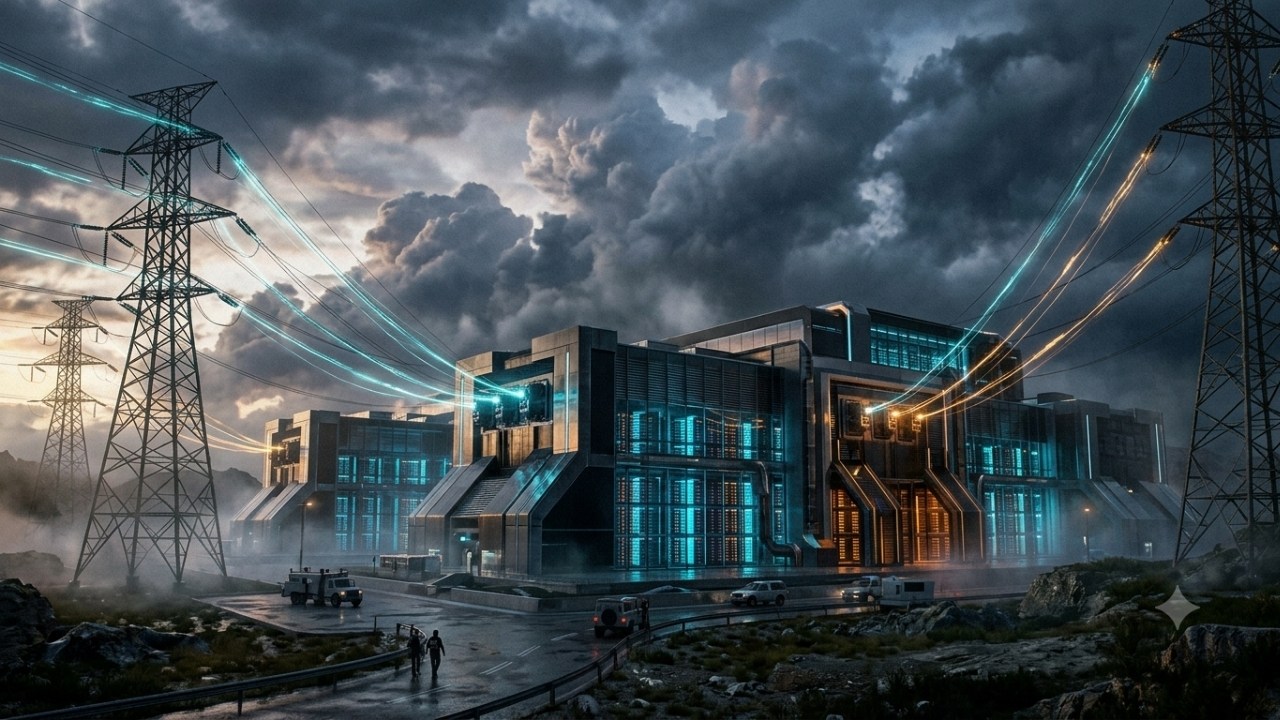
While the technology world celebrates the parameters size, context windows and intelligence capabilities of algorithms; energy regulators, grid operators and public managers face a much more concrete question: Where and what cost will we find the electricity to feed these systems? Artificial intelligence energy consumption is now a technical subhead wreck that has been discussed in tech blogs or corporate sustainability reports l affects the society and public life of artificial intelligence Home The balance of infrastructure in the context is transformed into a global crisis of the gang, which is shaped in the national security, public finance and social justice axis.
Physical Limits of Silicone: Why Does Calculation Power Take Electricity?
The traditional web traffic or a standard search engine query can respond in seconds with microsecond CPU (Center Processing Unit) processing power at the database level. In response to a large language model (LLM) question, it requires a different IT architecture that sets up reasoning chains or generate a high-resolution video with multi-mode (multimodal). No need for artificial intelligence models (training) and progress (inference) stages are carried out with parallel tensor calculations on tens of thousands of high-performance managed server sets (especially modern GPU and TPU infrastructures). Industry to alleviate this huge load Depth-oriented optimization and precision analysis in MoE models Home Although it focuses on rare architectures, thermal and electrical printing at the hardware level as the system scale grows.

These hardwares emit a tremendous thermal power when doing intensive mathematical tensor processes. So a AI data center does not only run itself of the hardware; it needs massive liquid cooling and air conditioning systems to keep chips in the range of functional temperature.Energy and AI report published by International Energy Agency (IEA) u According to the data, the total electrical demand of global data centers is expected to rise over 1,000 TWh levels by increasing more than two floors by 2030. In the center of this increase, artificial intelligence includes accelerated servers that back up business loads. A single hypersite facility across the U.S. and Europe creates an unprecedented load in energy infrastructures.
Unsee Crisis: Water Resources and Cooling Infrastructure
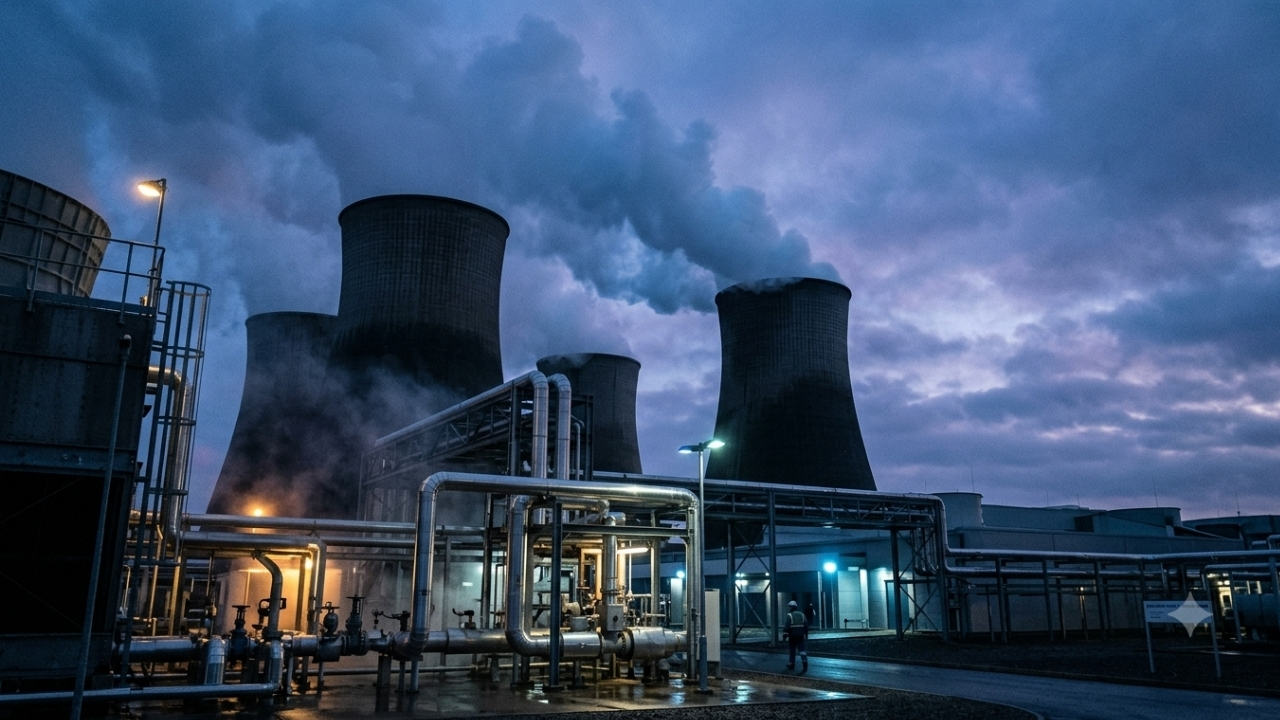
The physical footprint of artificial intelligence is not only limited to electrical outlets, but the work of systems is directly based on the consumption of water resources. Evaporative cooling towers used in data centers spend huge amounts of sweet water to evaporative heat from server racks.
When the amount of water consumed in the educational phase of a large artificial intelligence model finds millions of liters, users are calculated for cooling purposes by evaporating more than half a liter of clean water in the chain of queries. The hypersite facilities, which fight against the risk of drought and have been established in areas of living water stress, are competing with local agricultural lands and municipal water networks. One of the biggest withdrawals of the region’s people facing data center constructions in local councils is the withdrawal of underground water resources to these facilities.
Political War Space of Energy
It means that seeing the power demand of artificial intelligence as the problem of building a "legal power plant" means to whistle the most annoying political size of the table. Based on TIME analysis The electric bill increases triggered by the construction of artificial intelligence-oriented infrastructure are turned directly into the most critical political crisis of Washington and state management.
While the concern for public’s electrical bills is transformed into a serious political burden for sector and politicians, the US President Donald Trump announced a new package called “Ratepayer Protection Pledge” (Electric Subscriptions Protection Taahhüdu) by bringing together members of the company’s top managers and cabinet. Trump preachers announced that more than 200 stakeholders, consisting of public service companies (utilities) and data center developers, the consumers of more than 200 shareholders, giving them a promise of protection from bill shocks.
Home TimeThis commitment based on no legal sanction mechanism and completely volunteering, emphasizes that the problem is only about saturation on the bank. As the decision-makers are delayed by structural and stable steps, the place of the temporary solutions of the pansuman is inevitable that all energy systems leave the restructuring demands down from the beginning. Aspen Ideas Climate Summit in Chicago is seen as one of the most difficult titles to implement in the existing polarized political climate, such as University of Chicago, economist Michael Greenstone. At present, the priority of selected authorities is to manage a completely short-term "disability" edition. The concrete examples showing this political reflex are rapidly increasing:
Price Ceiling Finish:
The huge transmission network, covering the eastern and mid-cut of the US, in PJM, authorities brought the price ceiling (price cap) to the electrical offerings of public service companies; critics are warning that this step will bale new grid investments.
Receiving from the task:
The State Public Service Commission (IURC) in Indiana province has taken the task on the increasing public response of the head of the State Public Service Commission (IURC).

Political incentives across states are focused on printing today’s bills in the lunar scale of tomorrow’s reliability risks. In the current form of the system, it is potential to trigger a large political temper wave if it starts from excessive hot air waves or a hard winter frost, and the planned electrical interruptions (rolling blackouts).
Former FERC (Federal Energy Regulation Commission) commission member Neil Chatterjee Home TimeThe statement given to the table clearly summarizes the broken point of the table:
"I can definitely say that on the hottest day of summer, a network operator will have to make a selection of artificial intelligence to give electricity to a settlement area that needs air conditioning or if it is necessary to do a choice, it goes to the electrical data center. And at that moment, dirgens appear on the street. "
According to the analysis, this reaction on the street and the current situation can not be maintained, in fact, a large reform that has been delayed for a long time in the US energy system can also lead. A deep crisis that will come to the middle can save reforms (permitting reform) from the lock, allowing to build energy infrastructure, can bring more hard authorizations to FERC and rewrite the century Federal Energy Act (Federal Power Act) that regulates electrical transmission between states.

Basic Crisis Areas of Data Center Energy Demand
Increased artificial intelligence electric consumption pushes global energy supply chain in three main axes:
Crisis Size u | Recommended Basic Problem | Possible Result / Risk |
|---|---|---|
Network Reliability | Uninterruptible base load demand (7/24 fixed shots) | Network printing and regional interruptions in peak periods |
Social Justice and Invoices | The cost of transmission infrastructure expansion is reflected in the ring |
A sudden leaps in electrical bills of housing subscribers
Carbon Freezing Goals
Transfer fossil fuels for fast supply
Extending the life of coal and natural gas plants
1. Carbon Freezing Disruption and Fosil Fuel Seasoning
Technology giants (Microsoft, Google, Amazon, Meta) have been conducting public relations campaigns with clear zero carbon and 100% renewable energy commitments over the decade we left behind. However, the uncontrolled leap in the need of data center energy left behind the speed of the introduction of renewable resources. The wind and solar energy will produce cut (intermittent) according to the nature; the server blocks that have to work full capacity 24/7 when air is decided or wind rest.
As a direct result of this, the operation licenses of coal and natural gas plants planned to be closed and retired are extended. While the Silicon Valley defends that artificial intelligence will contribute to the fight against the climate crisis on the other hand, private agreements are signed with energy companies to keep fossil fuel-based turbines in the background.
2. 2. Return to Nuclear Energy: Three Mile Island and SMRs
The need for uninterrupted, zero emission and high density base load was pushed the technology capital to the largest nuclear energy return of history. The 20 years of giant purchase agreement that Microsoft signed to reopen the closed Crane Clean Energy Center in Pennsylvania (Three Mile Island Unit 1), World Nuclear News analysis It is considered a milestone in the nuclear industry. Giants such as Amazon and Google also transfer direct capital to hundreds of millions of dollars to attempts developing Small Modular Reactors (SMR).
Nuclear investments are far from being a short-term life simulator. The new generation is based on a nuclear reactor or a closed plant’s regulation permits, passing through security tests and connecting to the grid to a 5 to 10 years solid bureaucratic calendar. Yet artificial intelligence investments are growing with monthly periods, which deepens the asymmetry between calendars.
3. Transmission Lines and Bureaucratic Climbing
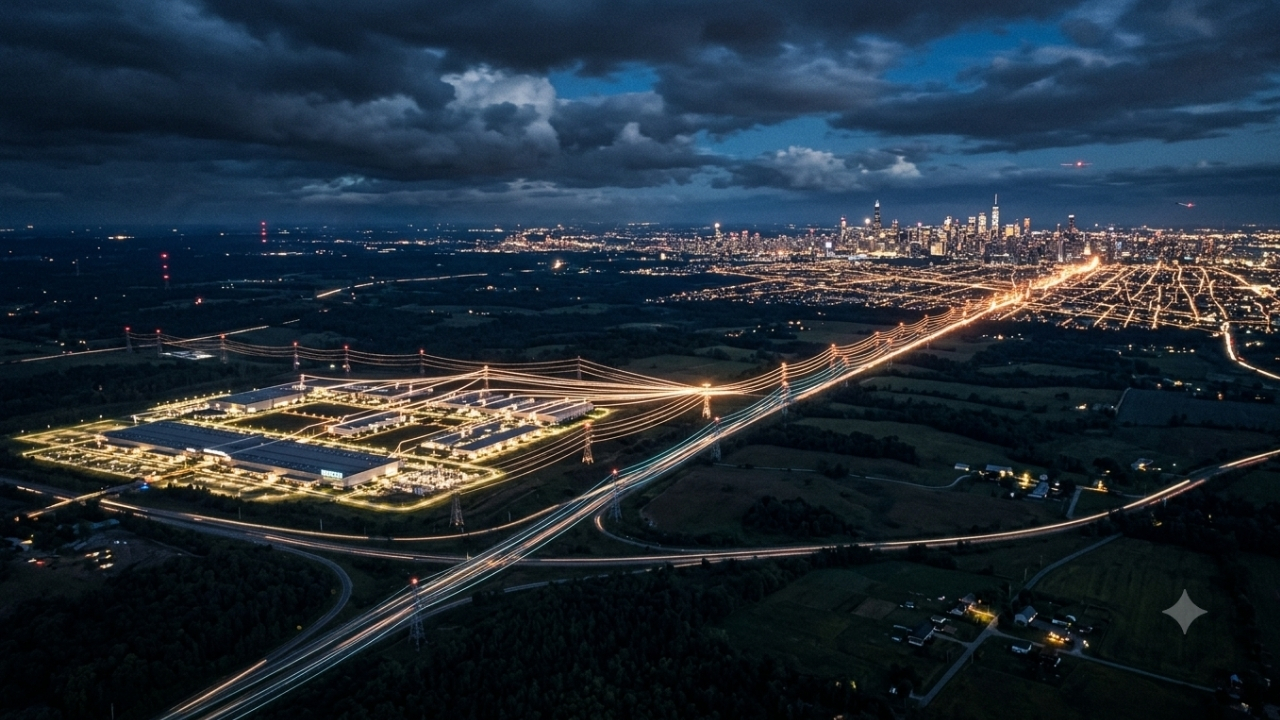
To produce energy, it produces huge megawatts to move to server farms as well as a infrastructure bottleneck per head. The large part of the high voltage transmission lines in the US and Europe consists of old lines that are projected according to the industrial needs of the 20th century, not the digital age.
The construction of new high voltage lines is appealing to bureaucratic labyrinths for years due to federal permissions, state-of-the-border property discussions, publicization cases and strict environmental assessments. When the construction of a data center can be completed in 18 months, it finds 7 to 10 years when a transmission line will feed the plant.
Can Hardware Efficiency Disrupt This Problem alone?
The defense in technology circles and semiconductor sector is often brought in: "More advanced nanometer architectures (3nm, 2nm) and specially optimized chips increase the calculation capacity per watt, so total consumption will be balanced within the process. "
This argument gets one of the most established and proven principles of the history of iktisat: Jevons Paradoksu. According to this law, William Stanley Jevons revealed on the efficiency of coal engines; the cost of consumption of that source increases the use efficiency of a source decreases, as the cost fell, the demand is replaced and exploded. As hardware has become more efficient, technology companies don’t turn off servers, fully reverse trains more gigantic parameters, real-time video production integrates into every smartphone and activates autonomous AI agents that work without stand behind. Therefore, the increase of hardware efficiency is expanding the limits of use scenarios since it is a way to knee the systemic energy demand.
Control Artificial Intelligence to Control Energy
The element that determines the future of artificial intelligence models is that only architectural optimizations, parameter numbers, or softwareal leaps, who can access megawatts, how quickly and cheap. Countries that invest in modern transmission networks that provide energy supply security and can flexibly guide the production of electricity in the industrial scale. In turn, the existing infrastructure is rapidly climbing the base load demand, the remaining economies face the most advanced models with the risk of training and running within their limits.

This table radically transforms the center of technology diplomacy. In the coming years BM’s global AI management steps As international initiatives and local regulations will not only be limited to copyrights, data privacy or algorithmic bias; connecting quotas to national networks of data centers, water resources consumed for industrial cooling and the most harmarked public policy discussions to share households’ bills. Governments in the global AI race in one pedestrian, in the event of establishing a precision balance between the necessity of delivering uninterrupted and comparable electricity to other citizens. Artificial intelligence revolution has ironed the transformers of the earth directly from the abstract limits of the cloud, transmission lines, copper cables and nuclear reactor towers. The limit of algorithmics is no longer code lines, but the capacity of carrying thermodynamic laws and electrical networks. The actors who are able to read this solid reality in the physical world and quickly convert energy infrastructure, will be the decisive of digital intelligence and future global power balances.
WriterAjan Destekli Fidye Saldırısı Sahte Test Diye Yürütüldü


Ajan Yapay Zeka (Agentic AI) Nedir ve Neden Önemli?