Toulmin Model and Trust in AI Diagnosis
Automatically translated
 Admin
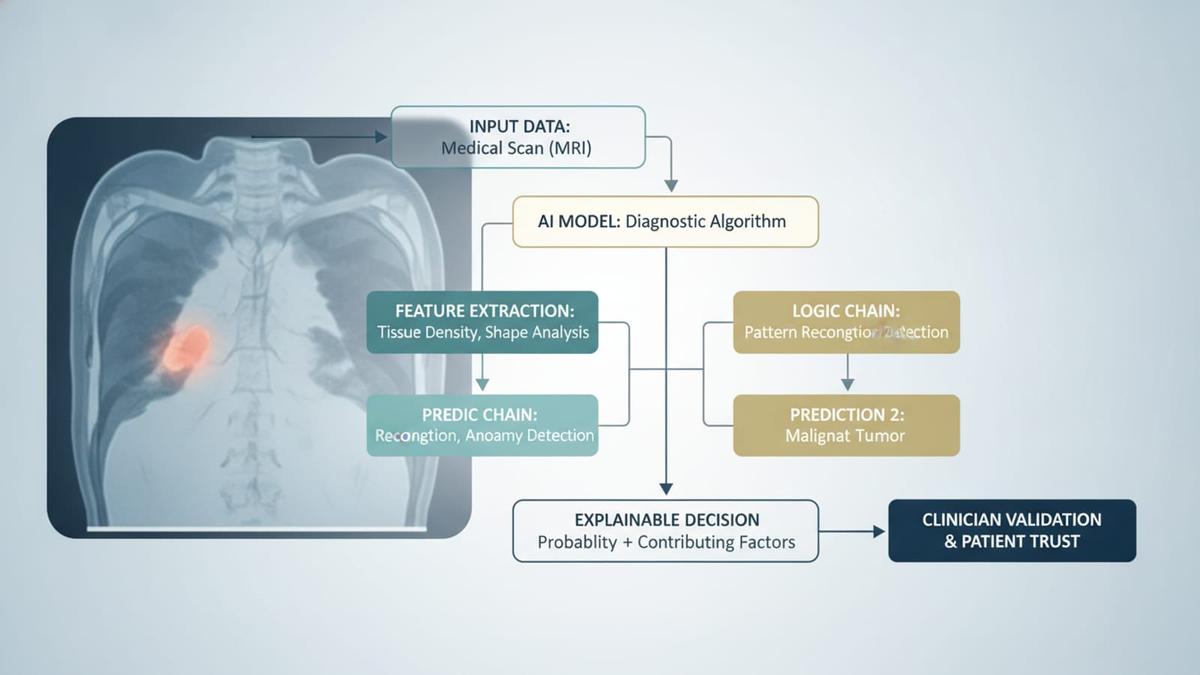
Machine learning (ML) models' claims in medical diagnosis have long raised trust issues because of their "black box" nature. A new study applies the Toulmin Argumentation Model to address this transparency problem. By breaking image-based diagnoses into components such as claim, grounds and warrant, this approach makes them easier to understand. It could speed up the adoption of AI in healthcare and give clinicians support for more informed decisions.
What Is the Toulmin Model and How Does It Relate to AI?
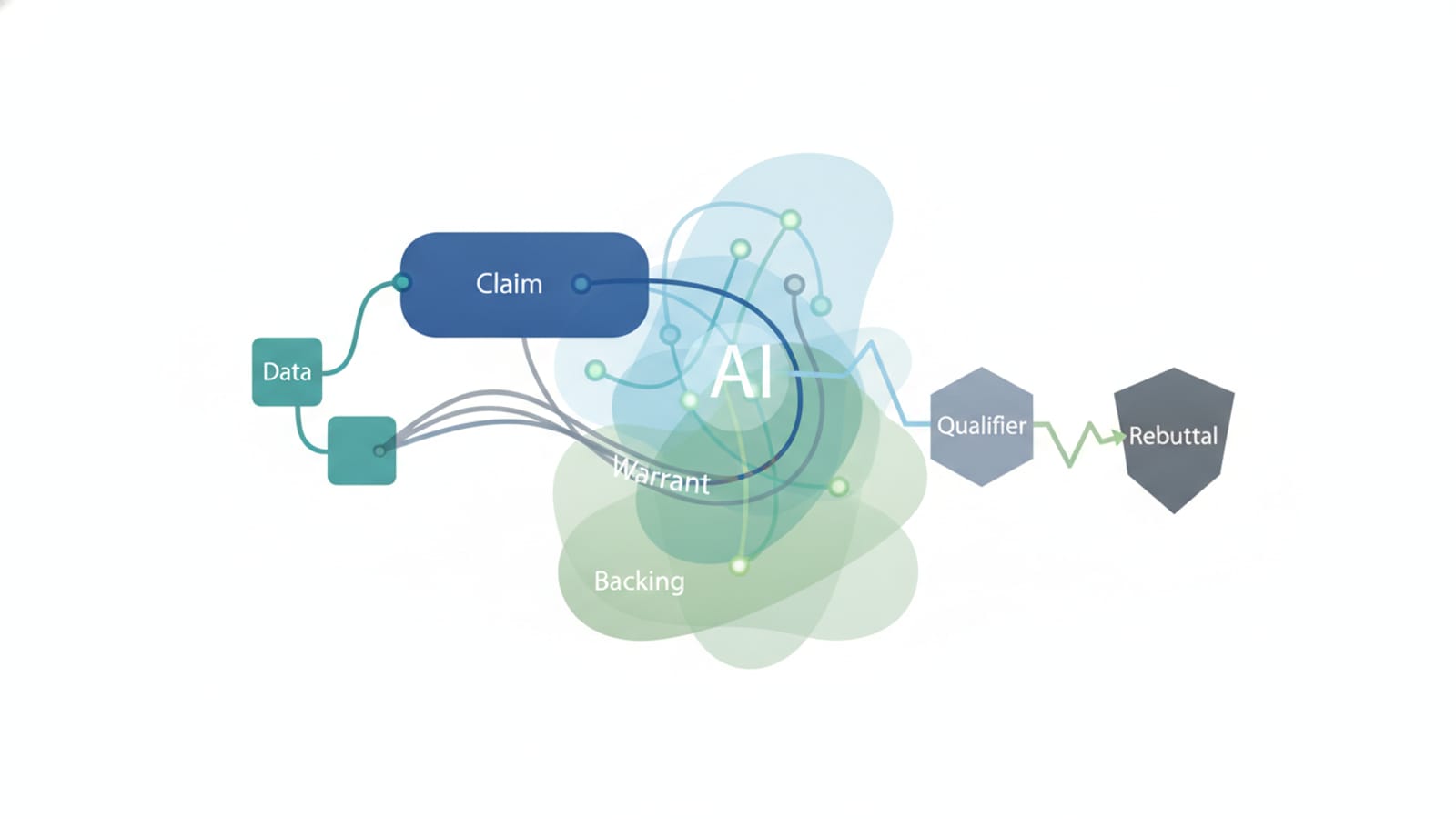
The Argumentation Model developed by Professor Stephen Toulmin consists of six main components: claim, grounds, warrant, qualifier, rebuttal and backing. The model is designed to analyze the logical structure of any argument and evaluate its validity. In medical diagnosis, it makes explicit the 'claim' an ML model makes for an image-based diagnosis, such as a retinal scan, the 'grounds' on which that claim rests (for example, specific findings in the image), the 'warrant' (medical knowledge or previously learned patterns), and possible 'rebuttals' (exceptional cases).
When combined with AI models, the Toulmin Model makes it possible in particular to mirror the clinical reasoning processes of Large Language Models (LLMs). Three-stage training processes such as Curriculum Goal-Conditioned Learning (CGCL) teach LLMs to gather facts, test hypotheses and synthesize qualified conclusions in line with the Toulmin structure, making the AI's decision steps understandable.
Why Is Explainable AI (XAI) Critical in Healthcare?

AI and machine learning systems have reached promising accuracy rates in disease classification, cancer diagnosis and other medical fields. In healthcare, however, accuracy and precision alone are not enough. Because every decision directly affects human lives, understanding the logic behind an AI model's decisions is critically important. The opaque decision processes of traditional 'black box' AI models reduce clinicians' trust in these systems and thereby hinder real-world adoption.
Explainable AI (XAI) addresses this trust problem by explaining why a model reached a particular result. XAI allows healthcare professionals to verify the model's decision process, understand potential errors and make more informed clinical decisions. This transparency is also of great importance for legal and ethical responsibilities, since in the event of an error, it may become clear who is responsible.
Pioneering XAI Work from Turkish Scientists

Scientists from Turkey are also making important contributions in this field. A team led by Op. Dr. Gültekin Koçun, Obstetrics and Gynecology specialist at Medicana International İzmir Hospital, has developed an explainable AI model that works with up to 99% accuracy for early detection of ectopic pregnancy. Unlike traditional 'black box' models, this model presents to the physician, with justifications, how much it relies on each parameter (such as the presence of an intrauterine sac, endometrial thickness, and progesterone and beta-hCG levels) when making a diagnosis.
The study was published in the internationally prestigious journal IEEE Access, entering the global literature. The system aims to detect ectopic pregnancy at an early stage, increasing the chance of non-surgical treatment. Local and concrete examples like this are a strong indication that XAI technologies can move beyond academic studies to deliver tangible benefits in real-world clinical practice.
Ways to Build Trust in ML Diagnosis

Building trust in machine learning diagnoses is not limited to high accuracy rates; it also requires understanding how those accuracy rates were achieved. Frameworks such as the Toulmin Argumentation Model increase transparency by breaking each prediction of a model into components that humans can interpret. In this way, clinicians can evaluate a model's grounds and warrants instead of accepting the AI's output without question.
Some AI models use techniques such as SHAP (SHapley Additive exPlanations) and LIME (Local Interpretable Model-agnostic Explanations) to explain their decision processes. These methods show which features are most influential when the model makes a particular prediction, offering an in-depth view of the diagnostic process. These integrations both improve the model's auditability and help doctors make more confident decisions in complex cases.
Challenges Ahead and the Future Outlook
Although AI's potential in healthcare diagnosis and decision support systems is large, there are still challenges to this integration. One of the most important is striking the right balance between accuracy and interpretability, since a trade-off often exists between these two factors. In addition, the lack of real-world validation and the absence of standardized interpretability metrics limit the wide-scale adoption of XAI models.
Instability in individual predictions, caused by random elements such as optimization and initialization that affect a model's performance, is another problem that could undermine clinical trust. In the future, personalized computational frameworks, such as Feature Sufficiency Analysis (FSA), that assess whether AI models can provide reliable decision support even with incomplete clinical information will be further developed. AI applications in healthcare are expected to spread much faster in hospitals by 2030, including physician-supported surgical guidance systems.
What the Community Thinks
Supporters
It is believed that making AI models transparent through the Toulmin Argumentation Model will create a major increase in trust among clinicians. Understanding the logic behind a model's decisions will make patient acceptance easier and help define legal responsibilities more clearly. Especially in complex cases, the justifications offered by AI will enable doctors to make more informed and sound decisions.
Critics
Some experts believe that striking an ideal balance between interpretability and model accuracy is a difficult task. The lack of real-world validation and the absence of standardized metrics for XAI models are also major sources of concern. In addition, there are worries that variability in predictions caused by random optimization within the model could negatively affect clinical trust.
Frequently Asked Questions
Is the Toulmin Argumentation Model used only in medicine?
The Toulmin Argumentation Model is actually a philosophical framework developed to examine the general structure of arguments. It is used to analyze and evaluate arguments in many fields, including law, philosophy, literature and science. In the field of AI, it has been adapted in particular to make explainability and decision-making processes transparent.
Why are Explainable AI (XAI) models called 'black boxes'?
Traditional AI and machine learning models, especially deep learning networks, are often called 'black boxes' because their decision-making processes cannot be directly understood by people. The model performs complex, non-linear calculations that show how it gets from input to output, but each step of these calculations cannot always be translated into human language or easily interpreted. XAI techniques aim to close this lack of transparency.
Does the Toulmin Model increase the accuracy of AI diagnoses?
The primary purpose of the Toulmin Model is not to directly increase diagnostic accuracy; rather, it is to increase the interpretability and reliability of existing machine learning diagnoses. By explicitly showing why the model made a prediction, it allows clinicians to evaluate those predictions more critically and notice potential errors. This can indirectly lead to more accurate results by reducing the risk of misdiagnosis.
Which XAI techniques are popular in medical diagnosis?
Some of the most widely used XAI techniques in medical diagnostic applications are SHAP (SHapley Additive exPlanations) and LIME (Local Interpretable Model-agnostic Explanations). These methods make the decision process easier to understand by showing how much importance a model gives to particular features (such as specific regions of a medical image or laboratory values) when making a given prediction.
The development of AI in healthcare depends not only on technological progress but also on making this technology understandable and reliable for humans. Frameworks such as the Toulmin Argumentation Model offer a structural solution to the transparency problem of 'black box' models, paving the way for AI to play a more effective and responsible role in clinical decision support. This approach has the potential both to improve patient safety and to strengthen clinicians' confidence in new-generation technologies.
AdminFormat Duyarlılık Endeksi Nedir?


LLM Ajan İletişiminde Mesaj Formatı Neden Kritik?