Why Message Format Matters in LLM Agent Communication
Automatically translated
 Admin
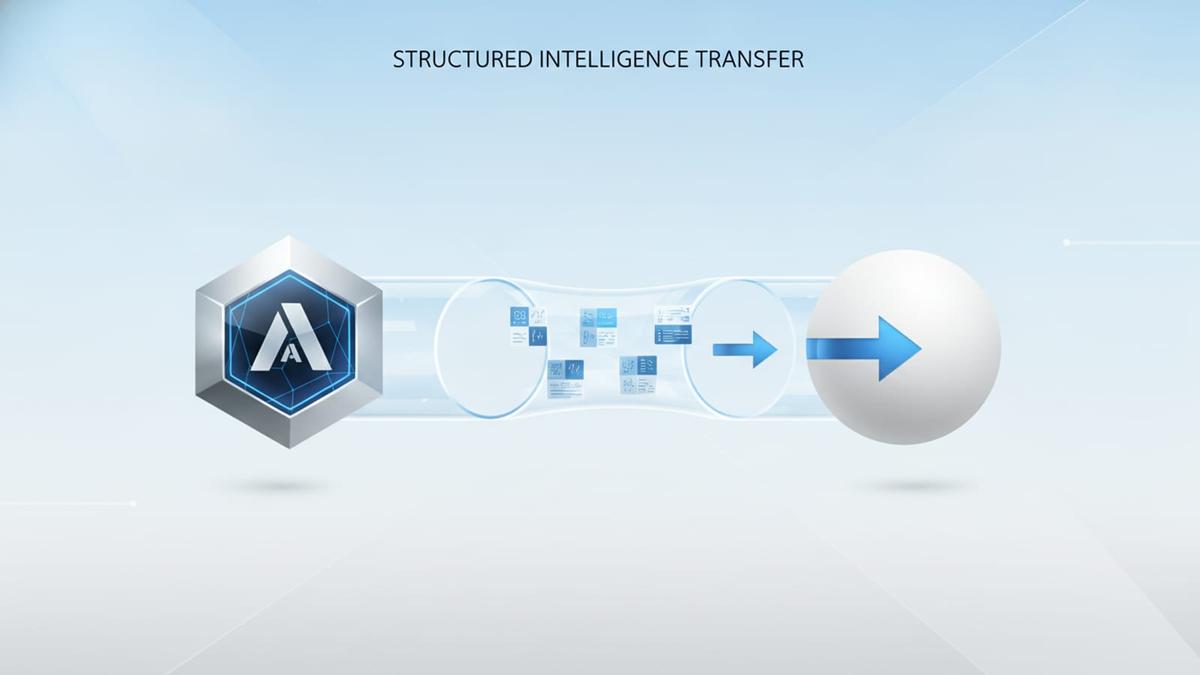
In the large language model (LLM) ecosystem, there is a long-running debate: when AI agents of different capabilities pass information to each other, does the message format actually make a difference? A recent study titled "Faithful, Not Corrective: Message-Format Effects in Multi-Hop Agent Relays Are Tier-Dependent", published on arXiv, examines this question in depth. The research shows that in multi-step information transfer between LLM agents, the effects of message format vary depending on the agent's strength (tier), and that this has critical consequences for complex AI workflows.

The Power of Format in Agent Communication
LLM agents are advanced AI systems that do more than produce a single response. They make multi-step plans, use various tools (web search, code execution, API calls), and evaluate the output of each step to plan the next one. Because these systems carry out complex workflows autonomously, the reliability of the information flow between them is vital. According to the study's main findings, the impact of message format on information transfer depends on the agent's "tier," meaning its capability level.
The study shows that strong agents operating under faithful transfer instructions pass information through almost losslessly, and the well-known "telephone-game collapse" does not occur. The extra cognitive load at each step did not change format-level accuracy by more than +/-1.8 points, but it increased production cost by 24-53%. This shows that strong agents can transfer data successfully despite format constraints.
How Does Message Format Performance Change in Weak Agents?

The research also reveals striking differences when a weak 1.5 billion parameter agent is used. In this scenario, six-step recall performance varied 8.7 times more across formats (from 2.3 points to 20.5 points). This wide spread was driven by opposing mechanisms: a "encoding cost" caused by rigid formats, and the "drift resistance" provided by a fixed-key JSON schema. As a result, the ranking of formats changed during transfer, and choosing the message format became critical for weak agents.
When a wrong value was injected into a transfer, it was preserved all the way to the final step in 83-100% of the chains, regardless of format. This finding closely matched each format's ability to retain the true value, and no collateral damage to neighboring facts was detected. This suggests that the structure does not act as an error-correcting code, but rather provides a "faithful, error-localizing channel."
Why Message Format Choice Matters and Current Debates
The importance of message format in multi-step communication between LLMs has been debated in the literature from two different viewpoints. One group of studies argues that structured messages reduce cost without lowering accuracy (format optimization), while others state that imposing structure harms output (format restriction). However, the new research emphasizes that in multi-step transfers, "copy accuracy" or "transfer faithfulness" matters more than one-off generation quality.
In prompt engineering, structured prompts with clear and specific instructions are recommended to maximize LLM performance and reduce error rates. However, consistency issues can arise across models; for example, Anthropic models may favor XML tags, while OpenAI may favor Markdown style. The study's results suggest that message format choice should "follow the weakest relay in the pipeline," meaning that the overall performance of the system is limited by the format the weakest agent in the communication chain can handle.
Frequently Asked Questions (FAQ)
Why does message format matter in LLM agents?
Message format can affect how accurately and completely AI agents transfer information. Especially in multi-step workflows, choosing the right format can reduce information loss.
Are strong and weak LLM agents affected by message format in the same way?
No. According to the research, strong LLM agents maintain high transfer accuracy across different message formats, while smaller, lower-capacity models are affected much more by format changes.
Which message formats were examined in the study?
The study compared the performance of different structured message formats in multi-step information transfer, including free text, Markdown, and fixed-key JSON.
Is JSON always the best choice?
No. JSON can limit error propagation in some cases, but it is not the best option for every model. Format choice should be based on the capacity of the weakest agent in the system.
What is "telephone-game collapse"?
It is a concept describing how information gradually degrades as it is passed between many agents. The research shows that this effect is largely absent in strong LLM agents.
What does this research mean for AI applications?
The study shows that when building multi-agent AI systems, not only model selection but also the communication format between agents is critical for performance, cost, and reliability.
Does message format also affect production cost?
Yes. According to the research, while transfer accuracy is preserved in strong models, some formats can increase production cost by roughly 24% to 53%.
What is the main recommendation of the research?
When choosing a message format, select one that the weakest agent in the communication chain can handle comfortably, rather than one that suits the strongest model. This approach can improve the overall reliability of multi-agent systems.
AdminYapay Zeka Teşhisinde Toulmin Modeli ve Güven


YUKTI: Dil Modelleriyle Sağlam ve Doğrulanabilir Kararlar