Skip to content
Back to blog list
Yapay Zekada Halüsinasyona Çözüm: RAG Mimarisi Nedir?
Natural Language Processing

Solving AI Hallucinations: What Is RAG Architecture?

Automatically translated
Özkan Günalp
Özkan GünalpWriter
4 min read
We look at what Retrieval-Augmented Generation (RAG) architecture is, how it addresses hallucinations in language models, and how it works.

Large language models (LLMs) have remarkable language abilities, but they freeze at the date their training data ends, and they can confidently produce false information about topics they do not know. To address this problem, known as hallucination, and to make AI work with current, verifiable company data, RAG is the architecture that has become the industry standard today.

What Exactly Is Retrieval-Augmented Generation (RAG)?

RAG is a framework that lets an AI model consult a trusted knowledge base before generating a response. Traditional language models answer only with closed knowledge they learned during training and stored in their weights. The RAG architecture opens this closed system to the outside world, giving the model a kind of "open book" exam ability. In this way, the data gap or freshness problem at the root of why AI gives wrong information is addressed by feeding the model dynamic data from outside.

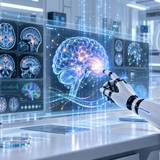
Abstract technology visual showing glowing network connections and data transmission bridging a digital brain structure and cloud data storage.

The Origins of RAG Architecture: What Did the 2020 NeurIPS Paper Show?

The concept entered the center of the technology world in 2020, with a groundbreaking paper published by Patrick Lewis and his team at Meta AI. The NeurIPS 2020 paper titled "Retrieval-Augmented Generation for Knowledge-Intensive NLP Tasks" demonstrated that language models could produce much better results by retrieving information from an external Wikipedia database, without having to memorize everything. This paper was the first concrete indication that models could reach state-of-the-art performance on knowledge-intensive tasks (question answering, summarization) without increasing parameter counts into the trillions.

How Does a RAG System Work Step by Step?

As the name suggests, the RAG architecture consists of two main phases: Retrieval and Generation. When a user asks the system a question, the model pauses instead of answering directly. The retrieval module, which works like a search engine, finds and returns the documents from the external database that most closely match the user's question in meaning. These current documents are then combined with the user's original question (prompt augmentation) and presented to the large language model. By reading this new and accurate context, the model produces a fluent, natural response with a clear source for the end user.

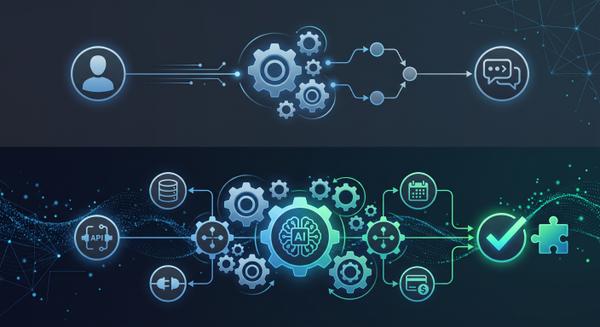
Digital process flow diagram symbolizing a user query passing through search engines and merging with a generation engine.

What Role Do Vector Databases Play in the RAG Process?

Vector databases are the backbone of RAG architecture. Company PDF reports, customer conversations, or internal correspondence cannot be quickly searched by a language model in their raw form. These texts are converted into numerical arrays (vectors) with thousands of dimensions through a process called "embedding." Vector databases such as Pinecone, Milvus, or Weaviate store these numerical arrays. When a user asks a question, the question is also instantly converted into a vector, and the closest meaningful data in the database is matched and returned to the system in less than a second.

Why Is RAG Essential for Large Language Models?

No company seeking enterprise-level AI integration can accept a model that speaks on the basis of assumptions. The RAG architecture eliminates the cost of constantly retraining the model. Instead of spending millions of dollars of computing power to teach the model a financial statement or a current regulation, the relevant document is simply added to the vector database. RAG also maximizes the auditability of the system by allowing the AI to add a reference beneath its answer, such as "I took this information from page 4 of document X."

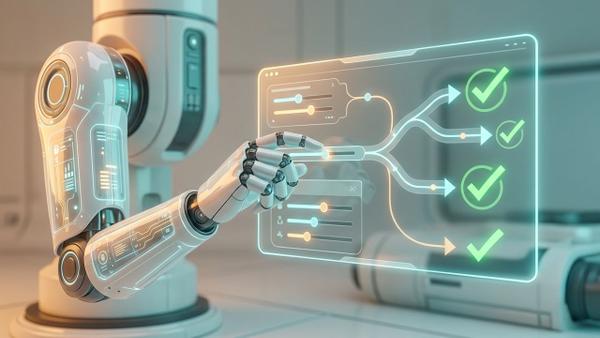
Transparent data flow representing a closed black box, with bright algorithmic structures correcting enterprise errors.

Agentic RAG: Where Is the Future of AI Heading?

Traditional RAG is like a static librarian that only finds and returns documents for the question asked. However, next-generation "Agentic RAG" architectures turn the model into a decision-maker. If the system cannot find enough information in its first search, it can generate new sub-queries on its own, search the internet, or trigger a different API to verify the data. The transformation of AI from a mere reader into an autonomous agent that formulates strategy and conducts research is fundamentally changing the workflows of information-intensive industries.

What Does the Community Think?

Within the developer ecosystem, there are two main views on the future of RAG. The majority argues that, despite the expansion of context windows, RAG will always remain an industry standard because of its cost and accuracy advantages. Another group predicts that new-generation models with context windows as large as 2 million tokens (such as Gemini 1.5 Pro) could reduce the need for complex vector database infrastructure in the future, since they can read the entire database in one pass.

Dynamic, moving network structure symbolizing autonomous AI agents that can make their own decisions and carry out multiple tasks.

Frequently Asked Questions

What is the difference between RAG and fine-tuning?

Fine-tuning retrains the internal weights of a model to permanently change its behavior or language style, whereas RAG does not change the model and instead gives it instant memory (context). To add current information, use RAG; to adapt the model's conversational style to a sector, use fine-tuning.

Is building a RAG architecture expensive?

Compared with training a language model from scratch or fine-tuning it continuously, it is much more affordable. Vector databases and retrieval operations can run efficiently even on fairly inexpensive hardware.

Does a RAG system completely eliminate hallucinations?

It does not eliminate them completely, but it reduces them significantly. The model may sometimes misinterpret the data it receives or lose context, but because it works from sources, errors are much easier to detect and correct.

Large language models (LLMs) have remarkable language abilities, but they freeze at the date their training data ends, and they can confidently produce false information about topics they do not know. To address this problem, known as hallucination, and to make AI work with current, verifiable company data, RAG is the architecture that has become the industry standard today. What Exactly Is Retrieval-Augmented Generation (RAG)? RAG is a framework that lets an AI model consult a trusted knowledge base before generating a response. Traditional language models answer only with closed knowledge they learned during training and stored in their weights. The RAG architecture opens this closed system to the outside world, giving the model a kind of "open book" exam ability. In this way, the data gap or freshness problem at the root of why AI gives wrong information is addressed by feeding the model dynamic data from outside. The Origins of RAG Architecture: What Did the 2020 NeurIPS Paper Show? The concept entered the center of the technology world in 2020, with a groundbreaking paper published by Patrick Lewis and his team at Meta AI. The NeurIPS 2020 paper titled "Retrieval-Augmented Generation for Knowledge-Intensive NLP Tasks" demonstrated that language models could produce much better results by retrieving information from an external Wikipedia database, without having to memorize everything. This paper was the first concrete indication that models could reach state-of-the-art performance on knowledge-intensive tasks (question answering, summarization) without increasing parameter counts into the trillions. How Does a RAG System Work Step by Step? As the name suggests, the RAG architecture consists of two main phases: Retrieval and Generation. When a user asks the system a question, the model pauses instead of answering directly. The retrieval module, which works like a search engine, finds and returns the documents from the external database that most closely match the user's question in meaning. These current documents are then combined with the user's original question (prompt augmentation) and presented to the large language model. By reading this new and accurate context, the model produces a fluent, natural response with a clear source for the end user. What Role Do Vector Databases Play in the RAG Process? Vector databases are the backbone of RAG architecture. Company PDF reports, customer conversations, or internal correspondence cannot be quickly searched by a language model in their raw form. These texts are converted into numerical arrays (vectors) with thousands of dimensions through a process called "embedding." Vector databases such as Pinecone, Milvus, or Weaviate store these numerical arrays. When a user asks a question, the question is also instantly converted into a vector, and the closest meaningful data in the database is matched and returned to the system in less than a second. Why Is RAG Essential for Large Language Models? No company seeking enterprise-level AI integration can accept a model that speaks on the basis of assumptions. The RAG architecture eliminates the cost of constantly retraining the model. Instead of spending millions of dollars of computing power to teach the model a financial statement or a current regulation, the relevant document is simply added to the vector database. RAG also maximizes the auditability of the system by allowing the AI to add a reference beneath its answer, such as "I took this information from page 4 of document X." Agentic RAG: Where Is the Future of AI Heading? Traditional RAG is like a static librarian that only finds and returns documents for the question asked. However, next-generation " Agentic RAG" architectures turn the model into a decision-maker. If the system cannot find enough information in its first search, it can generate new sub-queries on its own, search the internet, or trigger a different API to verify the data. The transformation of AI from a mere reader into an autonomous agent that formulates strategy and conducts research is fundamentally changing the workflows of information-intensive industries. What Does the Community Think? Within the developer ecosystem, there are two main views on the future of RAG. The majority argues that, despite the expansion of context windows, RAG will always remain an industry standard because of its cost and accuracy advantages. Another group predicts that new-generation models with context windows as large as 2 million tokens (such as Gemini 1.5 Pro) could reduce the need for complex vector database infrastructure in the future, since they can read the entire database in one pass. Frequently Asked Questions What is the difference between RAG and fine-tuning? Fine-tuning retrains the internal weights of a model to permanently change its behavior or language style, whereas RAG does not change the model and instead gives it instant memory (context). To add current information, use RAG; to adapt t

Etiketler:RAGLLMHalüsinasyon
Özkan Günalp
Özkan GünalpWriter
@ozkngunalp

Comments (0)

Log in to comment.

Log in
No comments yet. Be the first to comment!