Small Language Models (SLM) Upgrade Home
Automatically translated
 Writer
The concept of "so good if it is so big for a long time in the artificial intelligence world. The huge language models with hundreds of billions of parameters, high server costs and massive energy consumption, when forced the company’s budget, a fractional player entered the scene: Small Language Models. These models working on smartphones, laptops and local servers with several billion parameters not only reduce costs, but also set a new standard in data privacy and response speed.
What is a Small Language Model and How to Separate from Big Language Models?
Small Language Models are artificial intelligence architectures optimized to work with high accuracy in certain tasks, usually with a magnitude ranging from 1 billion to 15 billion parameters. GPT-4 or Claude 3.5 with hundreds of billion parameters The main difference from huge systems like Sonnet is that the number of parameters reduces this radical scale.
LLMs act as general cultural experts trying to extract all the information in the world, while SLMs work like deepened private experts in a specific area. The decreased number of parameters reduces the memory footprint of the model and allows the operation in standard consumer hardware without needing complex data centers. Technical details Comparison of ChatGPT and other language models You can browse through.

How Does SLMs Provide Cost and Energy Advantage to Companies?
Thousands of expensive graphics processors (GPU) are needed to run Devasa language models. This creates both cloud providers’ bills and a serious electricity and cooling energy consumption. For each search or text production of companies, the cents do not spend on the Mercedes, present a sustainable financial table in mass use.
Small language models reduce transaction load significantly. For example, a model with 3.8 billion parameters can work on the NPU (Nöral Trading Unit) chip of a single consumer screen card or even a laptop. These companies API Reduces dependence, lowers server costs up to 80 percent and minimizes carbon footprint.

How Does Edge AI and Device Top Work Affect Data Privacy?
Models running directly on the device without requiring Internet connection provide a breakthrough in data privacy. It is a serious risk of sending data to external servers or cloud services in industries where sensitive data is processed such as health, finance or law.
Thanks to SLMs, data is processed without leaving the user device. This end artificial intelligence systems that work even if the Internet is interrupted; in aircraft, mine sites or places where there is no network coverage. In addition, response times decrease to milliseconds, as the return delay time to the cloud server is eliminated.

Phi-3, Llama 3 8B and Gemma Which Area Is Featured?
The industry giants take great steps in small model race. Although the development of large language models has been shaped around more parameters and larger infrastructures for a long time, the focus point started to change. Companies like Microsoft, Meta and Google are turning to develop models that can offer high performance with lower welding consumption. This approach allows both individual developers and institutions to use artificial intelligence with more accessible costs.
Developed by Microsoft Phi-3 MiniDespite having only 3.8 billion parameters, language understanding shows remarkable performance in areas such as logical reasoning and code production. The model according to the technical report of Microsoft offers a lightweight structure that can work on mobile devices while revealing results that can compete with much larger models in some measurements. Specifically local AI applications stand out as an important alternative for low-equipped systems and edge AI solutions.
Meta offers as open source Llama 3 8B attention to its performance as well as its strong ecosystem. The Llama 3 family is rapidly adopted by researchers and developers, the open source is located in the center of the artificial intelligence world. Thanks to the model weights and development tools published by Meta, Llama 3 has become one of the most preferred models for fine adjustment, RAG systems, artificial intelligence agents and corporate applications.
Google is the experience gained from Gemini technology to open model world Tags The family offers a different approach. Gemma models, which are released in smaller sizes, are designed with efficiency and accessibility. Gemma, an important part of the open model strategy for the research community of Google, is especially considered an attractive option for developers with academic studies, experimental projects and limited hardware resources. Google expands language support and improved intelligence capabilities in the next versions of the model family.

Compared to these three models, each one is seen to address different priorities. Phi-3 focuses on delivering its performance with the smallest possible hardware cost; Llama 3 8B stands out with wide community support, vehicle ecosystem and customizable structure. Gemma pays attention to the architecture of light weight, research-friendly approach and Google from artificial intelligence technologies. With another statement, Llama 3 is preferred in open source projects and corporate customizations, while offering an alternative to both researchers and developers with a balanced location between these two approaches.
As artificial intelligence ecosystem, competition is now shaped not only through model size, but through efficiency, accessibility and ease of use. This three language models are among the most remarkable examples of this conversion.
How to Convert Synthetic Data and Quality Data SLM Period?
When you drop the parameter of a model in the old understanding, the intelligence and understanding ability was reduced directly. The basic innovation of this situation was " veri data" and strict data filtering techniques. As in the Phi series of Microsoft, the models began to be taught high quality synthetic texts, which are produced by "training books" or large models, rather than the random and unqualified data of the internet.
With advanced data filtering, small models can gain logical execution and code writing skills with much less parameters, unlike untrained huge models.
Will the Great Models Do You Lose Totally?
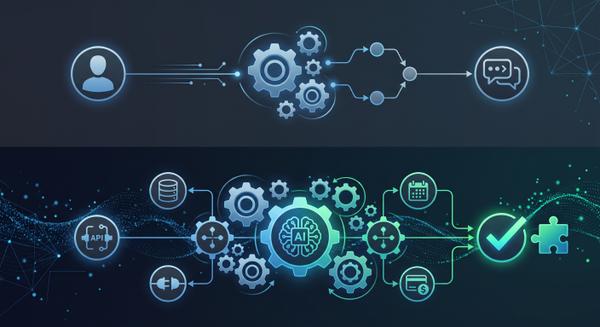
The rise of SLM does not bring the end of LLMs. On the contrary, artificial intelligence architecture is home towards a hybrid structure. In the future systems will guide the incoming requests to a small and fast model. If the response requires a standard summary, e-mail compensation or a simple classification, the process will be completed on the device.
Only deep academic analysis will be transferred to the large language model in the request cloud when you need to query on multi-step complex reasoning or huge databases. This guiding architecture offers the most efficient balance in terms of cost and performance.

Why Do Developers and Researchers Discrete in SLMs?
Discussions around the small language models have become one of the hottest topics of the world of artificial intelligence. Specifically, models such as Phi-3, Gemma and Llama 3 8B perform high performance from expected, "Do you need gigantic models from reality?" have moved the question again. However, the developer community does not have a full view of this regard among researchers and corporate users.
On one side, open-source developers and corporate technology teams defend the future will be the most common artificial intelligence solutions. According to this opinion, each company GPT-4 or not need to use very large models like. The large part of the institutions has narrower extensive needs such as document analysis, customer support systems, corporate search engines, content production, reporting and basic coding tasks. A few billion parameter model in these scenarios is often able to offer enough performance.
The most powerful arguments of the defenders are cost, privacy and control. When creating significant risks in some sectors that are sent to third-party service providers in cloud-based systems, models working locally provide serious advantage in terms of data domination. Specifically, institutions operating in finance, health, defense and public sector are getting closer to solutions that allow data to remain in their own infrastructure. It is also highlighted that SLMs have a much more sustainable investment in the long run, when major models consider API usage costs.
Another opinion argues that the future of artificial intelligence will pass through ecosystems, which are not very large models, but from specialized small models. According to this approach, instead of a single giant model in the future; there will work together with a large number of small models specially optimized to fields such as coding, customer service, data analysis or law. Thus, both energy consumption and task-based performance will increase.

In turn, researchers and academic circles adopt a more cautious approach on small models. With the adoption of SLM’s significant progress in recent years, these models are still considering that they have marked limitations. In particular, very stepd logical interests, complex problem solving processes, scenarios requiring advanced reasoning and long context tracking are indicated that the superiority of large models continues.
According to researchers, small models are able to perform impressive performance in frequent tasks in educational data, as well as faster errors in unusual or unexpected scenarios. The production of hallucination is shown among the troubles in the absence of improper results and follow complex instructions. It is particularly expressed that performance fluctuations in multilingual usage scenarios and low-source languages are more pronounced.
A third view that has been increasingly strengthened in the community is not complement to the large and small models. According to this approach, the majority of users will continue to use large models in tasks requiring high cognitive capacity, such as scientific research, advanced reasoning, complex software development or multi-task systems. With another expression, the sector is moving towards a hybrid future where models of different scales work together by moving away from the concept of "makes every model."
The discussion in the community is no longer "small models, large models?" from the question, "which model size for the task is more efficient?" is focused on the question. The rise of new SLM models plays an important role in artificial intelligence not only more powerful but also becoming more accessible, economical and common. Therefore, according to many experts, the element that will determine success in the coming years is not only model size; cost, efficiency, customizable and balance of actual world usage value.
WriterChrome AI Modelleri Bilgisayarınızda 20 GB Yer Kaplayabilir


Sıfırdan Yapay Zeka Kariyeri Nasıl Yapılır?