



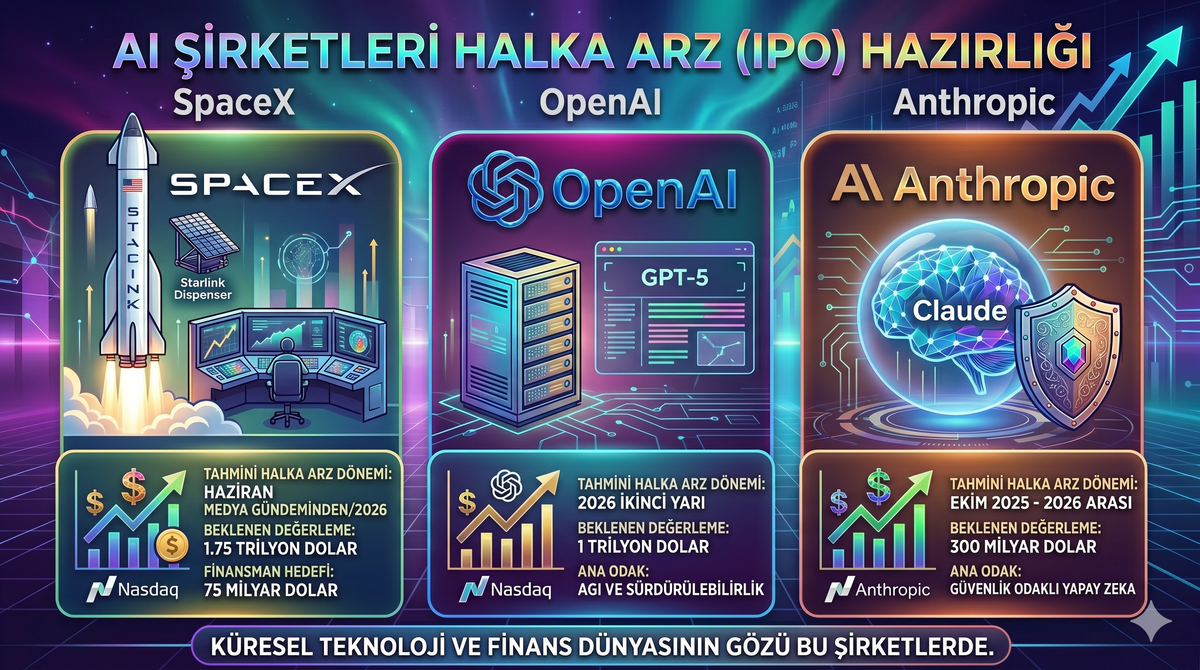
AI Companies IPO: SpaceX, OpenAI, Anthropic
Automatically translated
On Wall Street, there has long been a question that kept coming up without a clear answer: "When will the AI boom turn into real cash flow?" That threshold now appears close to being crossed. IPO preparations circulating around SpaceX, OpenAI and Anthropic look less like a listing of a few companies and more like the start of a new technology cycle.
Looking at these three together, you can see clearly that this is no longer only a race to build models. It is becoming a battle for capital markets.
Are AI Companies Entering the IPO Race?
The growth visible in AI over the past year looks nothing like classic technology cycles. Normally, the product matures first, earnings follow, and an IPO comes last. Here, the order is reversed.
Companies like OpenAI have reached valuations in the billions of dollars, yet the question of whether they have a fully proven business model remains open. Anthropic has also attracted heavy investment but is not publicly traded. SpaceX has been one of the largest players in the private market for years.
Now that all three are being discussed as IPO candidates at once, the message is clear: AI is no longer just a technology. It is becoming a financial asset class in its own right.
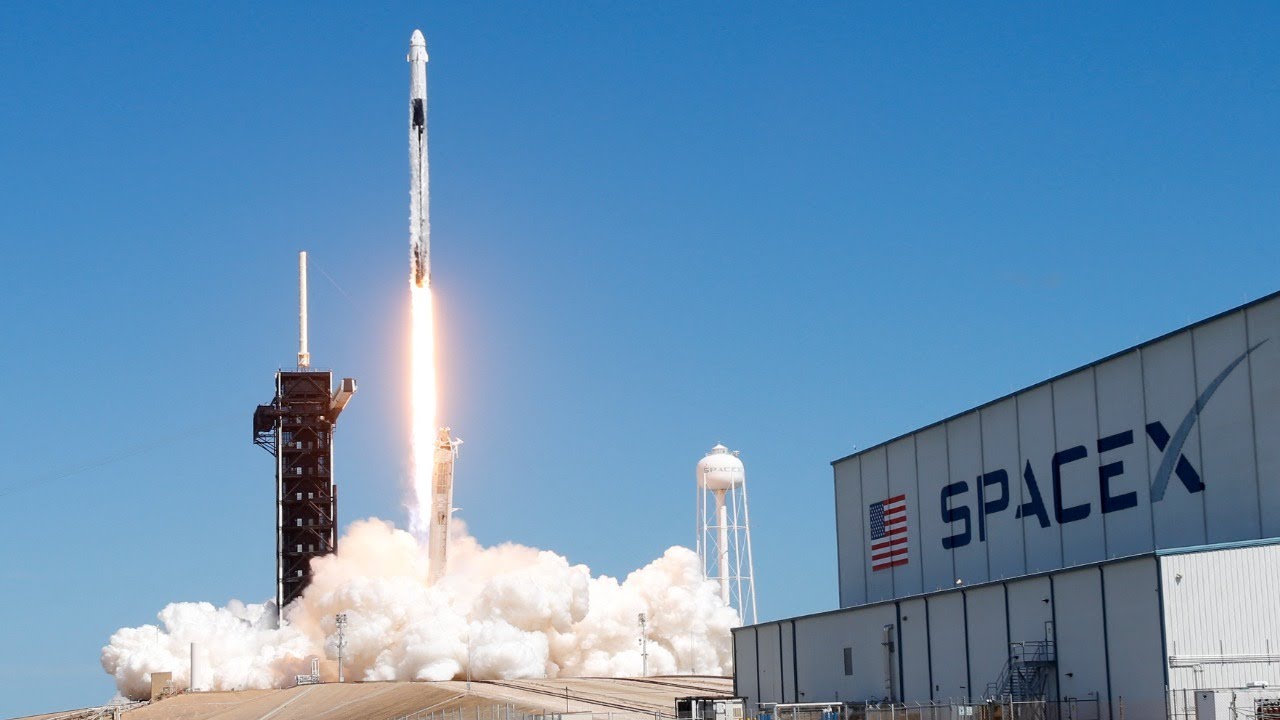
SpaceX IPO: What Is Elon Musk Planning This Time?
SpaceX is not a classic AI company. But through Starlink, data, communications and global infrastructure, it sits at the center of the AI economy. The strongest scenario discussed recently is a separate IPO for Starlink.
Why does this matter?
Starlink alone has built a massive revenue model
Satellite internet infrastructure means global data access for AI systems
It could speed up AI adoption, especially in developing countries
We know Elon Musk has previously said that "Starlink is not ready for an IPO", but the market now reads this differently. The motivation seems to be unlocking value rather than meeting cash needs.
Why Is an OpenAI IPO Now More Realistic?
This is the most critical point.
For a long time, OpenAI's "capped profit" structure made it appear unsuitable for an IPO. But there has been a significant transformation over the past year.
Today there is: a huge consumer product in ChatGPT, substantial B2B revenue through the API, Enterprise agreements, and deep integration with Microsoft.
This means:
OpenAI is no longer a "research lab" but a full-fledged technology company.
The biggest obstacle to an IPO is structural complexity. But that is also starting to be resolved, because investors want this:
"We want a share of this growth."
For entrepreneurs, the key lesson here is this:
If you are building an AI company, even at an early stage, an IPO is now something people think about.
Anthropic IPO: Why Is It Coming Into the Spotlight?
Anthropic is somewhat more of an "insider player." It is progressing without huge spikes, but its backing is incredibly strong: it has received investment from giants such as Amazon and Google.
Claude models technically compete directly with OpenAI, but the positioning is different: safer AI, more controlled model behavior and an enterprise-focused use.
Once the possibility of an Anthropic IPO started being discussed, this question came up:
"Is the market ready to price a second major AI player besides OpenAI?"
The answer is most likely yes. This shows that the AI market is not a "winner takes all" one. There will be multiple major players.

Why Is Wall Street So Open to AI Companies?
To understand this, looking at Nvidia is enough.
The recent rise of Nvidia has shown that AI is not just popular, it is generating real money.
On Wall Street, the following mental model has taken shape:
Internet → 2000s
Mobile → 2010s
AI → 2020s
In other words, investors see AI as the next major platform shift.
But there is an important difference. This time the infrastructure is truly ready. GPUs, cloud, data and models all arrived at the same time. That is why the appetite for IPOs is much more aggressive.

What Does the AI IPO Wave Mean for Entrepreneurs?
If you are currently building a startup in Turkey, these developments affect you directly.
How?
First, the logic of valuation is changing. In the past, SaaS metrics, ARR and growth rate were in focus. Now, AI capability, model integration and data advantage matter much more.
Venture capital is also changing. Funds now ask:
"Is this startup AI-first, or is AI just added on?"
This difference is very important.

How Will This Process Change the Startup Ecosystem?
This IPO wave has two sides:
1. The positive side
More investment
Faster-growing startups
Increasing global competition
2. The risk side
The possibility of an AI bubble
Inflated valuations of projects without real value
Non-AI startups struggling to find funding
This IPO wave shows that building AI-first startups is no longer a niche but mainstream. If you are considering entering this field, the guide to building a startup with artificial intelligence on Masqot is a good starting point.
The Turkey Perspective: What Do These IPOs Tell Us?
The biggest mistake in Turkey is this:
"These things happen in America, they won't affect us."
It is the opposite. If these IPOs happen, global AI investment will grow, investors in Turkey will also shift toward artificial intelligence, and opportunities will open up for local startups.
But there is a critical problem: there are very few AI-first companies in Turkey.
Most ventures use AI but do not build their core around it, and they are not aggressive enough for global competition.
There is a serious gap here. What is happening now is not a simple IPO process. It is AI moving from an "experimental technology" to the center of the financial system. When this wave arrives, the gap between those inside it and those left outside will open very quickly.
If you are an entrepreneur, you are exactly at that turning point.
AI ile Teyit Uzmanlara Güveni Zedeliyor mu?


Antigravity vs Codex vs Claude Code: Hangisi Daha İyi?


