
What Is Fuzzy Logic?
Automatically translated
 Admin
Logic is a branch of science that examines the principles of valid reasoning. Traditionally, Aristotle's two-valued logic assumes that every proposition is either true (1) or false (0). However, most situations we encounter in everyday life cannot be defined with such precise boundaries. Is the weather "a bit cold" or "fairly mild"? Is a film "very good" or "so-so"? Fuzzy logic emerged to deal with uncertainties like these.

Fuzzy logic is an artificial intelligence approach that imitates human thinking and the uncertain workings of nature, creating decision-making mechanisms based on imprecise, linguistic expressions. By accepting all intermediate values between 0 and 1 as valid, this system allows us to determine degrees of certainty for logical propositions. An object's membership in a set can be described with expressions like "somewhat a member" or "largely a member," instead of only "fully a member" or "not a member at all." This article will examine in depth what this flexible system of thought is, how it emerged, and its wide range of applications today.
What Is Fuzzy Logic and How Did It Emerge?
Classical logic assumes that a situation is either "true" or "false." However, reality contains more than black and white. Fuzzy logic was developed to fill these gray areas. In the early 1900s, Jan Lukasiewicz proposed a three-valued logic to express uncertain situations such as "maybe," challenging Aristotelian logic. He defined logical values in the range [0, 1, 2], which allowed for an intermediate value in addition to true and false. This is considered one of the first seeds of fuzzy logic thinking in the modern sense.

However, it was Lotfi Zadeh who published the paper "Fuzzy Sets" in 1965. Zadeh observed that computer science was inadequate for describing uncertainty and approximate reasoning in human thought. The human brain can make sense of terms like "hot," "tall" or "slow" without tying them to exact numbers. When a thermostat's temperature rises from 25°C to 26°C, it does not make an abrupt switch to the "hot" category; instead, the degree of "hot" rises gradually as the temperature increases. To describe these gray areas, Zadeh developed a system using all real numbers in the closed interval [0,1]. This way, the degree of warmth of "lukewarm" water can be expressed as 0.6, and that of "somewhat hot" water as 0.8. This approach made decision-making processes more flexible and closer to reality.
When and by Whom Was Fuzzy Logic Developed?
Although the idea of fuzzy logic was first grounded in Jan Lukasiewicz's work on many-valued logic, its modern founder is the Azerbaijani-born American mathematician and computer scientist Lotfi Zadeh. Zadeh opened a new chapter in this field with his 1965 paper. This paper offered ways to express imprecise concepts mathematically, opening a new door in the world of computer science.

After studying electrical engineering at the University of Tehran, Zadeh earned his master's degree at the Massachusetts Institute of Technology (MIT) and his doctorate at Columbia University in 1949. He then continued his academic work at Columbia, Princeton and the University of California, Berkeley. He made countless important contributions to science until his death on September 6, 2017. Zadeh's pioneering work played a critical role in bringing artificial intelligence and automation to their current level.
How Does Fuzzy Logic Work?
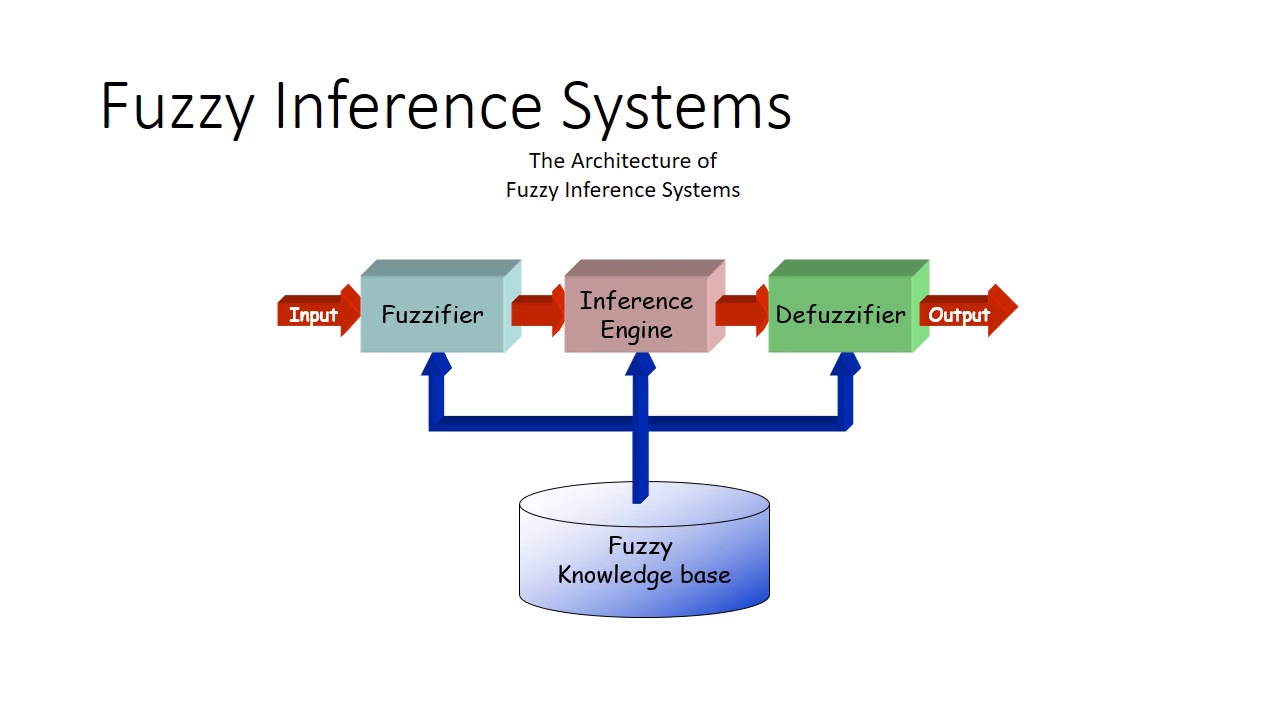
Unlike traditional approaches, fuzzy logic works with imprecise, uncertain data to solve a problem. At its core are membership functions and linguistic variables.
Fuzzy Sets and Degree of Membership: In traditional sets, an element either belongs to the set (membership degree 1) or does not (membership degree 0). In fuzzy logic, however, an element can belong to a set partially. For example, for the set of "tall people," a person who is 1.75 meters tall might have a membership degree of 0.6, while a person who is 1.90 meters tall might have a membership degree of 0.9. This means the boundaries of the set are not defined by sharp lines, and it adds flexibility to decision-making processes.
Linguistic Variables: Fuzzy logic can process qualifiers we use in everyday language, such as "very," "a little" and "fairly," numerically. These terms are associated with membership functions and are used to narrow or widen the scope of a value. For example, the speed of a "very fast" car will have a higher membership degree than that of a "fast" car.
Set Theory Operations: Fuzzy logic has also adapted the union and intersection operations of classical logic. In classical logic, intersection finds the elements that are in both sets; in fuzzy logic, the question is "how much of each element is in both sets?" and the minimum value is used. For union, the maximum value is used. This makes it possible to carry out consistent mathematical operations even with imprecise data.
Where Is Fuzzy Logic Used and Why Does It Matter?
Thanks to its flexible and practical approaches, fuzzy logic has found wide application in many fields today. It is especially preferred in systems where uncertainty and complexity are high.
Home and Consumer Electronics: Fuzzy logic is best known in this area. For example, modern washing machines automatically adjust the amount of detergent and the washing time according to the degree of dirtiness. Air conditioners and refrigerators work more efficiently by sensing temperature changes. Camera focusing systems and the control of vacuum cleaners are also provided by this logic.
Engineering and Automation: Fuzzy logic is frequently used in engineering applications such as robotic control systems, programming automobile engines, safety brake systems and traffic light control. For example, the operation of a metro line makes its stopping and acceleration decisions with fuzzy logic algorithms instead of sharp rules, providing a smoother and more comfortable ride.
Medicine and Signal Processing: It is used in medicine for patient diagnosis processes, in signal processing applications and in artificial intelligence systems to interpret uncertain data. Complex algorithms for handwriting, character and object recognition also benefit from this logic.
Fuzzy logic is important because it offers solutions similar to human reasoning and brings more efficient approaches to complex problems. It can work even with noisy or incomplete data, and because its structure resembles human logic, it is easy to build. This flexibility has allowed it to be used across a wide spectrum, from engineering to sociology.
What Are the Advantages and Disadvantages of Fuzzy Logic?
Like every system, fuzzy logic has certain advantages and disadvantages.
Advantages:
Flexibility: It can work effectively even with noisy or corrupted data.
Human-Like Reasoning: Because it closely resembles human reasoning, it offers efficient solutions to complex problems.
Simplicity: The logic used is simple and requires very little memory, which makes it possible to implement even on microcontrollers.
Mathematical Compatibility: It can be easily combined with mathematical expressions.
Disadvantages:
Dependence on Experts: Creating membership functions and the rule set depends on the experience of experts in the subject. Finding experts may not always be easy, or their knowledge may be insufficient.
Lack of a Systematic Approach: There is no systematic, single method for solving a given problem. The most suitable function or rule is found through trial and error.
Insufficient Information: Because the rules used depend heavily on human experience, the success of the system cannot be guaranteed without expert experience.
Fuzzy logic may struggle in situations where precise results are sought, but it has become an indispensable tool for solving uncertain and complex problems. This makes it one of the most flexible and powerful tools in the world of artificial intelligence.
AdminOpenAI’da Yeni Dönem: Yönetim Kadrosunda Büyük Değişim


En İyi Yapay Zeka İçerik Tespit Araçları (2026)