




Using Conventional Commits: 2026 Software Standards
Automatically translated
 Admin
In 2026, software development is less about writing code alone and more about how the code you write is interpreted by autonomous systems. In complex projects where hundreds of changes are made every day, using Conventional Commits has stopped being a preference and become a cornerstone of sustainable engineering architecture. Looking at a project's history and finding structured data instead of vague messages is a factor that directly affects both the speed of a team and the overall quality of the software.
In this environment, where codebases have grown enormous and distributed teams need a shared communication language, semantic messaging protocols play a critical role. Built on Git commit message standards, this structure reduces human error and allows AI-assisted development tools to analyze the project in depth. In short, keeping a clean commit history is the strongest mark you can leave on the future autonomous software ecosystem today.
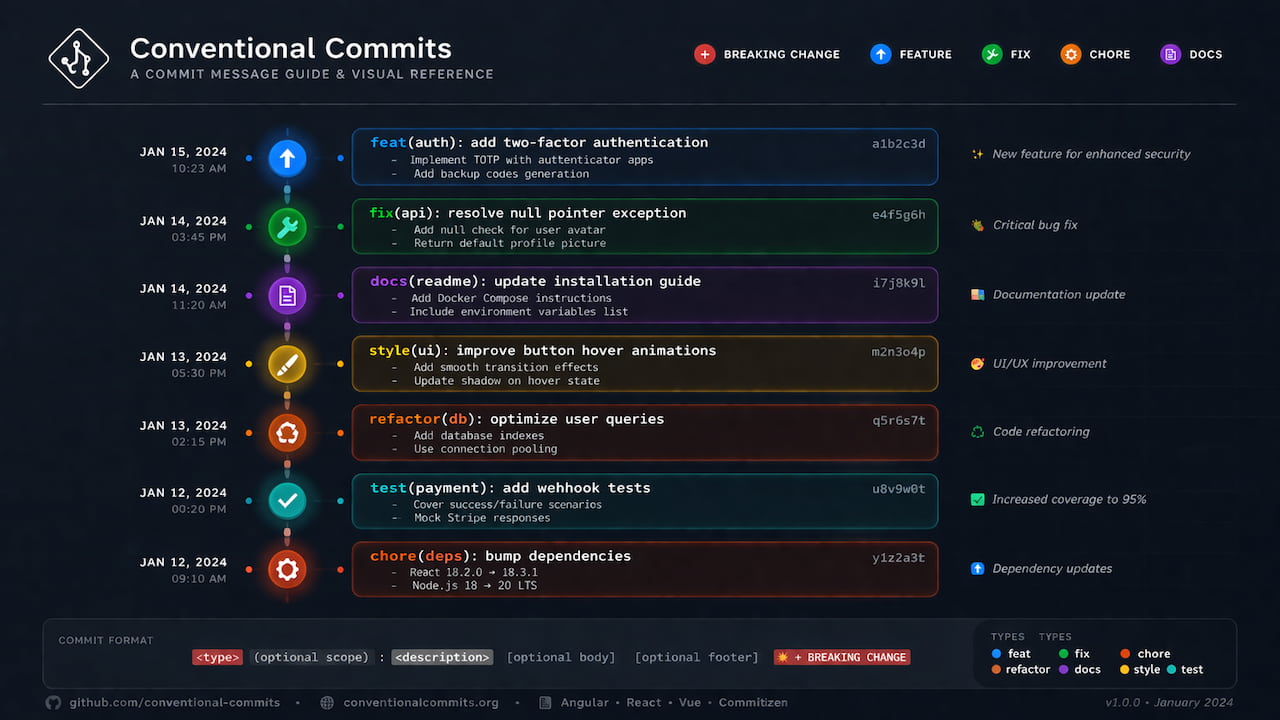
Using Conventional Commits is a 2026-generation software protocol that turns commit messages into structured data, enabling the autonomous generation of changelogs and documentation. This standard, with prefixes such as
feat,fix, andrefactor, makes the purpose of each commit meaningful for both people and machines.
What Are Conventional Commits and Why Should You Use Them?
Conventional Commits is a lightweight convention for adding human- and machine-readable meaning to commit messages. At its core, each message includes a type that describes the kind of impact the change has, an optional scope, and a short description. This simple but powerful structure offers a disciplined way to manage the complexity that emerges over a software project's lifecycle.
So why is this standard so important? First, it standardizes communication across teams. Instead of a developer writing "Bug fixed," writing fix(api): resolve connection timeout issue immediately gives other members of the project the context they need. In addition, this structure allows semantic versioning rules to be automated in line with 2026 standards. Which change requires a new version and which fix is a patch can be easily determined by the system.
How Should Git Commit Message Standards Be Structured in 2026?
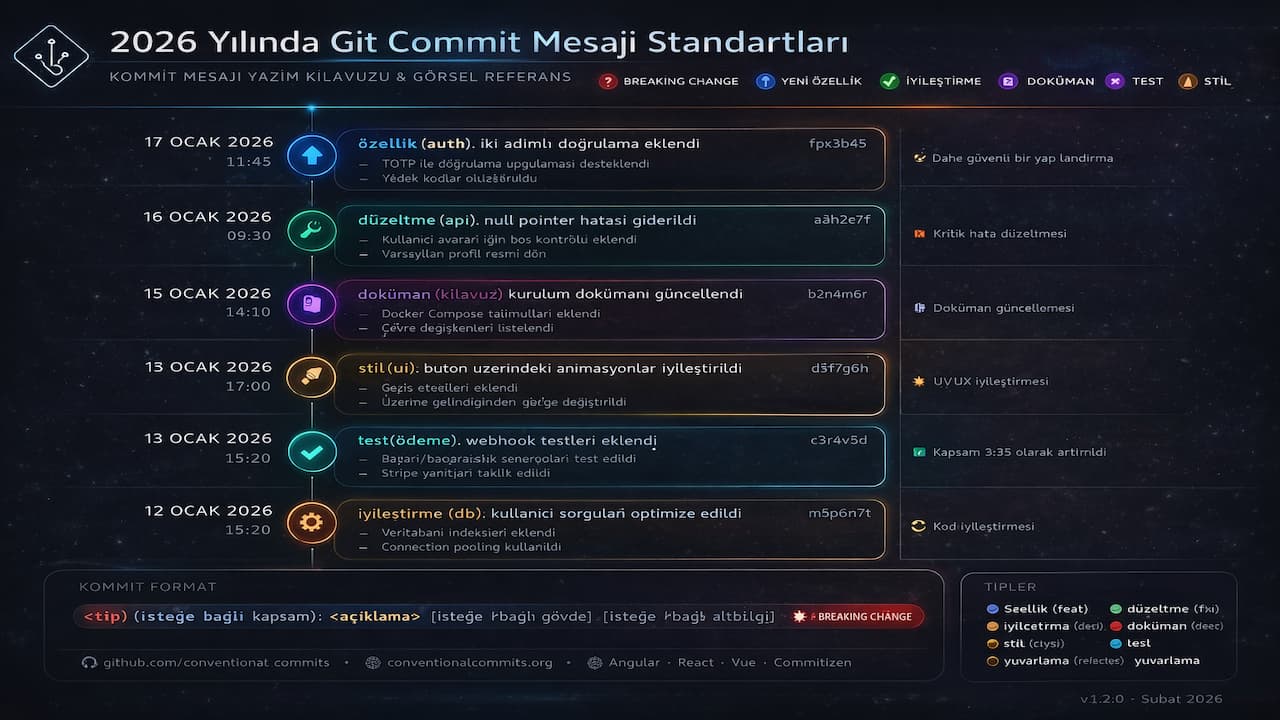
When designing git commit message standards for the 2026 software ecosystem, the focus should be not only on short-term solutions but also on long-term autonomous manageability. A standard commit message should follow this template:
<type>[scope]: <description>
The commonly used types are:
feat: Adding a new feature to the application.
fix: Resolving a bug.
docs: Changes made only to documentation.
style: Visual adjustments that do not affect how the code runs (spacing, punctuation, etc.).
refactor: Code changes that neither fix a bug nor add a new feature.
chore: Updates to the build process or auxiliary tools.
Choosing these types correctly turns your project's history from a simple log into an analyzable database.
Automated Release Notes (Changelog) and Its Relationship to Semantic Versioning
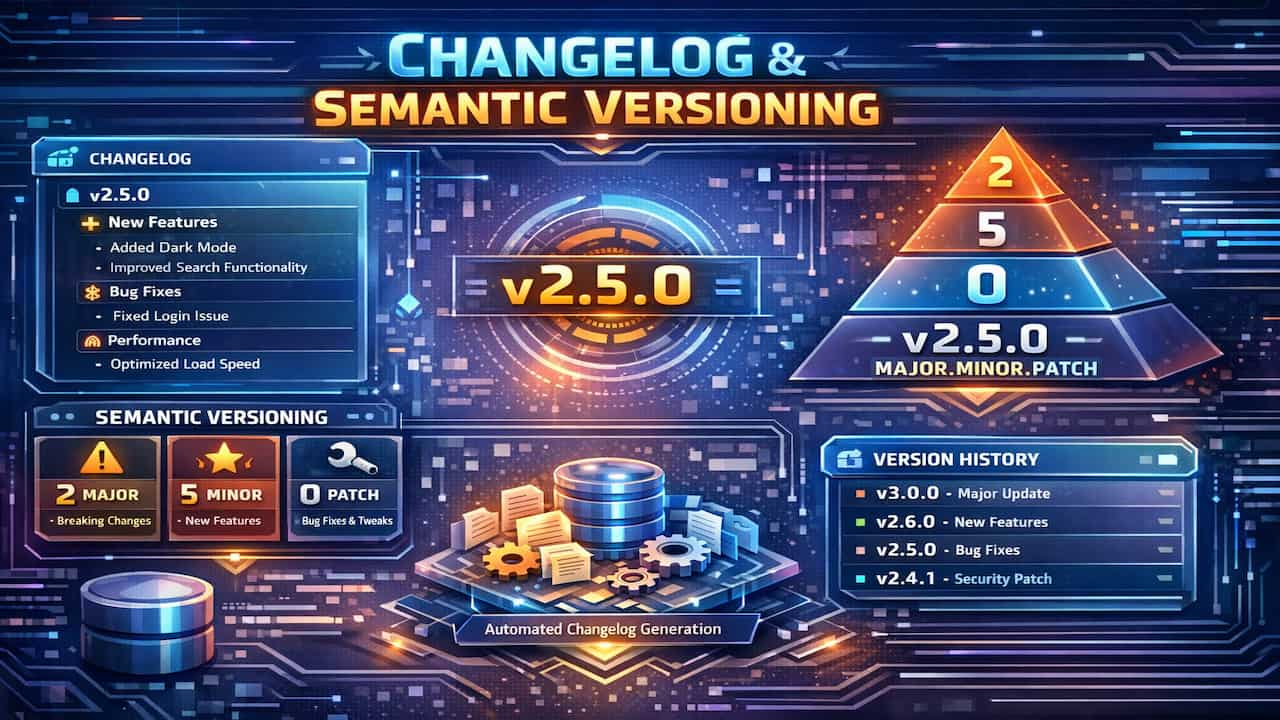
Using Conventional Commits transforms the creation of release notes from a manual chore into an automation that takes seconds. CI/CD (Continuous Integration / Continuous Delivery) tools used in 2026 can scan commit messages and present users with a list of the features added and bugs resolved.
This tight link with Semantic Versioning (SemVer) means that a software version number (for example, moving from 1.2.0 to 1.3.0) can be incremented automatically based entirely on the types of commits made. This eliminates versioning errors while providing end users and other stakeholders with transparent and reliable information about the project's pace of development.
Why Meaningful Commit Messages Matter for AI Coding Assistants
Git conventions for AI coding assistants are one of the most discussed topics of 2026. Today, AI agents can scan a project's history to find the sources of bugs or suggest new features. If commit messages are disorganized and meaningless, the "contextual intelligence" that AI provides is largely blinded.
Meaningful commit messages give AI models clear training context about how a project has evolved. For example, a structured message explaining why and how a bug was resolved allows AI to respond much faster and more accurately when a similar bug appears in the future. This means taking human and machine collaboration in software development to its highest level.
How Do You Manage Technical Debt in Software Development?
Although the answer to how to reduce technical debt is usually sought in the code itself, it actually lies in how processes are managed. Conventional Commits is a critical tool for technical debt management because it records the "why" behind a project's evolution. You can clearly see why a piece of code was refactored or which hotfix introduced a temporary solution.
This transparency creates a self-check mechanism that prevents technical debt from accumulating. It reduces the time spent on code reviews and speeds up onboarding for new developers. Retrospective traceability makes it easier to visualize where technical debt is accumulating and to address those areas in time.
Commit Type | 2026 Automation Equivalent | Industry ROI (Impact) |
feat: | New Feature List & Minor Bump | High (User Transparency) |
fix: | Patch Report & Patch Versioning | Critical (Sustainability) |
refactor: | Code Quality Analysis Data | Medium (Clean Code Standards) |
docs: | Autonomous Technical Guide Update | High (Time Savings) |
test: | Test Coverage Analysis | Medium (Reliability) |
Using Conventional Commits turns software development from an art into a measurable science. In 2026 software standards, teams with this discipline ship projects that scale much faster and minimize their margin of error. Thinking of every commit message as a data cell will both make life easier for your current teammates and help your future AI assistants understand your project better.
To make a difference in modern software development practices and prepare your processes for an autonomous future, you can place Conventional Commits standards at the center of your workflow.
AdminÜniversite Öğrencileri için 20 ChatGPT Promptu (2026)


Elektrikli Araçların Geleceği: 2026 Teknolojik Dönüşüm Rehberi


