20 ChatGPT Prompts for University Students (2026)
Automatically translated
The most useful ChatGPT prompts for university students are the ones that clearly state the context (course, topic, level), the format you want the output in, and the limits. In this article you will find 20 ready-made prompts for course summaries, exam preparation, presentations, thesis topics, data analysis and careers. Use ChatGPT as a helper that supports your learning, not as a tool that writes your assignments for you, and always check the information and sources it gives you.
Last updated: 14.10.2026
University life is busy, with coursework, exam stress and research projects all competing for your time. To ease that load a little, many students use AI tools such as ChatGPT. Today ChatGPT is more than a question-and-answer tool. When used with a good prompt, it works as a study assistant that explains topics, summarizes material, creates questions and plans your work. A well-written prompt helps you use your time better and understand the subject more deeply.

This article is a guide that compiles ChatGPT prompts for university students and explains why correct prompt use matters.
AI in Education and Its Effects
AI is now part of the education and teaching process. Students prefer it because it works quickly, can give feedback and evaluation, and can be personalized, which brings them considerable benefits. ChatGPT is one of the best-known AI chat tools able to do these things. By offering personalized experiences and contributing to the learning process, ChatGPT makes studying easier.
The effects of AI on education are not only positive. Using AI tools correctly is very important. Although tools like ChatGPT can help with assignments and projects, in some cases they stop being a convenience and instead reverse the learning process. They can weaken the process of thinking and generating ideas. Students may get used to ready-made thoughts and quick answers. Relying on ready answers and fast results can weaken critical thinking and creative production skills. AI systems also carry the risk of "hallucination" (producing false information) and bias. For this reason, information from AI always needs to be verified against reliable sources.
The Importance of ChatGPT in Education
Students use ChatGPT for many purposes. Beyond academic work, it is also used for personal and everyday matters, so you should think twice before typing personal data such as your ID number, address or health information into a chat.
Considering all these uses, ChatGPT offers university students a "personal assistant" experience that classic education rarely provides when used properly, and it speeds up the learning process.
Advantages Offered by ChatGPT
ChatGPT conversations can contribute to university students in many different areas:
It can summarize long texts from lecture notes into clear, simpler summaries. |
It can help with exam preparation by organizing topic reviews as questions and answers. |
It can help with research by developing ideas, drafting a plan and searching for sources; you should open and check every source it suggests yourself. |
It can create slide content, title suggestions or project plans. |
It can be used for foreign language practice, especially English. |
For career planning, it can produce draft texts for CVs, cover letters and internship applications. |
|
|
|
These functions contribute directly to university students' academic success and personal development.
Risks and Limitations of ChatGPT
Although it is a powerful tool, using the information ChatGPT provides without checking carries serious risks:
It can turn ready-made information into a habit. Students may get used to ready answers instead of thinking and analyzing. |
Constantly relying on AI can reduce the student's own ability to interpret. |
ChatGPT can sometimes present information that does not really exist or is wrong. This is called hallucination. |
Biased or incomplete perspectives in education may become widespread. |
Students using ChatGPT directly in assignments and projects may lead to plagiarism and academic integrity problems. |
What to Watch Out for When Using ChatGPT
Whether ChatGPT is a useful learning tool for university students depends on how they use it. Here are the points to keep in mind:
Source Checking: The information presented must always be compared with reliable academic sources.
Limited Use: ChatGPT should support the student, not think in their place.
Academic Integrity: In assignments and projects, it should be used as a guiding helper rather than for copying directly. Learn your instructor's or university's AI rules; if you used it, state that.
Proper Prompt Writing: To get the most effective answers from ChatGPT, use correct and detailed questions (prompts).

For this reason, ChatGPT should be seen less as a standalone source of information and more as a "smart assistant" that supports students' research and learning processes.
Academic Integrity: What the YÖK Ethics Guide Says
In May 2024, the Council of Higher Education (YÖK) published the Ethics Guide on the Use of Generative Artificial Intelligence in Scientific Research and Publication Activities of Higher Education Institutions. The guide does not ban generative AI, but it asks that its use be transparent and that responsibility remain with you. Key points when writing assignments, projects and theses:
AI cannot be an author. Because it cannot take responsibility for the work, it is not counted as an author; the study must be based on your own original ideas and findings.
Declare your use. It is recommended that you state which tool you used, at which stage and which version. Failing to declare it is considered an ethical issue.
Verify your sources. The guide warns that these tools can present made-up sources as if they were real. Open and read every source you cite yourself.
Do not delegate high-level work. Do not leave stages that require expertise, such as hypothesis development, discussion and interpretation, to AI.
Watch personal data. Do not upload personal data such as survey responses or participant information to AI tools.
The guide was prepared for research and publication activities; for assignments, the rules of your instructor and department are decisive. If you are writing a thesis, we cover which tools can help and their ethical limits in detail in our article Best AI Tools for Thesis Writers. For methods of using AI while studying, you can also read Studying with AI.
ChatGPT Prompts for University Students
Thanks to its natural language processing ability, ChatGPT can understand simple commands given in everyday conversational language and produce appropriate responses. That is why students often get useful results from ordinary sentences such as "summarize my lecture notes" or "explain this topic". However, for academic work, research projects and in-depth analysis, prompts written only in everyday language may not be enough. In these cases students need not just information but systematic, source-based and comprehensive content.
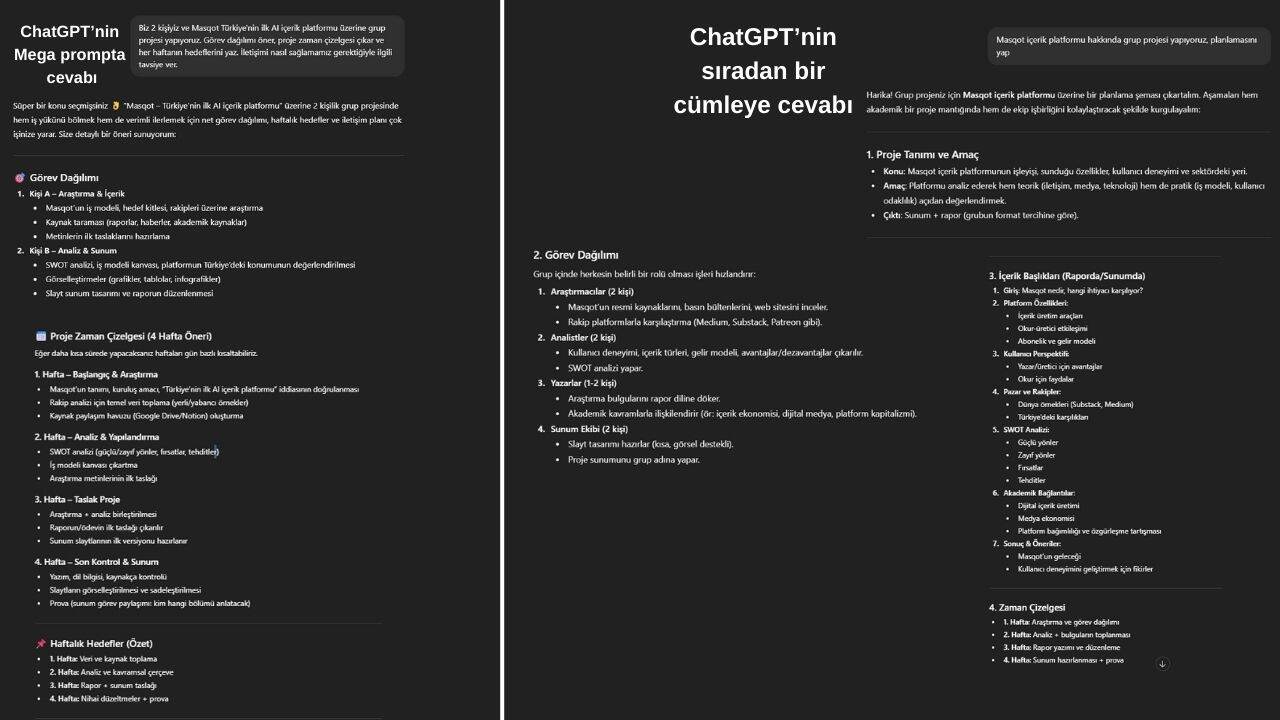
This is where mega prompts and meta prompts come in.
Mega prompts are long, detailed instructions that produce multi-faceted and comprehensive output from a single command. For example, a student is not only given an explanation of a topic; they also get a summary, examples, a comparison and exam questions.
Meta prompts, on the other hand, are higher-level instructions that do not produce content directly but define how ChatGPT should behave, acting as a kind of "prompt writing guide". In other words, to get the best result from ChatGPT, the student has ChatGPT write the prompt that will give the best result. This way students can learn to develop new prompts that suit their own needs.
For university students, this approach is the key to using AI not just to get ready answers but as an academic tool that makes learning easier. In this way ChatGPT becomes an assistant that supports students' skills rather than one that performs their thinking and research for them.
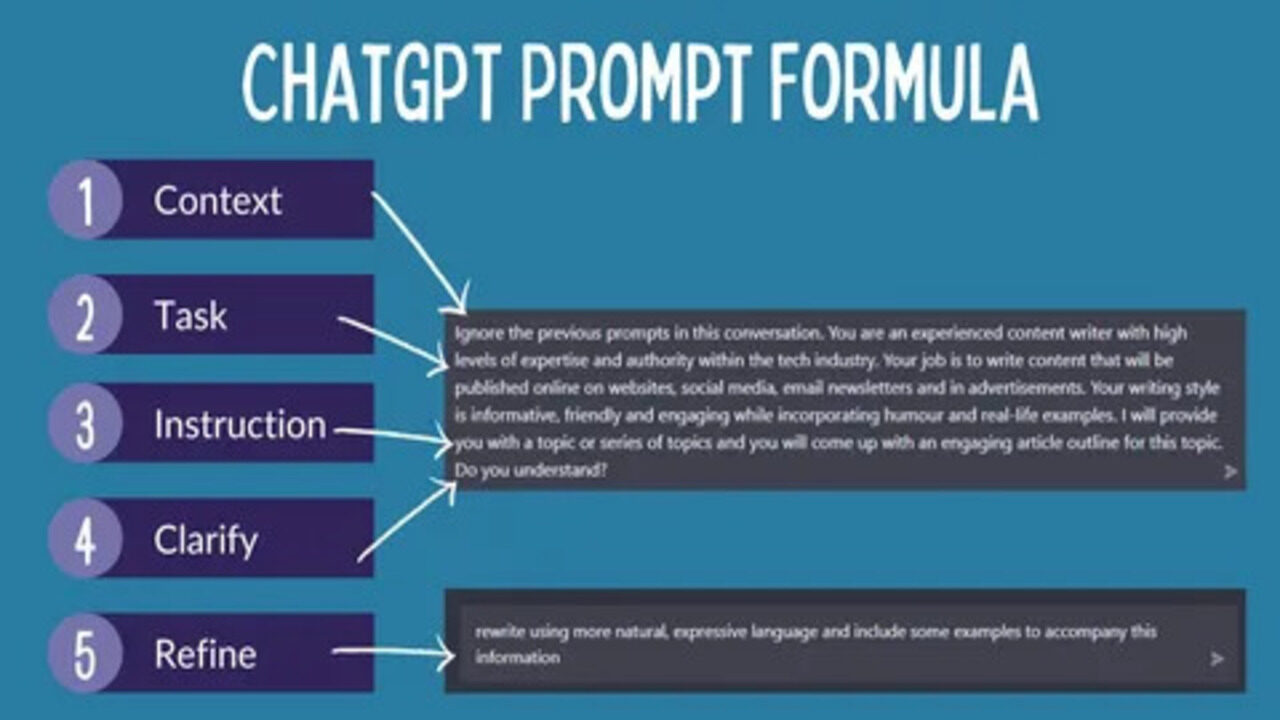
How to Write a Prompt in ChatGPT
1. For a course summary:
If you want ChatGPT to summarize a course topic, first give clear context (which course, which topic). Then specify the format you want (bullet points or a short paragraph). Next, tell it which points you want emphasized for exam preparation (formulas, definitions, examples). In short: write a prompt in the form Context + Format + Priorities.
2. For preparing a presentation:
In a prompt for a presentation, first state its duration (e.g. 10 minutes). Then state the topic clearly (e.g. the use of AI in education). Next, define the target audience (e.g. university students, lecturers). Finally, describe the format you expect (slide titles, sub-points, speaker notes). If you write in this order, you will get clear and practical slide content.
3. For career guidance:
When asking ChatGPT about career planning, first state your department and interests. Then write your future goals (e.g. academia or the private sector). Next, ask ChatGPT for: possible career paths, required skills, salary ranges, and pros and cons. A prompt written in this framework helps a student get clear career recommendations.
4. For a study schedule:
To have ChatGPT prepare a study schedule, first state your exam dates and number of courses. Then write how many hours a day you can study. Next, tell it which courses you are strong and weak in. Finally, define the format (a daily plan or a weekly table?). If you write a prompt with this structure, it will produce a personalized, realistic schedule.
For more advanced prompt techniques, you can read our article "Prompt Engineering Techniques for Open Problems".

20 ChatGPT Prompts for University Students
1. Lecture Note Summarizer:
I have a long text/lecture notes from the [course name] course. Your task is to summarize these notes in bullet points, plainly, clearly and in a form that is easy to memorize for exam preparation. Highlight the basic definitions, important formulas and critical points in particular. Remove unnecessary details but keep the examples. The summary you prepare should not exceed 2 pages.
2. Academic Article Researcher:
I am writing an assignment on [topic]. Using web search, find peer-reviewed academic articles published in the last 5 years and summarize them for me. For each article write: title, author, publication year, DOI or access link, the main findings and, if any, the method. Do not add to the list any source whose link you cannot show. Present the sources in APA format.
3. Study Schedule Planner:
I have [number of courses] courses and my exams start on [date]. Prepare a detailed study schedule for me according to my daily study hours. For each day, write how long I should study each course. Allocate extra time to the topics I struggle with. Add rest breaks.
4. Presentation Preparation Assistant:
I am preparing a 10-minute PowerPoint presentation on [topic]. Suggest titles for the slides, content bullet points and speaker notes. Also add visual suggestions (for example, which charts or images I could include).
5. Essay / Article Draft:
I am writing a 1000-word academic essay on the thesis statement '[thesis statement]'. Create a draft with an introduction, development and conclusion structure. In each section, write which arguments I should use and which examples I could give. When suggesting sources, only list sources that really exist and whose link you can provide. I will write the text myself; you only suggest the structure and arguments.
6. Difficult Topic Explainer:
I do not understand the topic [topic] in the [course name] course. Explain it to me in the simplest language. Use everyday analogies and explain it in a way that can be visualized. If necessary, solve example questions step by step.
7. Foreign Language Flashcard Creator:
I am learning [language]. Give me the 50 most commonly used words in the field of [topic: e.g. economics, engineering]. For each word write: its meaning, an example sentence and a pronunciation tip. Do this in table format so I can easily add them.
8. Coding Assignment Helper:
I am doing [assignment topic] in the [programming language] course. Explain to me step by step how to do it. First explain the logic, then write an example code. Add explanatory comments inside the code so that I learn, rather than copy and paste.
9. Discussion Question Creator:
We will hold a class discussion in the [course name] course. Topic: [topic]. Prepare for me 5 strong arguments, 5 counterarguments and 3 interesting discussion questions on this topic. Make the arguments logical and provable.
10. Thesis Topic Finder:
I will write a bachelor's thesis in the field of [field]. Suggest 5 current, original and feasible thesis topics. For each suggestion, briefly explain the research question, purpose, usable method and expected results.
11. Career Planning Assistant:
I am a [department name] student and I do not know what I will do after graduating. Suggest 5 different career paths for me. For each path write: the skills it requires, the average salary range, its pros and cons, and job opportunities in Turkey and worldwide.
12. Data Analysis Helper:
I have [data type]. I want to analyze it with [Excel/ SPSS/ Python]. Tell me which statistical test I should use and explain step by step how to do it. Also add sample output interpretations.
13. Group Project Coordinator:
We are [number of group members] people working on a group project on [project topic]. Suggest a division of tasks, create a project timeline and write the goals for each week. Give advice on how we should keep communication going.
14. Motivation Coach:
I am very stressed in the final week and cannot focus. Suggest short but effective motivation techniques, study strategies and stress reduction methods. Write them as a daily plan.
15. Literature Review Assistant:
I am doing a literature review on [topic]. First teach me the 3 most basic concepts in this field, then summarize the most important developments of the last 5 years. Provide sources in MLA format, but only those whose link or DOI you can show.
16. Experiment Designer:
I need to design a laboratory experiment on [topic]. Write for me the purpose of the experiment, the hypothesis, a list of materials, a step-by-step procedure and the expected results.
17. Presentation Speech Rehearsal:
I have a 5-minute presentation on [topic]. Write me a natural, fluent speech text. Use a warm but academic language, as if I were speaking in class. Make sure the timing does not exceed 5 minutes.
18. Formula Memorization Helper:
I cannot memorize the [formula name] formula from the [course name] course. Make up an easy acronym, a visual analogy or a short story to help me memorize this formula.
19. CV & LinkedIn Optimization:
My CV reads as follows: [CV text; paste it after removing personal information such as phone number, address and national ID number]. Give me suggestions to make this CV professional and modern. Also write a standout About section for my LinkedIn profile.
20. Exam Question Creator:
I am studying for the [course name] course. Prepare 10 sample questions that could appear in the exam on this topic. Also give the answer to each question. Arrange the questions from easy to hard.
Summary of the 20 Prompts
Prompt | What it is for | Watch out for |
|---|---|---|
1. Lecture Note Summarizer | Turns long notes into an exam-focused summary | Compare the summary with your own notes |
2. Academic Article Researcher | Finds and summarizes articles on the topic | Open and check every source |
3. Study Schedule Planner | Creates a plan based on exam dates | Give realistic study hours |
4. Presentation Preparation Assistant | Suggests slide titles and speaker notes | State the source of the visuals |
5. Essay / Article Draft | Creates an introduction-development-conclusion plan | Write the text yourself |
6. Difficult Topic Explainer | Explains the topic in simple language with examples | Verify with the textbook |
7. Flashcard Creator | Provides field vocabulary in table form | Check pronunciation in a dictionary |
8. Coding Assignment Helper | Gives the logic and example code with comments | Run the code and understand it; do not submit it as is |
9. Discussion Question Creator | Creates lists of arguments and counterarguments | Verify the evidence from sources |
10. Thesis Topic Finder | Suggests research questions and methods | Talk to your advisor |
11. Career Planning Assistant | Compares career paths | Check salary information from a current source |
12. Data Analysis Helper | Explains the appropriate statistical test and steps | Uploading files that contain personal data |
13. Group Project Coordinator | Suggests task distribution and a timeline | Decide together with the group |
14. Motivation Coach | Suggests a daily plan for stress and focus | If you are in serious distress, consult a specialist |
15. Literature Review Assistant | Summarizes basic concepts and developments | Verify the source list one by one |
16. Experiment Designer | Creates a hypothesis, materials and procedure | Follow laboratory safety rules |
17. Presentation Speech Rehearsal | Writes a speech text that fits the time | Rehearse it in your own words |
18. Formula Memorization Helper | Produces acronyms and analogies | Check the formula is correct |
19. CV and LinkedIn Optimization | Improves the CV and profile text | Paste after removing personal information |
20. Exam Question Creator | Prepares practice questions from easy to hard | Solve the answers yourself too |
To access more ChatGPT prompts for university students, you can visit ChatGPT's official student use cases page.
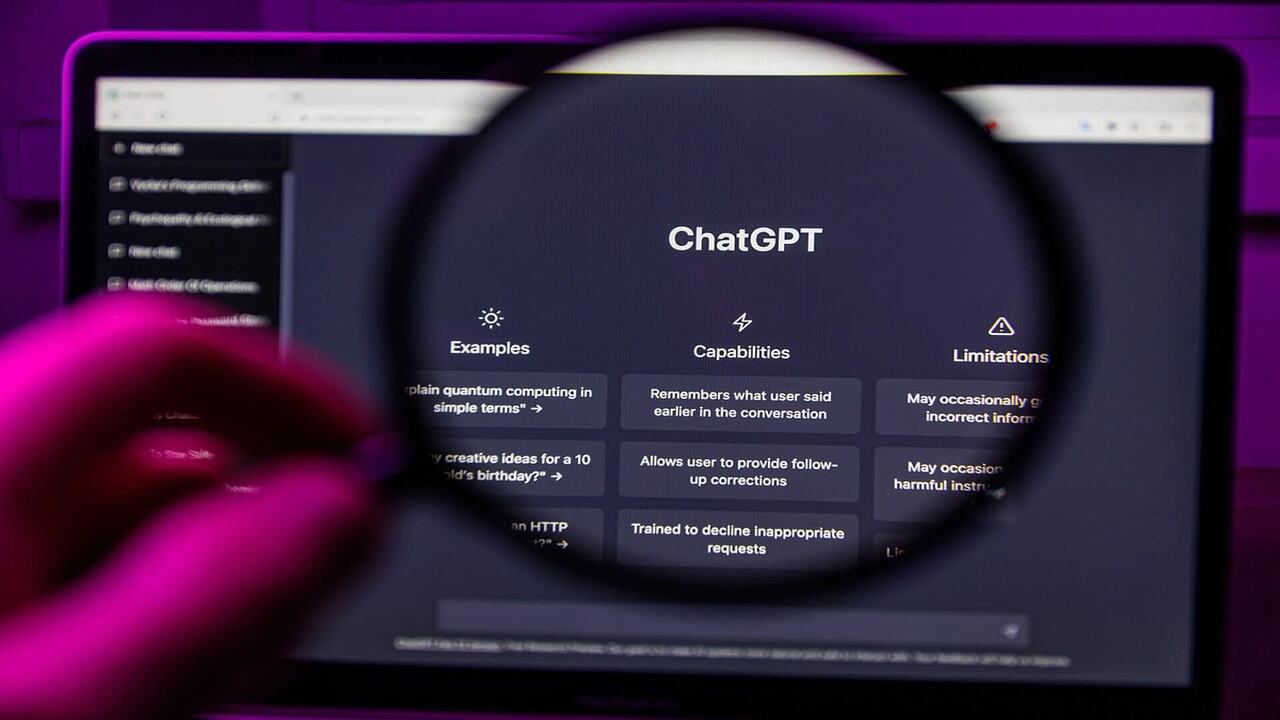
AI plays a very large role in education. However, ChatGPT is not a standalone solution; when used correctly, it is an aid that supports students' thinking, learning and problem-solving skills.
With the right prompts, you can use AI not only to get quick answers but also for in-depth learning, critical thinking and personal development. If you want to meet technology and AI enthusiasts outside campus, check out Masqot communities and events; you can find internship and job listings on the listings page.
Frequently Asked Questions
How do I write the best ChatGPT prompt as a student?
A good prompt gives context, format and priority together: which course and topic, what kind of output (bullet points, table, question and answer) and what to focus on. A pattern like "Explain the ... topic from the ... course to me, in bullet points with an example, for an exam" is enough for most tasks.
Is doing homework with ChatGPT considered cheating?
Having ChatGPT write the text and submitting it as your own work goes against academic integrity and may count as plagiarism. Using it to understand a topic, make a plan or review a draft is generally accepted; still, learn your instructor's rules and state it if you used it.
Can I trust the sources ChatGPT gives me?
No, you should not trust them without checking. Chat models can generate articles that do not exist or incorrect citations. Verify every source with Google Scholar, a library database or a DOI link.
What are YÖK's AI rules?
YÖK's ethics guide dated May 2024 does not ban AI; it asks that AI not be listed as an author, that its use be declared, that sources be verified and that responsibility remain with the researcher.
Should I enter my personal information into ChatGPT?
Do not, unless it is necessary. When sharing a CV or document, remove information such as phone number, address and ID number; in the settings you can choose whether your chats are used for model training.
En İyi Yapay Zeka İçerik Tespit Araçları (2026)


Conventional Commits Kullanımı: 2026 Yazılım Standartları