



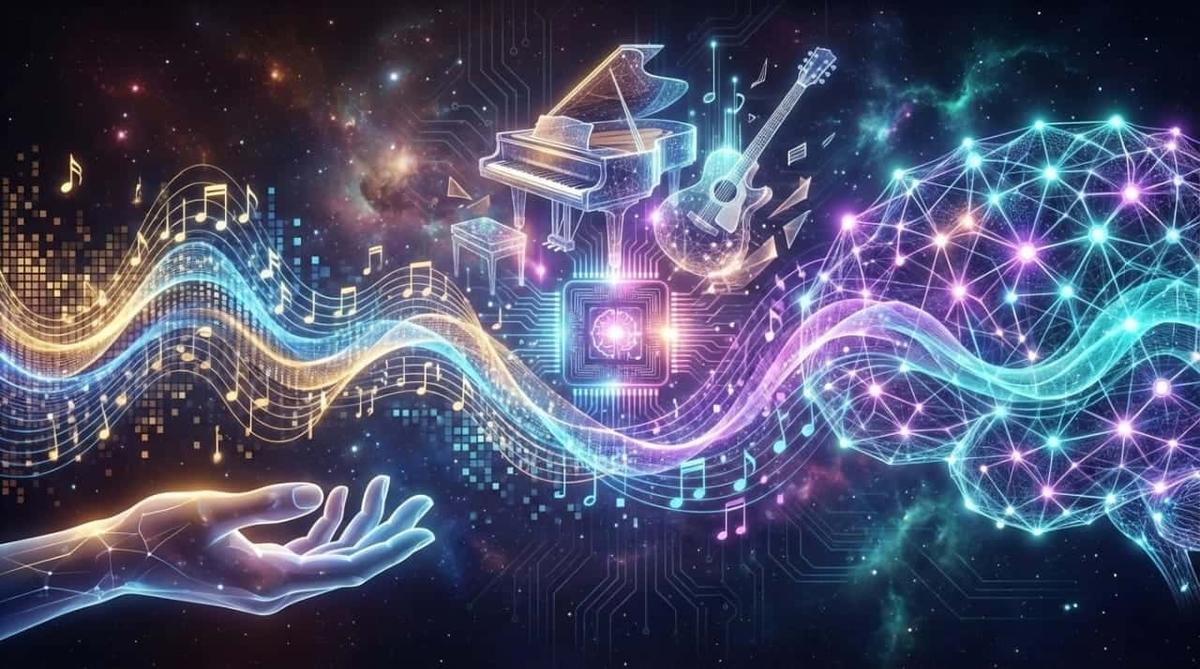
The New Architect of Melodies: What Is Google Lyria AI?
Automatically translated
 Writer
Music is a form of expression that flows from the deepest corners of the human soul. In this age of rapid technological change, however, notes are no longer shaped only by our fingertips but also between pixels and algorithms. Google DeepMind Lyria, Google's latest move in the world of artificial intelligence, steps in at exactly this point and takes the idea of "making music with AI" to a new level.
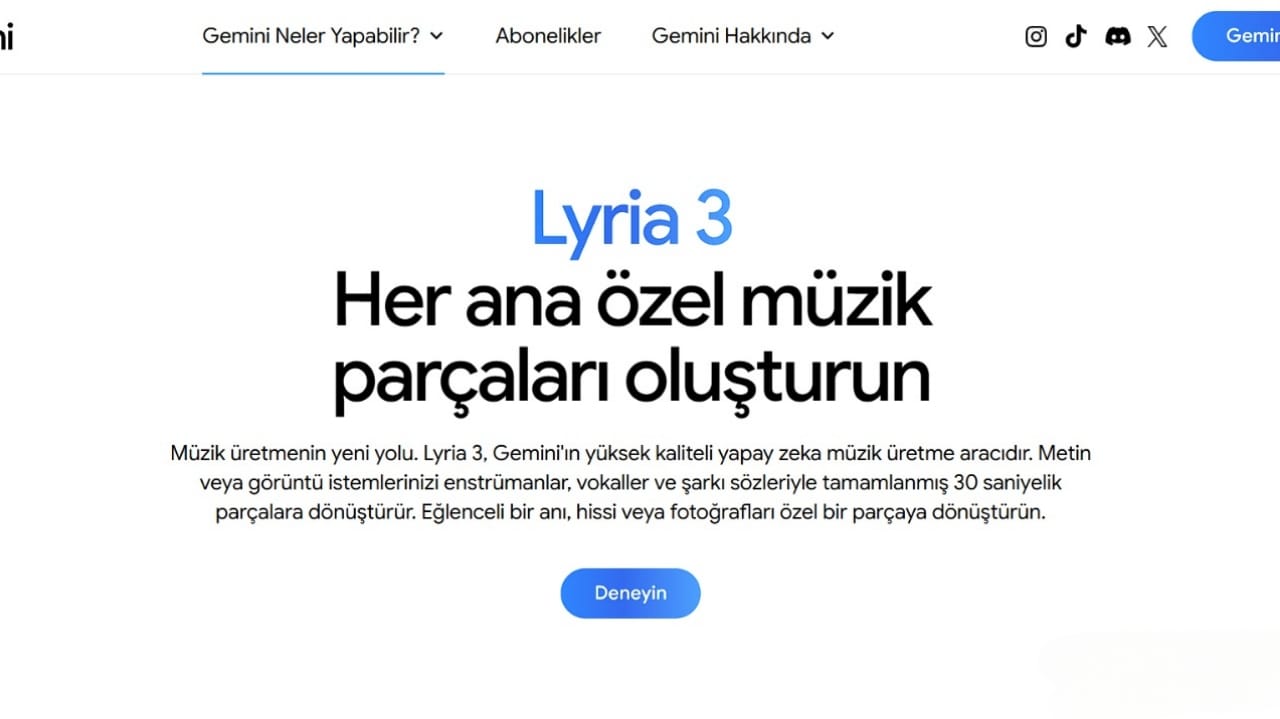
How Does Google DeepMind Lyria Work?
The Lyria model combines natural language processing and sound generation technologies. It analyzes the command you give;
- Genre (pop, lo-fi, classical, electronic, etc.)
- Tempo (slow, energetic, dramatic)
- Instrument choice (piano, guitar, synth, etc.)
- Emotional tone (melancholic, hopeful, epic)
and creates an original musical composition by setting parameters like these.
3Lyria processes sound not as singular, disconnected units like pixels, but as waveforms that are the rhythmic and harmonic parts of a whole. Every frequency, every vibration, and every transition is mathematically modeled to serve the overall atmosphere of the composition. As a result, the music produced has a fluid, coherent structure that carries emotion, rather than being merely technically correct. While layering sound tracks, the model also takes depth, spatial perception, and dynamic transitions into account. This way, the generated piece moves beyond a mechanical sequence of sounds and becomes a complete listening experience with a beginning, a rise, and a resolution.
1. Layered Data Processing
Because Lyria is part of the Gemini family, it builds a strong link between text, images, and sound. When you write a prompt, the system first converts this text into musical concepts (tempo, tone, instrument hierarchy). It then starts arranging notes by applying the "musical grammar" rules it learned from a massive dataset.
2. Transformer Models
Music is a sequence over time. Lyria uses an advanced Transformer architecture so that it does not break the relationship between the rhythm at the start of a song and the chorus at its end. This way, it maintains structural consistency between a 30-second excerpt and a 3-minute piece. In other words, the rhythmic structure stays consistent throughout the song and follows a steady flow.
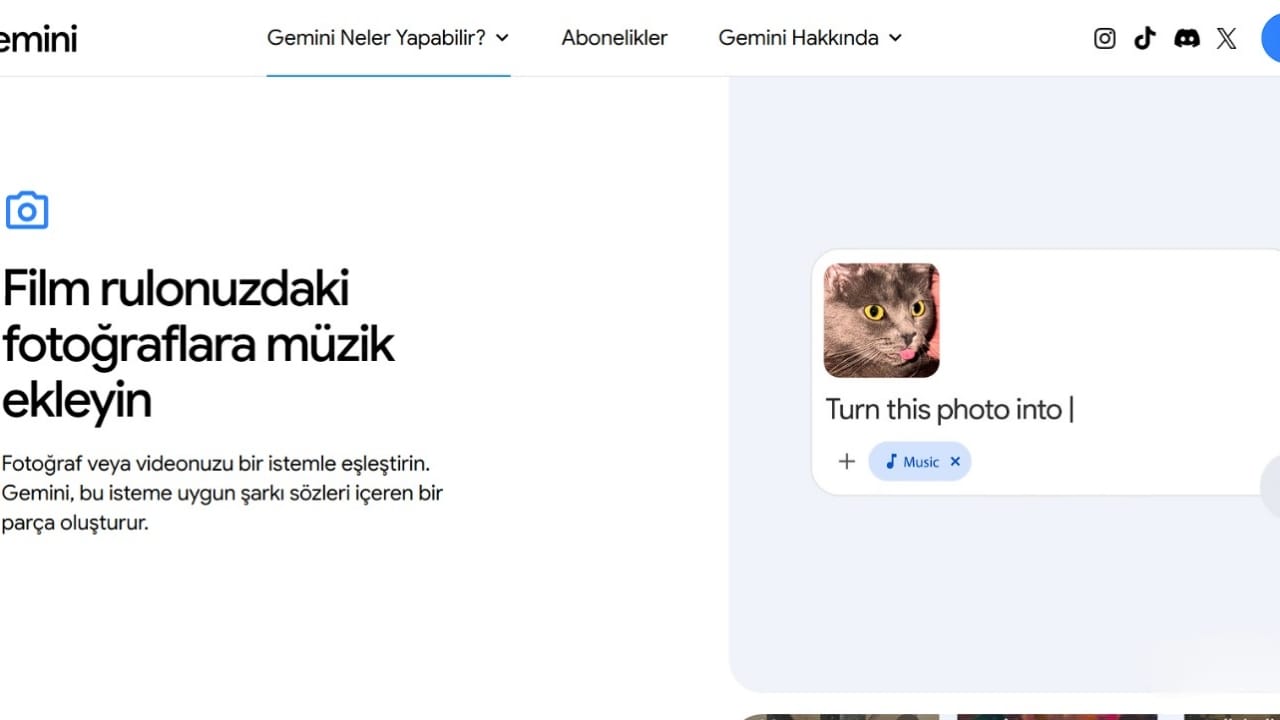
3. SynthID: Digital Signature and Security
One of the most groundbreaking aspects of Lyria is the SynthID technology that operates during generation. While creating the sound, the AI embeds a "watermark" within the sound waves that the human ear can never detect but software can recognize. This means:
- Copyright Protection: It can be technically verified that the audio was generated by AI.
- Tampering Resistance: Even if the sound is edited or its speed is changed, this digital signature does not disappear.
4. Vocal and Style Transfer
Lyria does not only play instruments; it can also take the style of an existing voice and dress another melody in it. For example, it can turn a simple tune you hum into an epic cinematic piece, as if it were sung by a professional choir. This is the peak in music of a deep learning technique called "Style Transfer."
| Feature | Benefit |
|---|---|
| SynthID | Provides copyright protection with an inaudible watermark. |
| Style Transfer | Turns humming into a symphonic work. |
| Transformer Architecture | Provides structural consistency and rhythm in long compositions. |
| Natural Language Processing | Offers professional music production with words alone. |
Lyria Model Features
1. Natural Language Understanding
Thanks to the Gemini infrastructure, it can grasp context and intent. This allows it to produce more coherent music that is closer to the style you want.
2. Genre and Style Flexibility
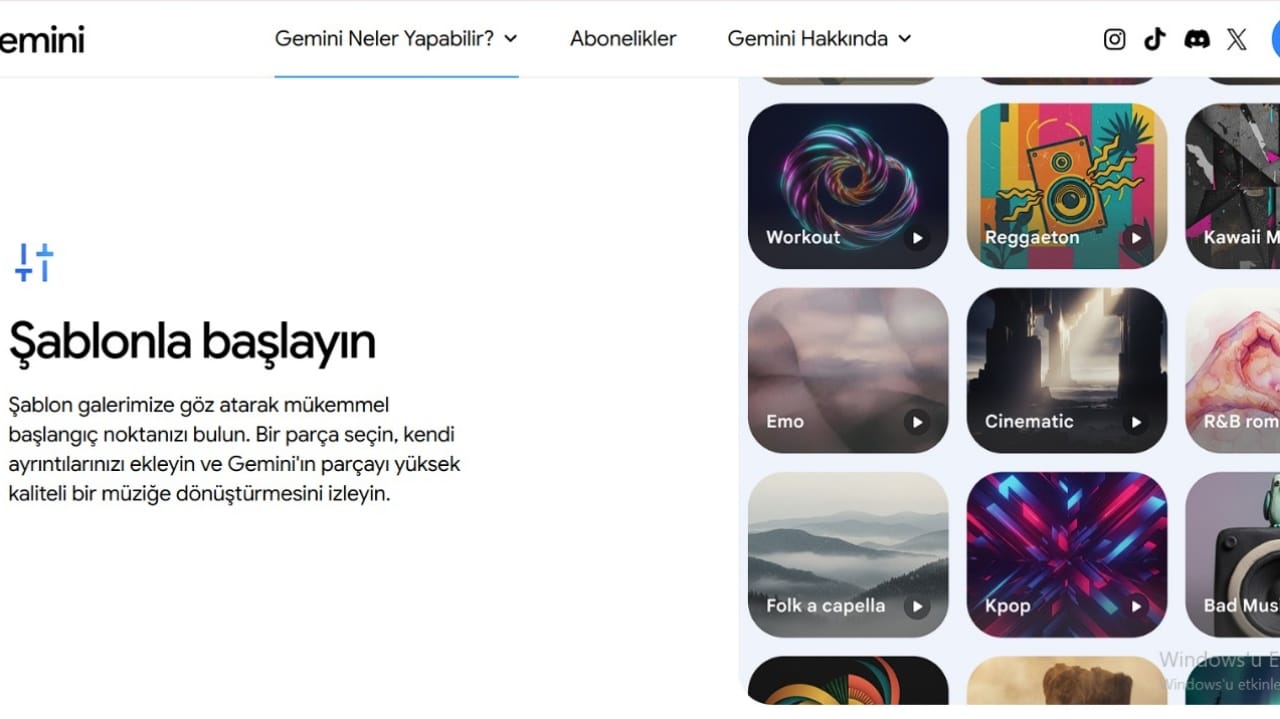
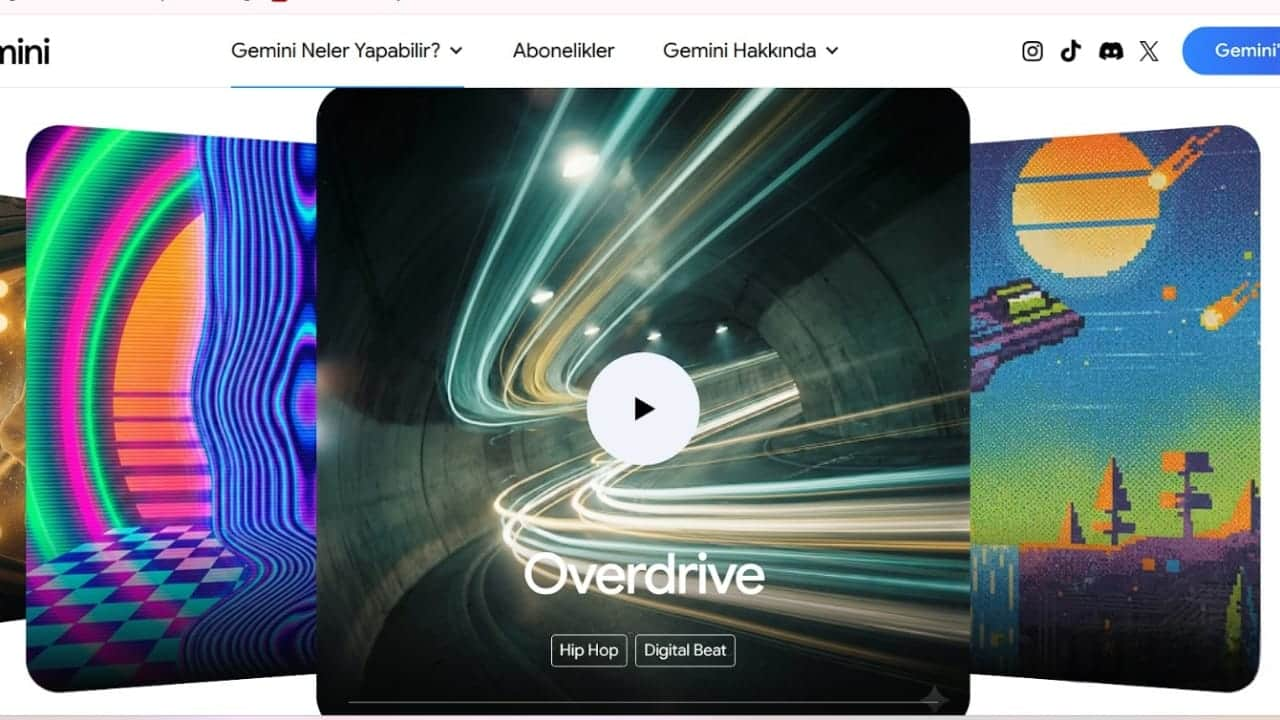
It can produce music across a wide range, from electronic music to cinematic orchestral pieces. For content creators, this variety is a major advantage.
3. Fast and Scalable Production
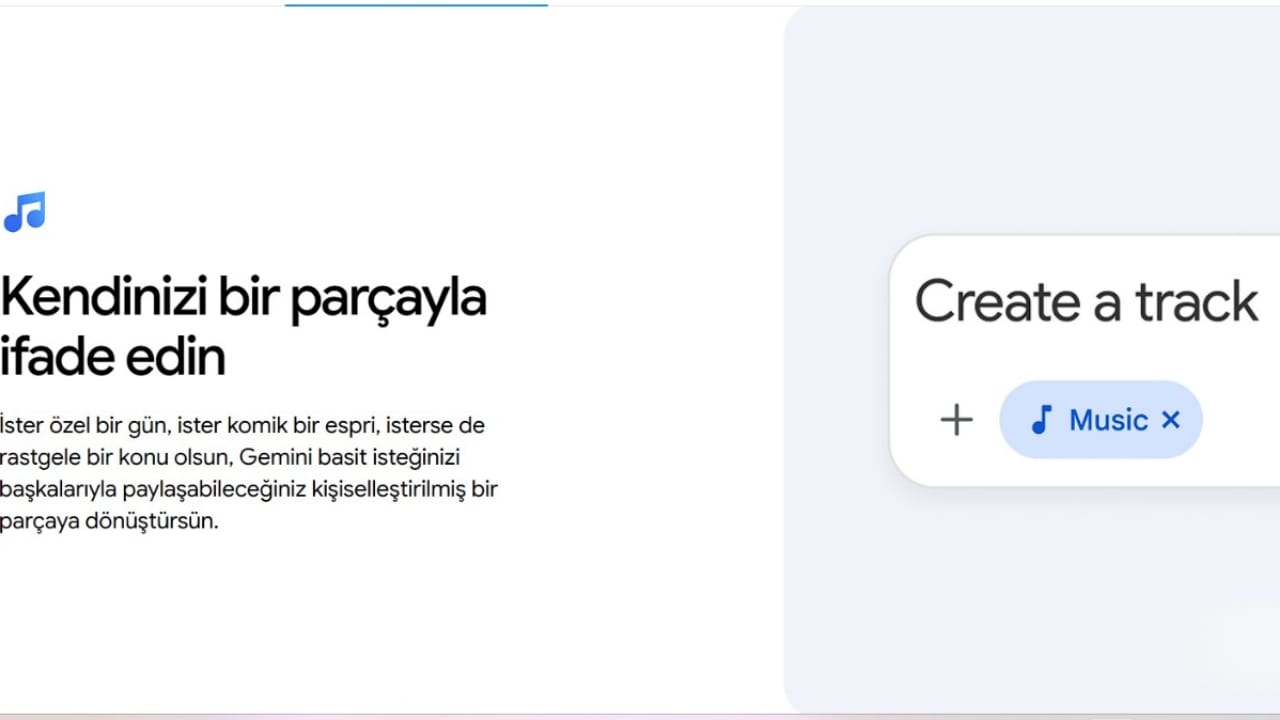
For video creators, game developers, and social media content creators, it offers the ability to produce original background music within minutes.
4. API Integration
Music generation features can be integrated for developers through the Gemini API. This creates an opportunity to add AI-powered music to applications and digital platforms.
 API Entegrasyonu
Making Music with AI: The Democratization of Creativity
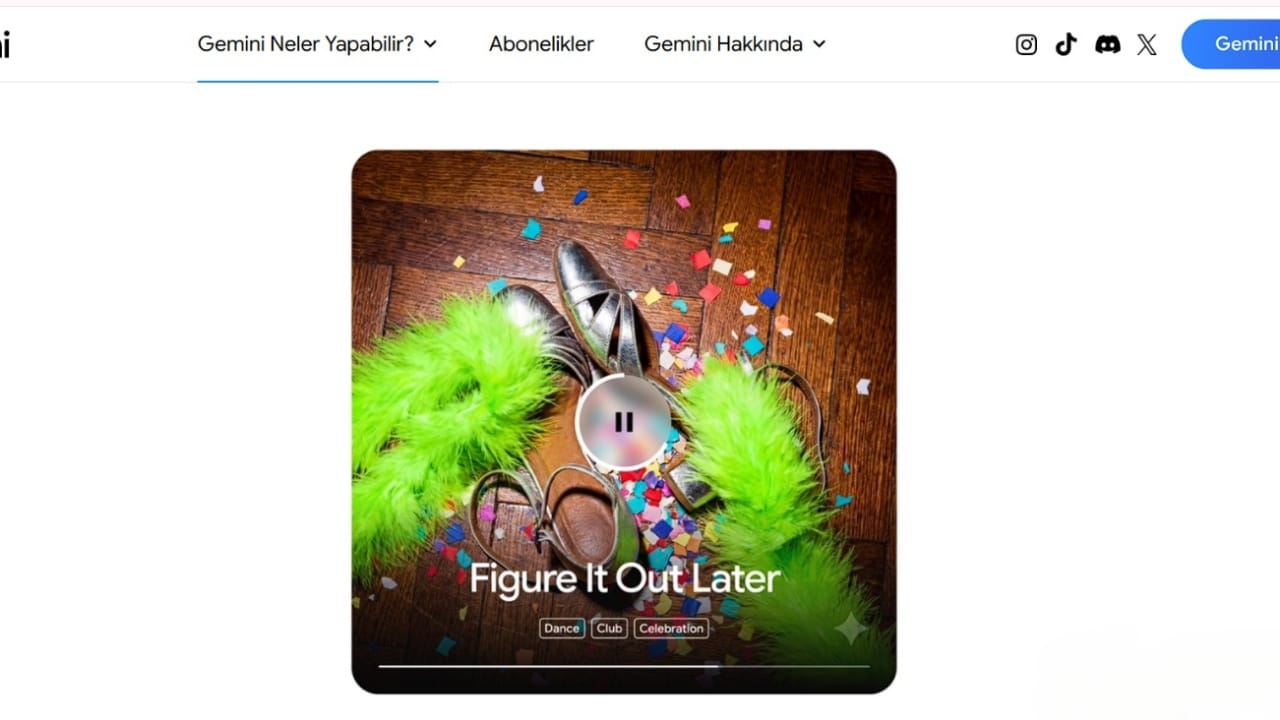
Traditional music production requires expertise in technical fields such as harmony, rhythm, instrumentation, and recording technology. In addition, studio equipment, software licenses, and time costs limit the production process to a certain level of expertise and capital. AI-powered music production systems, on the other hand, make the process more accessible by significantly reducing these barriers. Even a user with no knowledge of musical notation can obtain original music output by describing a specific atmosphere, genre, or emotional tone through text commands.
This shift is redefining the knowledge-based barriers in music production. The production process is built more on conceptual direction and aesthetic choice than on technical proficiency. This way, the user can take part in the creative decision-making process without directly engaging in audio engineering. Here, AI is positioned less as a generative tool and more as an assistant that speeds up the creative process and offers alternative variations.
This transformation provides operational efficiency especially for:
• Social media content creators
• Game developers
• Film and advertising professionals
• Podcast hosts
It also reduces the risk of copyright claims through original music production, speeding up content development and lowering costs. It further makes it possible for small teams and independent creators to produce audio content with high production quality.
AI-powered music production does more than offer a technical convenience; it also contributes to broader participation in creative production. In this context, the process can be seen as a sign that cultural production is evolving into a more inclusive and accessible structure.
Google Lyria AI: Artist or Assistant?
Many people ask, "Will AI replace musicians?" But Lyria is actually designed as an inspiration partner that triggers creativity. The ability to turn complex compositions into drafts within seconds is completely changing the workflow of producers and content creators. Google DeepMind Lyria is emerging as the shortest route to producing royalty-free and entirely original content for YouTube and other platform creators.
Unlike traditional music software, Lyria can bring a composer's vision to life with text commands alone. When you give a command such as "electronic music suited to a starry night," Lyria does not just produce sound; it works to create a sense of space, rhythmic structure, and emotional atmosphere. In this way, it differs from traditional production tools, because what matters here is not note knowledge but meaning.
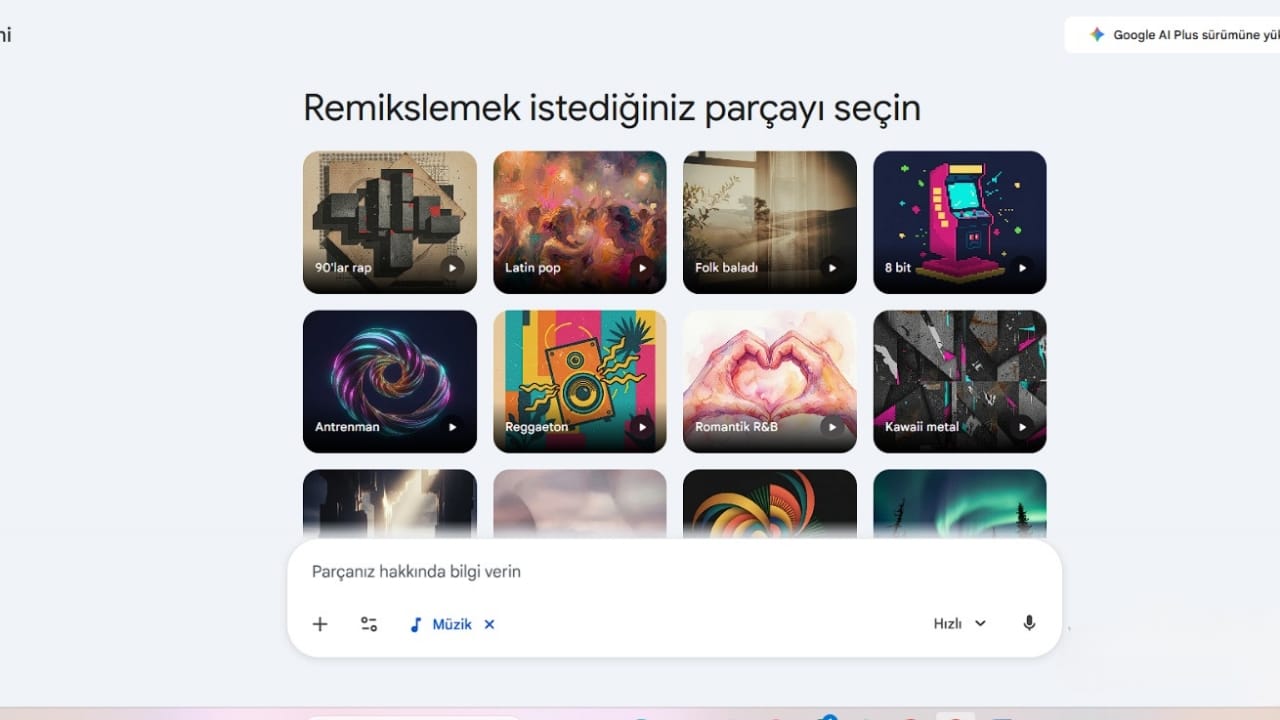
Lyria shortens the distance between art and algorithm. Where a composer waits for inspiration, the model builds a draft world within seconds. However, this is a collaboration rather than a competition. When human creativity and AI capacity come together, a hybrid art form emerges.
Yet this collaborative narrative also raises aesthetic and ethical questions. Is the value of a piece of music determined only by harmonic coherence, or by the inner experience distilled from the composer's lived experiences? AI can create convincing emotional atmospheres through patterns it learned from vast datasets; but this atmosphere is not a reflection of an experienced pain or a personal memory. At this point, the debate shifts from production capacity to questions of originality and intent. If a composition is the statistical outcome of the most impressive combinations, how will the "originality" of that work be defined? Therefore, while Lyria, developed by Google DeepMind, is positioned as a powerful assistant that accelerates the creative process, it should be regarded as a technology that reopens the ontological boundaries of art, rather than one that replaces the artist.
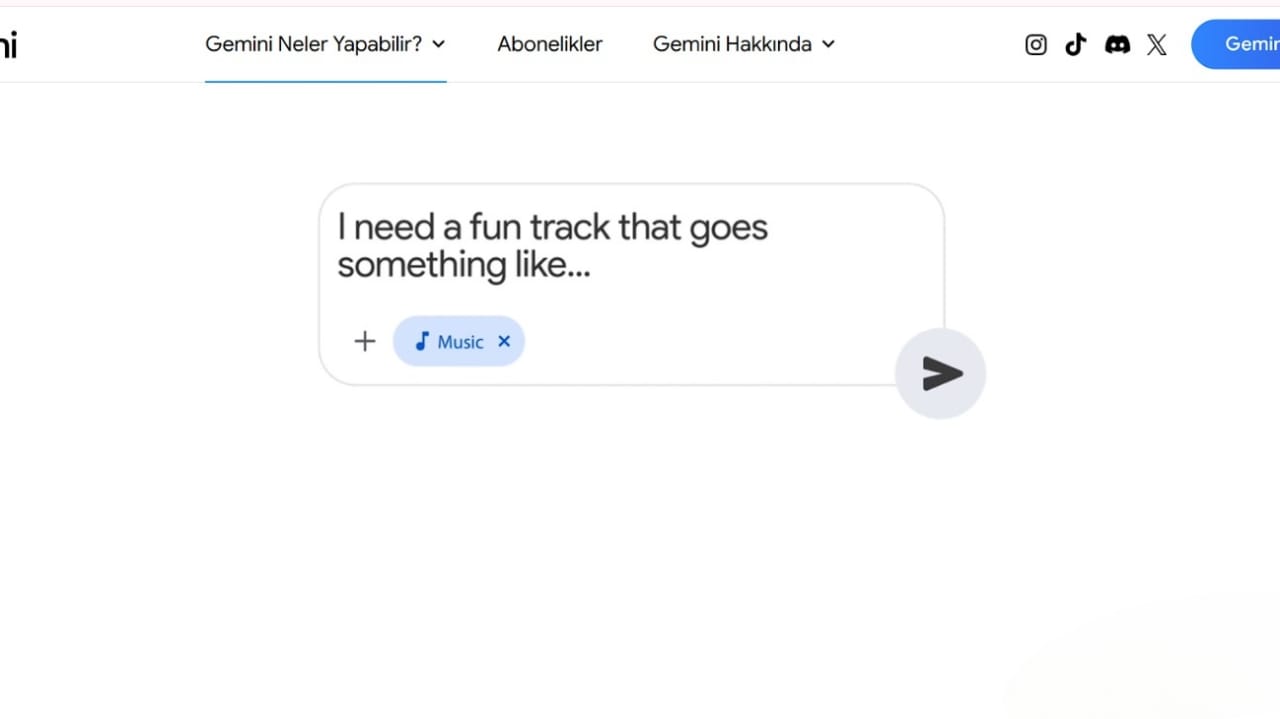
In the future, apps that generate music instantly based on your personal mood, dynamically changing AI compositions in games, and personalized film scores may become commonplace.
Lyria AI does not silence the melody within a person; it opens a new way to express it. An emotion wandering on the edge of words filters through a few lines of description and turns into sound. Here, technology is not a cold machine but the invisible partner of creation. It takes music beyond being a performed art and turns it into an extension of thought, imagination, and language. Perhaps compositions now begin with a sentence rather than a note; a feeling from the heart passes through the filter of the algorithm and blends back into life. And in this new age, we stand right at the threshold where inspiration echoes both in humans and in machines.
WriterAI Slop Nedir? Dijital Reklamcılık için Tehdit mi?


Claude Code Agent Teams Kurulumu ve Kullanım Rehberi


