



NVIDIA Alpamayo: AI Breakthrough in Self-Driving Cars
Automatically translated
 Writer
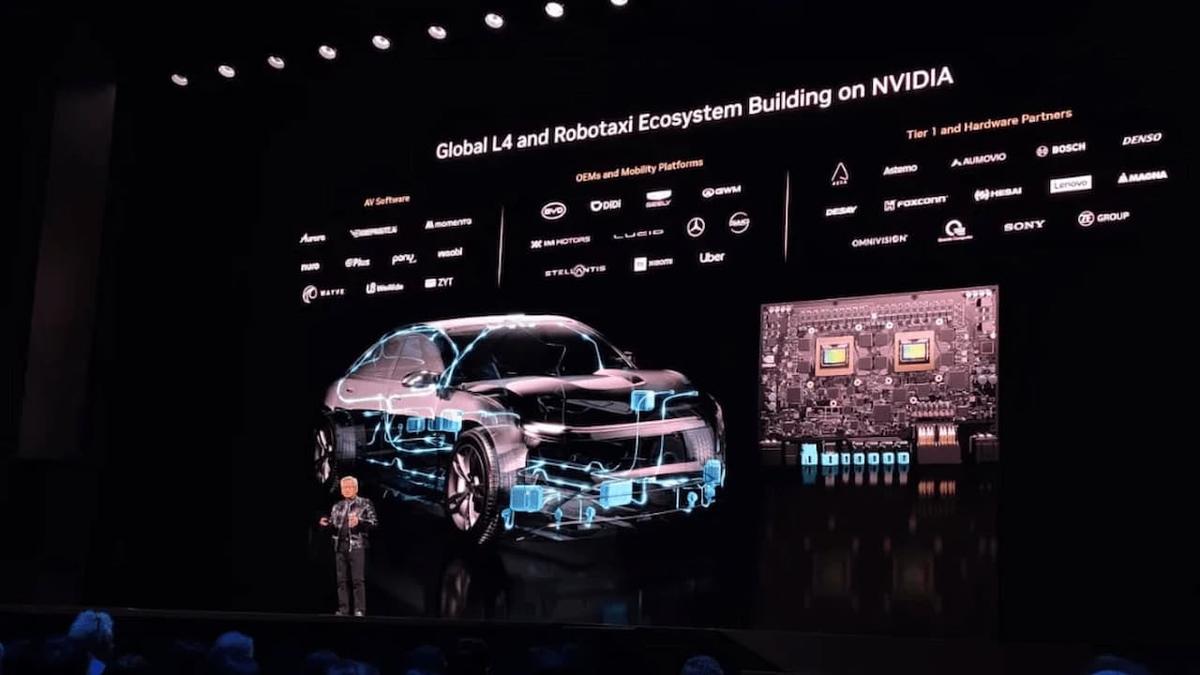
The automotive industry is on the verge of a digital transformation as well as a mechanical one. At the center of this change is the new generation model family that NVIDIA has developed for autonomous driving technologies. NVIDIA Alpamayo has launched a period described as an AI breakthrough in autonomous vehicles, enabling vehicles not only to perceive their surroundings but also to reason through complex traffic situations. This technology aims to take driving safety and efficiency to a level that was previously out of reach.
What Is NVIDIA Alpamayo?

NVIDIA Alpamayo is an advanced large language model and visual perception combined model set developed by NVIDIA for its autonomous driving ecosystem. While traditional autonomous driving systems are usually based on predefined rules, the Alpamayo series works on the principles of physical AI. This concept means that software learns not only from datasets but also by interacting with the physical laws of the real world.
This is exactly where the NVIDIA Alpamayo-R1 model comes to the fore. The R1 series goes beyond recognizing objects around the vehicle and offers a logical framework that can answer questions of why and how. This allows the vehicle not just to see a stationary object, but to distinguish whether that object is a child or a traffic cone, and to plan its next move in line with the laws of physics.
Driving Logic with Chain-of-Thought
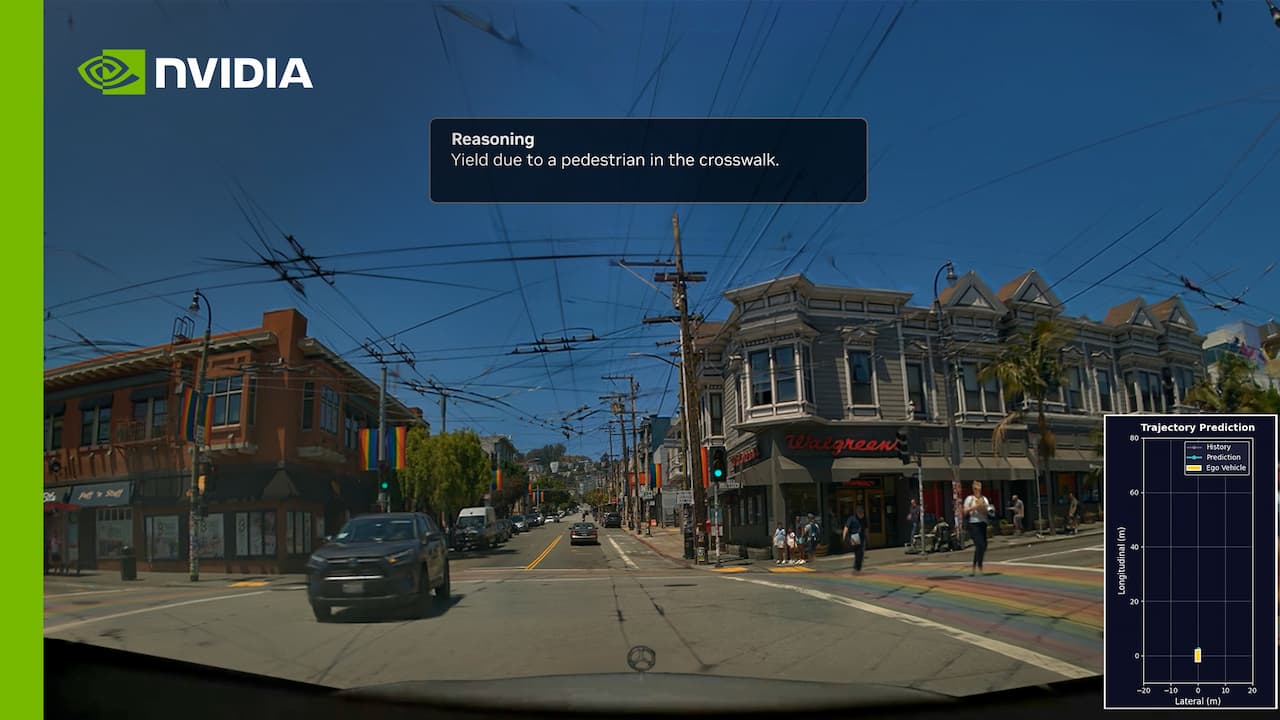
One of the biggest challenges for autonomous vehicles is reaching the intuitive decision-making ability that human drivers have. To solve this problem, NVIDIA adapted a technique called chain-of-thought to the Alpamayo models. This technique makes the AI follow a step-by-step chain of logic before reaching a decision. For example, when it sees a pedestrian trying to cross the road, the system carries out a reasoning process such as "The pedestrian has stepped onto the road, their speed is at this level, the road is wet so my braking distance may increase, so I should slow down gradually."
This reasoning capability helps autonomous vehicles move away from being black boxes and place their decisions on an explainable and safe foundation. Thanks to the chain-of-thought approach, vehicles can make strategic moves that anticipate how a scenario will unfold, instead of only reacting instantly.
Handling Long-Tail Scenarios
The most critical test for autonomous driving software is what are called long-tail scenarios: rare edge cases that are seldom encountered in real life. Situations such as an exotic animal suddenly crossing the road in fog, or an unusual road construction zone, can cause traditional systems to make errors. NVIDIA Alpamayo draws on a vast data pool to simulate and analyze these rare scenarios.
To learn these long-tail scenarios, Alpamayo models analyze millions of different variations and develop the safest possible response to each one. In this process, simulation tools such as AlpaSim come into play, allowing the vehicle to be tested thousands of times in digital twin environments before it goes out onto real roads.
Open Source Strategy with Hugging Face and GitHub
One of NVIDIA's strategic decisions is to make the Alpamayo 1 and AlpaSim models available as open source through platforms such as Hugging Face and GitHub. This move helps prevent autonomous driving technologies from remaining the monopoly of large technology giants and opens the way for a global developer community to contribute to this technology.
The open source model is accelerating innovation across the industry. Everyone from small-scale startups to large automotive companies can take NVIDIA's foundation models and optimize them for their own specific needs. This transparency also allows the reliability of these systems to be audited by independent researchers, contributing to the building of public trust.
Alpamayo Adoption by JLR, Lucid and Uber
Major names in the industry have also started adding NVIDIA's much-discussed technology to their own operations. Each of these brands is benefiting from different capabilities that Alpamayo offers. Here are some of these names:
- JLR: Uses Alpamayo models to deliver top-tier driving comfort and safety in its luxury vehicles. Especially in complex terrain conditions, the analytical capabilities of physical AI take JLR's autonomous capabilities to the next level.
- Lucid Motors: Lucid, which takes a range- and performance-focused approach, aims to offer a smooth autonomous experience in city traffic while optimizing energy consumption thanks to Alpamayo's efficient computing power.
- Uber: Uber, which works on autonomous taxi fleets called robotaxis, relies on Alpamayo's performance in complex urban traffic scenarios. To maximize passenger safety, it includes chain-of-thought-based driving systems in its testing processes.
The Road Ahead Is Being Shaped with NVIDIA

NVIDIA Alpamayo and the technological innovations it brings are turning autonomous vehicles from mere means of transport into intelligent assistants that think and learn. Thanks to physical AI and explainable reasoning processes, doubts about autonomous driving are giving way to a future of safe and efficient mobility. Supported by an open source vision, this process is bringing the entire automotive industry together for safer roads.
WriterNVIDIA PersonaPlex-7B: Gerçek Zamanlı ve Ücretsiz Sesli AI!


Bixby Live Nedir? Samsung’un Gören AI Asistanı


