



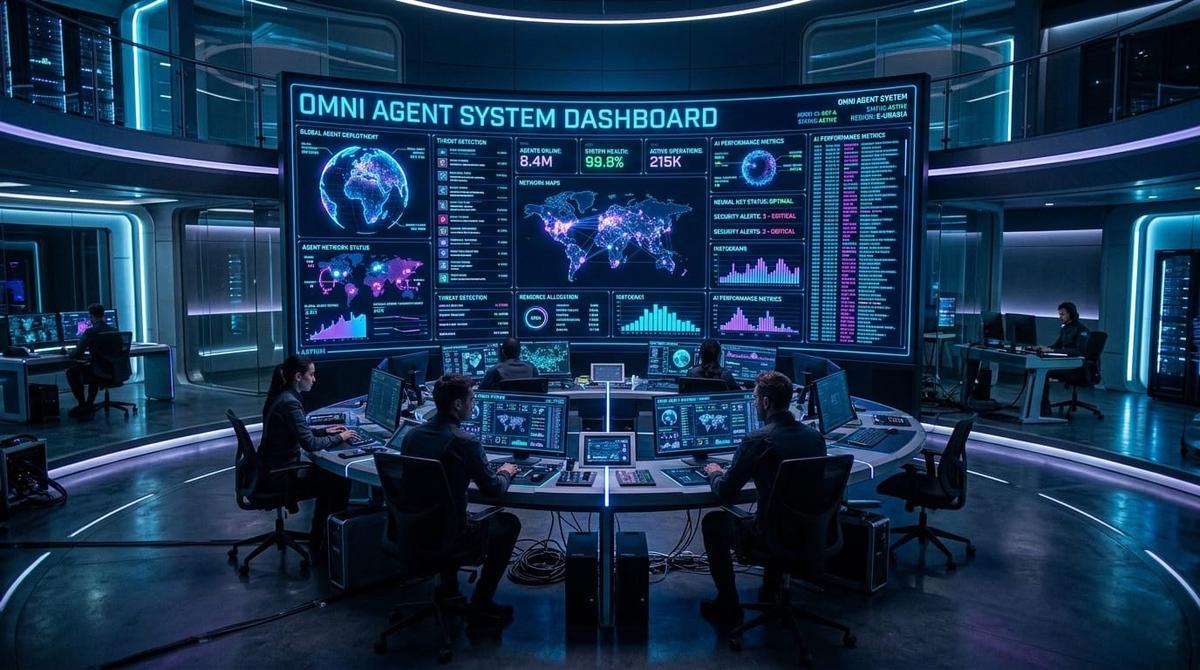
Omni Agent and Agentic AI: From Chatbots to Autonomous Systems
Automatically translated
 Admin
Technology history is usually shaped by shifts from periods when tools were passive to periods when they became active. When computers first appeared, they were huge machines that could only perform predefined calculations; later they became personal, then connected to each other through the internet, and eventually became mobile assistants. Artificial intelligence (AI) is at a very similar threshold. The "Generative AI" wave that exploded at the end of 2022 and swept across the world showed us that machines have an enormous language capability. Texts were written, poems were produced, and long articles were summarized in seconds. But after the initial fascination faded, a more basic reality set in: producing fluent, good-sounding sentences is not enough to solve the complex, multi-layered and constantly changing problems of the business world.
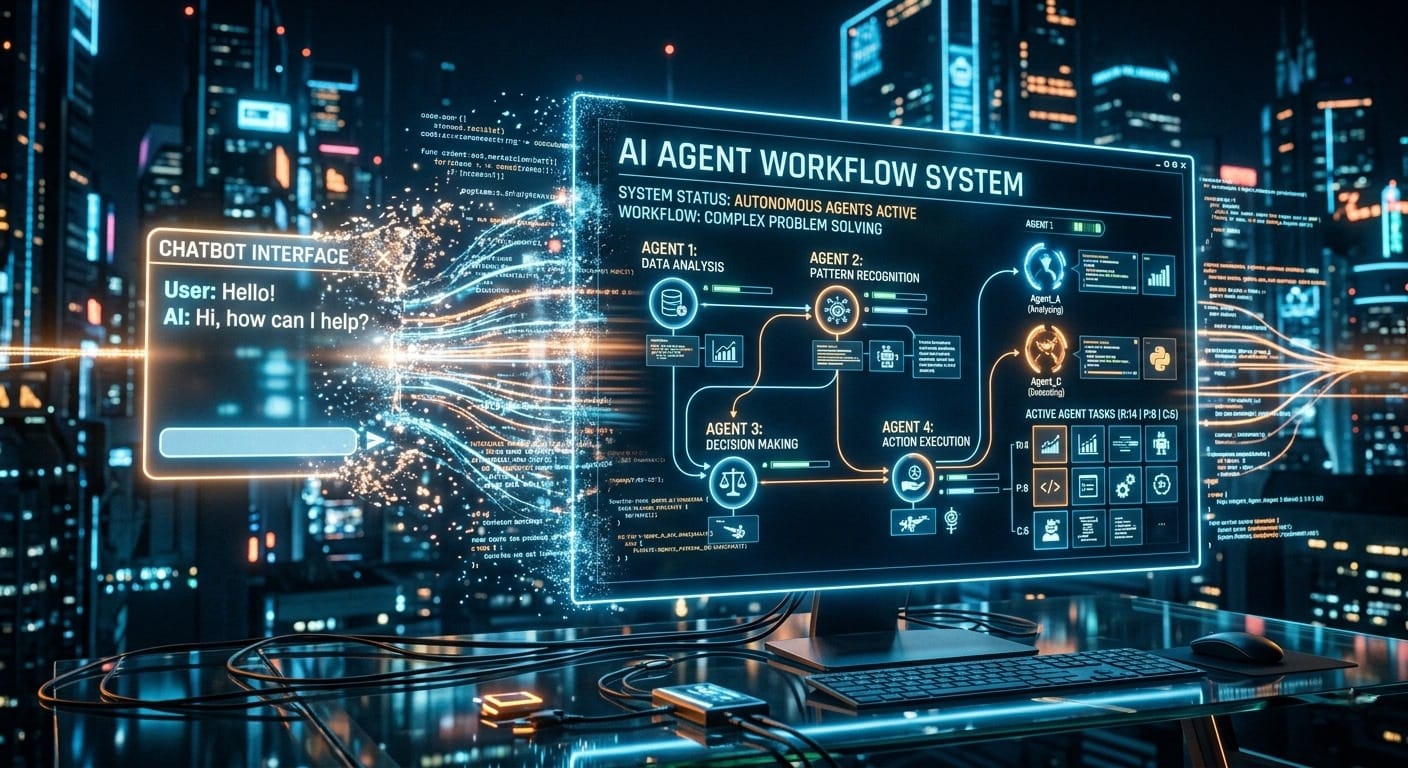
The core problem observed in the sector is this: most users still use AI as an "answer machine" or an advanced search engine. A question is asked, an answer is received, and the process ends there. But the real productivity leap lies in moving AI from a purely informational interface to a position as an "executor" that gets work done. As highlighted in the distinction between agentic and generative AI, the question now is the ability to turn text into action. This is where Omni Agent and the concept of Agentic Workflow come in to change the rules of the game. Understanding why the chatbot era is gradually closing, and why everyone from managers to software developers should think like an "Agentic Architect" in the modern business world, will be the biggest competitive advantage of the next decade.
1. Redefining the Omni Agent Concept
An Omni Agent is not just a chat interface; it is a sophisticated, multi-layered AI architecture that can use external tools and has autonomous decision-making capability. Classic chatbot systems are entirely reactive; in other words, they cannot act without a prompt from the user. They answer what is asked, and if their answer contains a logical error or gap, it is up to the user to notice and correct it. An Omni Agent, in contrast, is proactive; it does not just talk, it manages the process from start to finish to reach the goal it has been given.
The anatomy of a real Omni Agent architecture rests on four core components, and these components are in constant communication with one another:
• Cognitive Planning: When an Omni Agent receives a task, it does not start producing output right away. First it breaks the task into logical sub-units (Task Decomposition). For example, when given the command "Prepare a comprehensive market research report for me," the agent first designs a step to measure the market size, then a second step to identify the main competitors, then a third step to scan those competitors' websites. Finally, it combines all these findings. It plans the steps itself and puts them in order.
• Dynamic Tooling: The agent is not limited to the data it was trained on in the past. When it needs to, it interacts with the outside world. It runs a web browser to verify a financial figure, instead of leaving a complex mathematical calculation to a weak statistical guess it writes and runs code in a Python interpreter, or it connects to an internal SQL database to pull current stock levels.
• Contextual Memory: Classic chatbots can lose topical coherence in long conversations. Omni Agents, however, instantly process both the current task steps (short-term memory) and the user's past preferences, the brand's tone, or the company's corporate identity data (long-term memory). They never lose context at any point in the process, and thanks to vector databases (Vector DB), they retrieve only the information needed at that moment from huge volumes of data.
• Self-Reflection and Revision: One of its most critical abilities is to audit itself. Before presenting an output to the user, it runs its own internal review (Critic Layer) with questions such as "Does this text match the exact format the user asked for?" or "Did I make a mistake in the mathematical calculation?" If it finds an error, it autonomously goes back and corrects it.
2. Think Pro Ultra: The Depth of Reasoning Layers
The most criticized aspect of large language models is what is known as "hallucination," that is, making up information that does not exist in a highly convincing way. The main technical cause of this is the model's tendency to "answer without thinking." Because models focus on predicting the word most likely to follow the previous one, they can easily go off track in multi-step logical inference. As seen in OpenAI's analyses of its new generation of reasoning models, layers such as Think Pro Ultra are designed to prevent the model from rushing into action without analyzing the problem in depth.
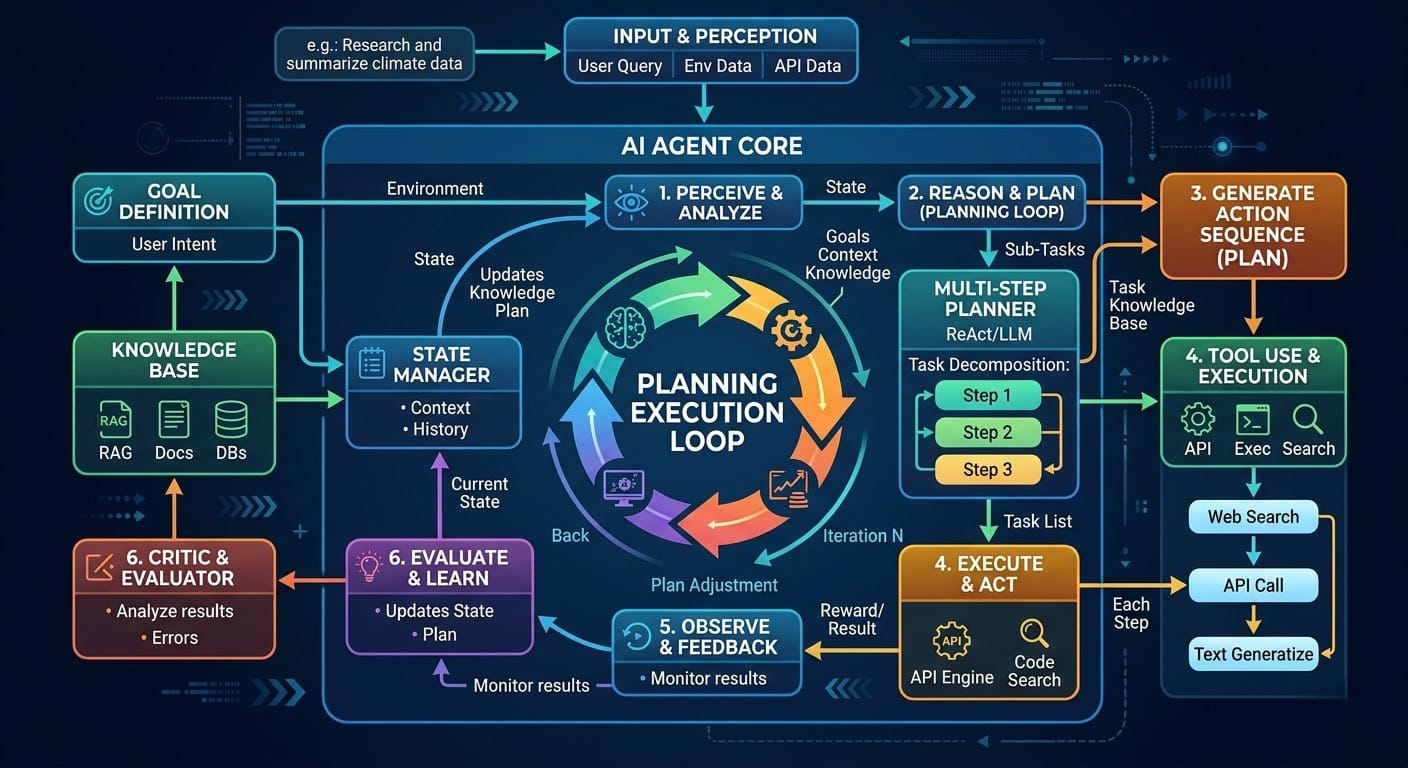
This advanced architecture moves the model's processing capacity away from a linear, one-way flow toward a "Tree of Thoughts" (ToT) or "Chain of Thought" (CoT) system. When faced with a complex question, instead of answering directly, the system generates several different hypotheses at the same time, much like a skilled chess player considering several moves. It simulates each hypothesis several steps ahead, tests its logical consistency, and if a hypothesis reaches a dead end, it cuts that branch (pruning) and proceeds along the path with the most solid arguments.
For example, in a complex supply chain optimization problem, a classic AI offers generic suggestions, while an agent with a Think Pro Ultra layer cross-analyzes all logistics variables, costs and weather forecasts. It calculates multiple route options, derives cost-time curves, and chooses the most rational one. Thanks to this layer, financial projections, the detection of hidden contradictions in legal contracts, or architectural errors in large-scale software code can be worked out in seconds with much greater accuracy.
3. AI Workflow Design and Operational Excellence
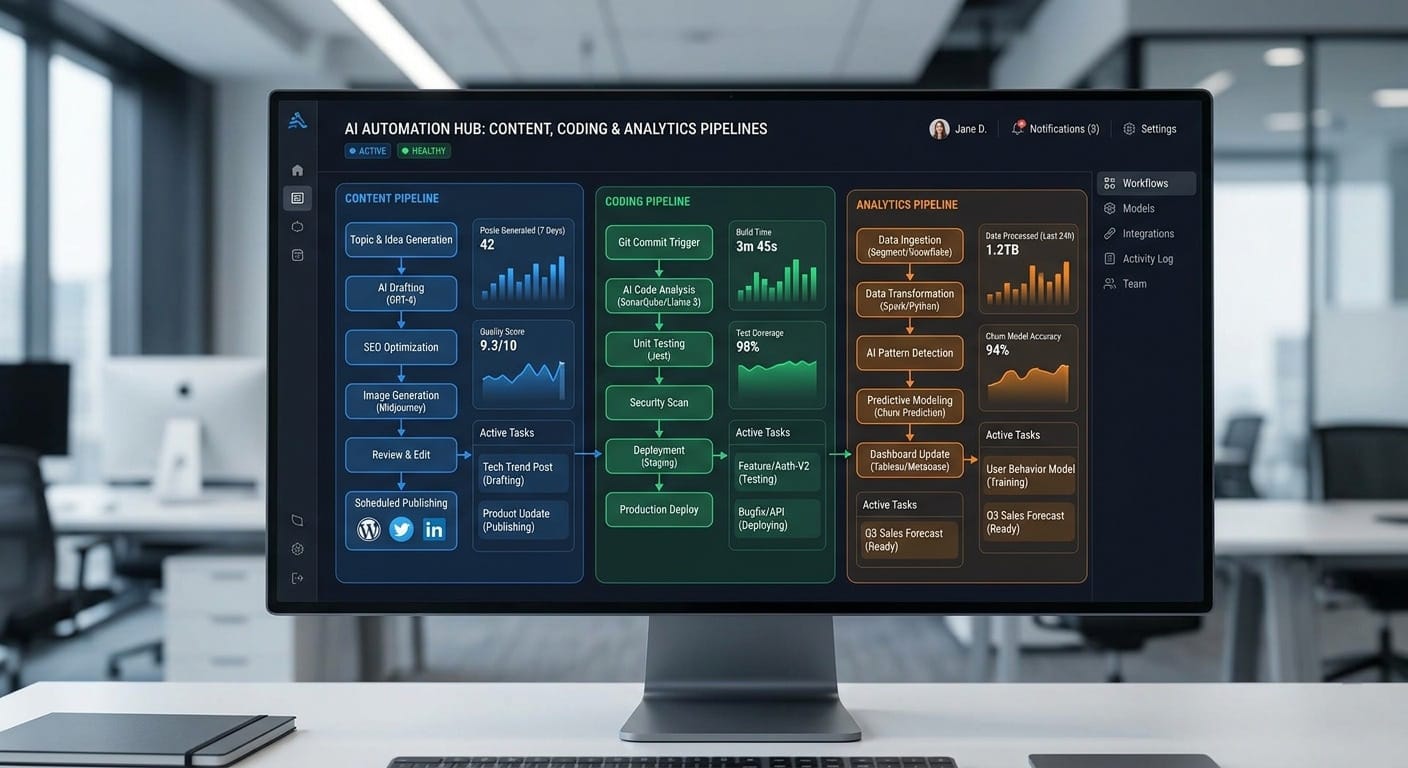
In the past, the first thing that came to mind with "automation" was usually software built on platforms like Zapier or Make, with strict, deterministic rules of the form "if A happens, do B; if B does not happen, move to C." Although these systems work well, they tend to break at the slightest unexpected variable, for example when the format of an incoming email changes. As noted in current discussions by industry experts, Agentic Workflow structures operate with the flexibility of "do whatever is needed to reach the goal I gave you." This flexibility gives businesses enormous agility and adaptability in market conditions that change every day.
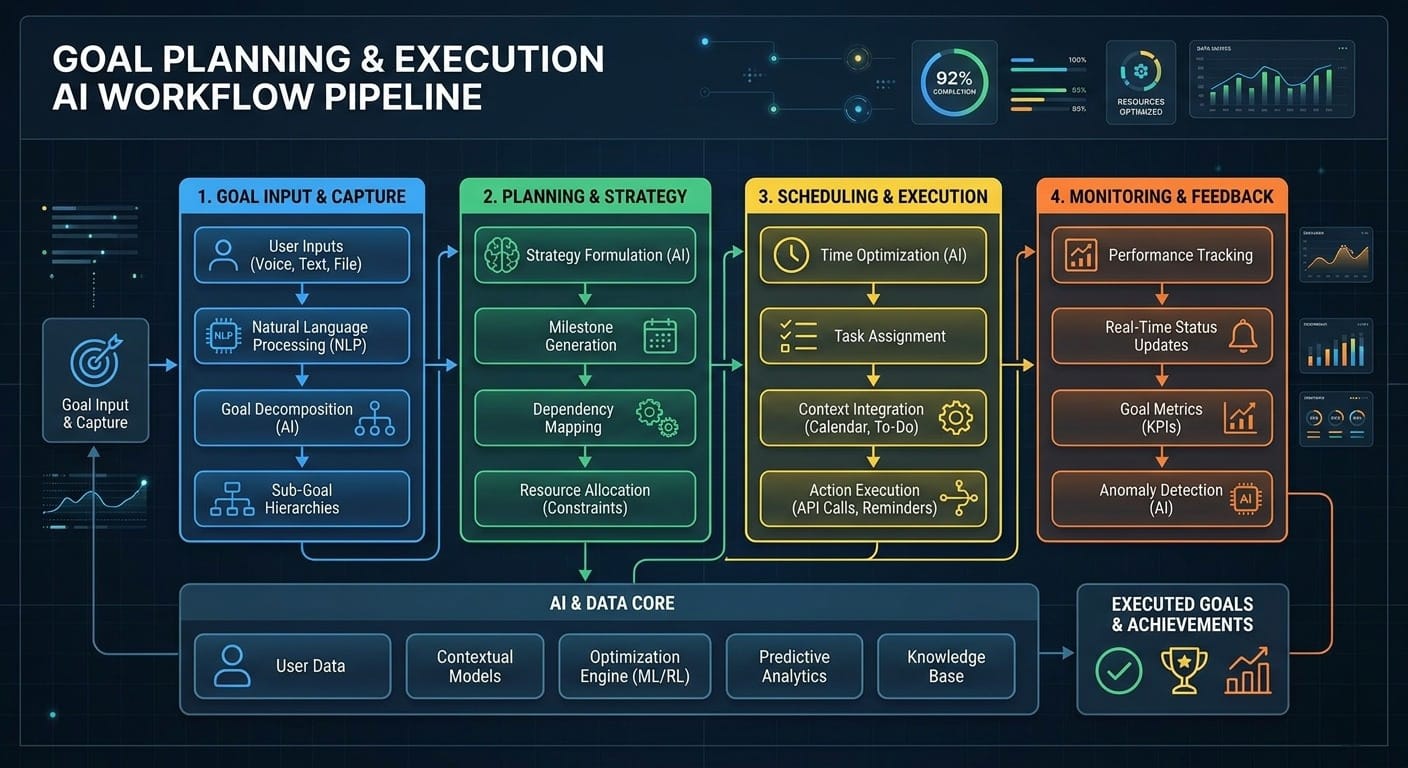
To make this concrete, let us look step by step at this workflow in a modern digital marketing operation:
1. Comprehensive Data Mining and Trend Analysis: The first agent (Researcher) scans social media platforms and search engine trends simultaneously. It autonomously extracts rising topics in the sector, content gaps left open by competitors, and the keywords with the highest conversion potential.
2. Strategy and Content Calendar Design: The second agent (Strategist) takes this raw data from the first agent and matches it with the brand's predefined target audience and product groups. From this it produces a detailed 30-day content map showing which topic will be covered on which day.
3. Autonomous Production Layer: The third agent (Copywriter), according to the calendar, creates blog drafts, newsletters and social media posts that fully match the brand's corporate voice, tone and SEO requirements. Each piece of content goes through a separate reasoning process here.
4. Multimodal Enrichment: The fourth agent (Creative Director) produces images suited to the text by connecting to APIs. For videos, it draws storyboards or finds the most suitable materials on stock platforms and matches them with the text.
5. Publishing, Distribution and Performance Tracking: The final agent (Distribution and Optimization) publishes content through the CMS (Content Management System) on the designated days and times. It analyzes the engagement data from the first 24 hours and re-optimizes the title of the next piece of content based on that data.
This entire process can run without human intervention. The human's role here is no longer "writing content" or "collecting data" but acting as an "Orchestra Conductor" who only approves final products or gives strategic direction.
4. The Multi-Model World: Strategic Orchestration and Chatly
In the AI ecosystem, the illusion of a single "best" or "all-capable" model has come to an end. OpenAI's GPT-4o stands out in general reasoning and coding algorithms, while Anthropic's Claude 3.5 Sonnet shows strong success in poetic writing, natural language use and zero-shot code generation. Google's Gemini 1.5 Pro, on the other hand, is unmatched in analyzing hours-long videos or thousands of pages of PDFs in a single pass thanks to its huge context window. The massive investments big technology companies are making in infrastructure and energy demonstrate how challenging it is to run these models from a single center. That is exactly why tying all of a company's operations to a single model is a strategic weakness.
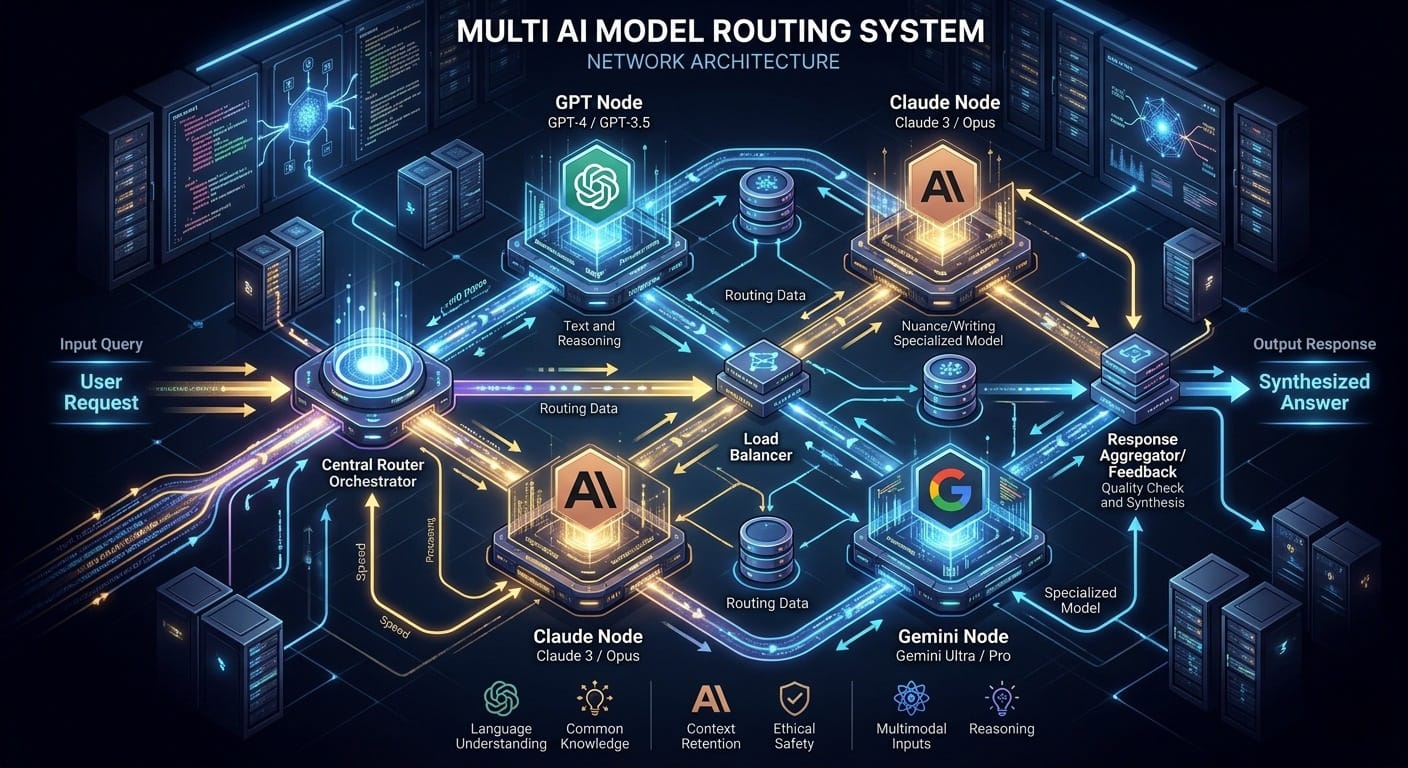
Modern orchestration platforms such as Chatly bring these many models together using "Routing" and "Orchestration" logic. When a user gives a complex task, the system splits it into parts in the background. It routes reading a long document to Gemini, extracting marketing copy from that document to Claude, and turning the data analytics and tabulation into GPT-4o. Omni Agent calculates in real time which part can be solved most efficiently, fastest and with the lowest token cost by which model. The user sees a single, very simple point of contact on the interface, while a synchronized army of specialists works in the background.
5. The Future of Software Development: Cursor, Devin and Autonomous Architecture
Software development is probably one of the areas where the Omni Agent architecture has produced the most concrete, measurable and striking disruptive effects. Traditional code editors and older AI assistants only understand the code that has been written, look for syntax errors, and at most perform autocomplete by predicting the next line. "Agentic IDEs" such as Cursor, on the other hand, grasp the entire architecture, intent and folder structure of the software project being worked on.
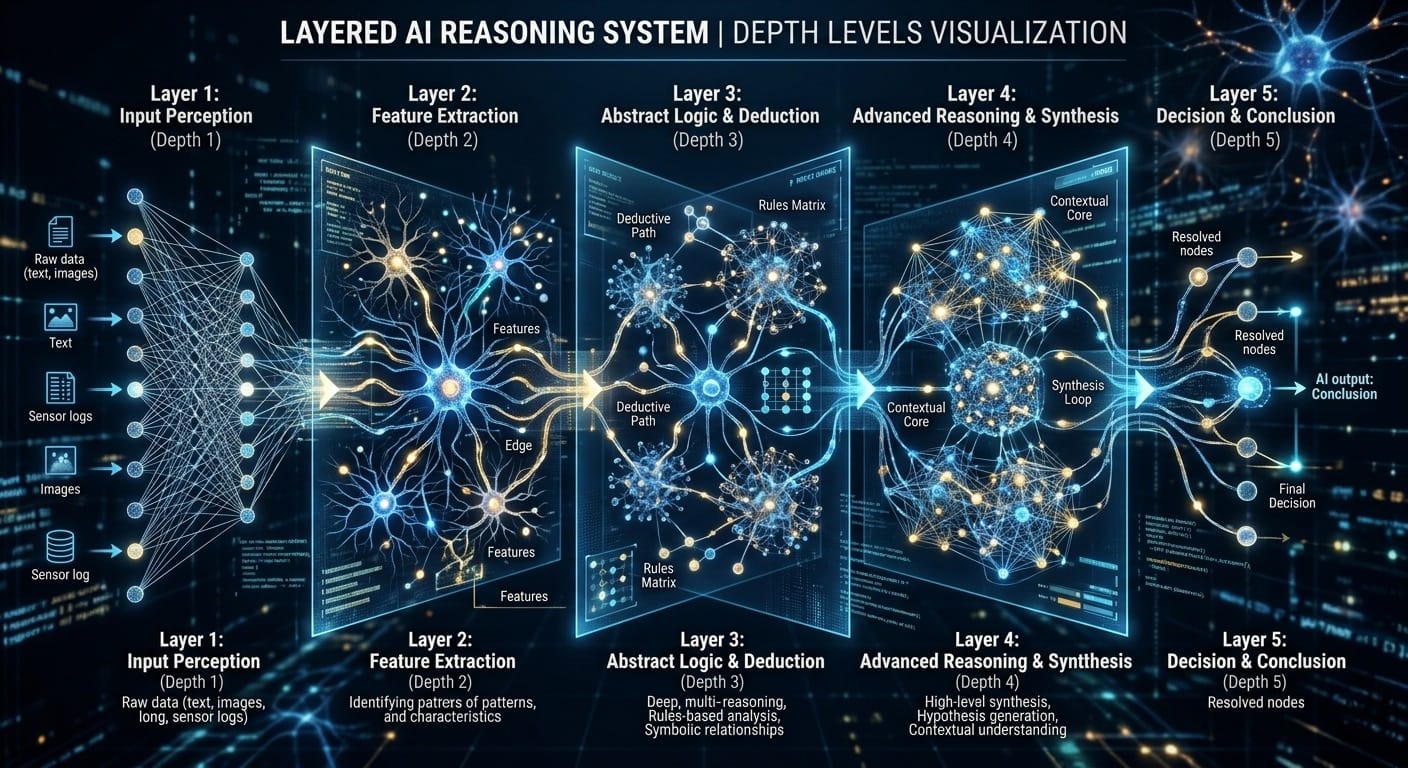
When a developer enters a high-level command into the Cursor interface, such as "Integrate a Google OAuth-based user login system into the project," the process starts autonomously. The agent reads the relevant API documentation within seconds, detects and installs the required dependencies, determines what needs to change in the database schema, performs security checks, and proposes simultaneous changes across several files. Fully autonomous AI engineers such as Devin go even further: without even submitting the process for human approval, they open a virtual terminal, compile the code, run tests, and fix their own code repeatedly until it works without errors.
At this turning point, the role of developers is quickly moving away from being a technician who writes code line by line at the keyboard. The developer of the future will rise to the position of a "system designer" who tells autonomous agents what they need to do, designs the system architecture, audits security protocols, and focuses on product vision.
6. Sector Use Cases: Real-World Impact from Theory to Practice
Agent-based workflows have moved beyond academic papers and technology demos and now reach the operational core of the real sector directly. A few detailed scenarios across different disciplines are essential for understanding the scale of this change:
A. Legal, Compliance and Consulting
In a traditional law firm, a major merger and acquisition (M&A) process can take months. Looking for inconsistencies with the human eye across thousands of pages of case files, confidentiality agreements, financial reports and past precedent decisions is a huge loss of time and effort. An Omni Agent-based structure instantly indexes all documents with RAG (Retrieval-Augmented Generation) infrastructure. Thanks to the Think Pro Ultra layer, it runs cross-document queries and finds, for example, "the hidden legal contradiction between a statement company A made three years ago and a clause in the current contract." Human lawyers spend their hours not on scanning, but on building a legal defense strategy around the inconsistency the AI found in seconds.
B. Global E-Commerce and Cross-Border Marketing
You are a global brand and need to market your products in 15 different countries at the same time. This is not just a matter of translating language. Every culture has its own sense of humor, taboo subjects, purchasing habits and idioms. Omni Agents conduct overseas digital market research for each target market, analyze the codes of that culture, and regenerate ad copy and visuals in a fully localized way. They can even set up A/B tests and allocate budget to the version that gets the most clicks. Where in the past you had to work with a separate local agency for each country, today a single central agent orchestration carries that load.
C. Financial Auditing and Risk Analytics
Consider the credit allocation or risk monitoring department of a bank. Agentic systems do not just read a company's balance sheet. At the same time, they use autonomous tools to scan live the global news flow in the company's sector, the financial condition of its suppliers, and the effects of central bank interest rate decisions on the sector. They complete the correlation work that would take a human analyst days within minutes, produce a dynamic risk score, and raise an immediate alarm when they see an anomaly.
7. The Future of Work: Human-Agent Collaboration Models, Security and Ethics
As AI systems stop being mere recommender tools and turn into agentic tools that take action, the future of work is taking shape entirely around "Systemic Leadership." Successful professionals will not be those who do the work themselves at the keyboard, but those who design and manage the autonomous units that do the work. Two basic models are becoming standard in the market right now: the Pilot-Copilot model, in which a human sits in the decision-making seat while AI takes on all the heavy data processing; and the Orchestra Conductor model, an advanced model in which a human coordinates many specialized agents working under them (one pulling data while another designs).
However, autonomy always brings great responsibility and serious security risks. In a world where agents can make payments with company credit cards and send emails on behalf of the company, where will the limits of authority be drawn? Companies creating their own "AI Ethics Charter," auditing models for bias in their decisions, setting up dual-approval mechanisms against hallucination risks, and building isolation layers that prevent sensitive data (PII) from leaking out are no longer a luxury but are becoming a legal obligation.
Looking further ahead, we are at the dawn of an era called Autonomous Economics. In this era, a company's AI agent will negotiate with another company's AI agent, buy data and sign contracts. Those who understand the architecture of these systems today will be the rule-makers of tomorrow's economy.
The Operational Architecture of the Future: Moving to System Design
Our interaction with AI has, in a very short time, turned from a simple chat interface into a massive operational system architecture. The chatbot era, which only generated text, has closed; the era of autonomous Omni Agent ecosystems that make decisions, use tools, learn from their mistakes and achieve goals has officially begun. For professionals in the sector, the real question is no longer just learning to use a new technology, but redesigning their own ways of working like an algorithm, designing their own autonomous workflows, and firmly embedding this new architecture at the heart of operations.
Quick Read and Going Deeper: Agentic AI Glossary
• Omni Agent: An autonomous task manager that can understand multi-step processes, make its own plan, and use external tools.
• Agentic Workflow: Unlike automations bound to rigid traditional rules, a goal-oriented, flexible, adaptive workflow dynamically managed by AI.
• Reasoning Traces (Reasoning Logs): A record that explains step by step how and through which logical steps an AI model reached a specific result, providing auditability and transparency.
• Multi-Model Orchestration: The efficient coordination of several models with different features and specialties (GPT, Claude, Gemini, Llama, etc.) within the same workflow, in line with cost and performance goals.
• Agentic RAG (Retrieval-Augmented Generation): A dynamic structure in which, while the information retrieval process is static in traditional RAG systems, the agent autonomously detects which information is missing and decides what kind of query to send to the database.
• Prompt Chaining: The technique of breaking a large and complex task into smaller prompts the model can understand, and using the output of each as the input of the next.
• Token Economics: The art of using models in the most optimized way when designing advanced AI workflows (a cheap model for simple tasks, an expensive model for hard ones) so that the 'tokens', the input/output units used in API calls, do not create unnecessary cost.
AdminFirefly AI Assistant: Adobe Tüm Uygulamaları Tek Merkeze Topladı!

Higgsfield Virality Predictor Rehberi: Hook Score Nedir?


