Revolutionary in Artificial Intelligence from Stanford University: Model for Brain Building
Automatically translated
 Creator
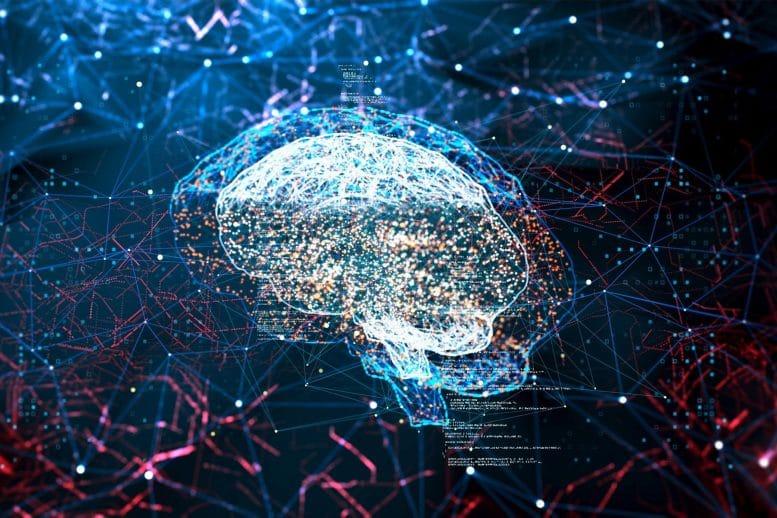
The Wu Tsai Neuroscience Institute of Stanford University developed an innovative artificial intelligence model that mimics visual information in the form of the brain editing. This model can successfully recreate the functional maps of the brain and has the potential to revolutionize both neuroscience research and AI technologies.
Artificial Intelligence Taking the Visual Processing Mechanism of the brain
The researchers at Stanford developed a new AI algorithm to better understand how the brain processes sensory information. This algorithm is called "topographic deep artificial nervous network" (TDANN). TDANN is working using natural sensory inputs and spatial connection restrictions. In this way, the visual system of the brain can accurately predict both sensory reactions and spatial organization.
Results of Seven Years Research
After many years of research, the findings obtained were published in the Neuron magazine with article titled "Active Frame" for Functional Organization of the High Ventral Visual Korteks. The leadership of the research team was named Dan Yamins and institute member Kalanit Grill-Spector, a faculty member at the Wu Tsai Neuroscience Institute.
Spatial Restrictions and Functional Maps
Unlike traditional nerve networks, TDANN organizes virtual neurons on a two-dimensional "cortical layer" with spatial constraints. This structure results in the creation of spatial maps that reflect how the brain responds to visual alerts while learning the visuals of the model. In particular, the model successfully recreates neuron clusters, which respond to categories such as "wind rose" structures and high ventral temporal cortex (VTC) on the primary visual cortex (V1).
Large Effects For Neuroscience and Artificial Intelligence
This model that can be fully trained offers neurosciences a new perspective in understanding how the brain is organized. Visual cortex provides new findings on how it develops and works and can potentially revolutionize neurological disorders in their treatment. In terms of artificial intelligence, insights from the brain can lead to more advanced visual processing systems that work closer to human vision system.
Energy Efficiency and Artificial Intelligence
The human brain needs millions of times more energy to make a supercomputer same operation, while only can perform mathematical process with 20 watts power. These new findings highlight that neuronal maps and spatial or ballographic restrictions, connecting them to 100 billion neurons of the brain, as simple as possible. These insights can be key to designing more efficient artificial systems.
Virtual Neuroscience and Medical Applications
More energy efficient AI can help to grow virtual neuroscience. The researchers showed that topographic deep artificial nerve networks give brain-like reactions to natural visual stimuli in a wide range. Such systems can be used as fast and cheap gaming areas for neuroscience experiments in the future and help identify hypotheses to be tested quickly and quickly.
Virtual neuroscience experiments can move human medical care further. For example, by imitating the way a baby visually learns the world, a artificial visual system can better train, help a artificial intelligence see the world like human. Another application can help to improve vision prostheses or simulate the effects of diseases and injuries on the brain.
This innovative research at Stanford University opens the forefront of breakthrough developments in neuroscience and artificial intelligence. Increasing the energy efficiency of artificial intelligence and transforming the treatment of neurological disorders, just a few of such studies in potential applications.
You can withdraw your interest: Artificial Intelligence Revolution from Apple: Apple Intelligence
CreatorMicrosoft, 3,2 Milyar Dolarlık Yatırımla Bulut ve Yapay Zeka Altyapısını Güçlendiriyor


Luma Labs Dream Machine: Devrim Niteliğinde Yapay Zeka ile Video Üretimi