Space Based AI Infrastructure: Google Project Suncatcher
Automatically translated
 Writer
Artificial intelligence has brought new discussions in energy and infrastructure not only in the software world in the last few years. Large language models and huge visual models require incredible electrical consumption in the background while increasing data centers, cables, cooling systems and solar energy systems have also grown rapidly. Google’s Project Suncatcher’s new research aims to resolve these issues.

In the blog released by Google Research Furthermore, the idea of space-based AI infrastructure is processed with details. The main purpose is to make large-scale artificial intelligence calculations through satellite constellations working with solar energy equipped with Google TPU chips. In the center of this vision, it lies in the idea to move data centers on the Earth completely, to space an important part of AI workloads in the long run. Research team, “Most of the AI calculations in the future were built in space, how did we design a system?” in the effort to answer the question.
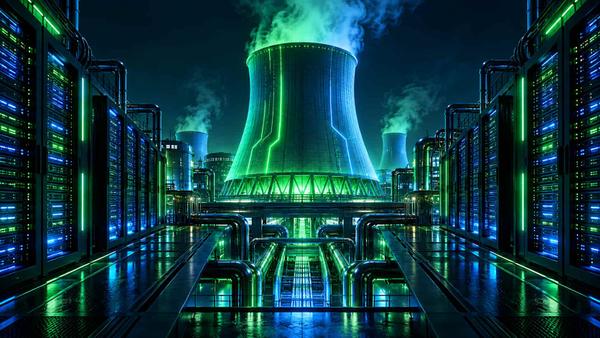
A Data Center in the Image
The architecture proposed by Project Suncatcher can be summarized basically as carrying a classic storage space to the sky. But here there are a large number of small satellites connected to each other instead of a single satellite. On each of these satellites, Google’s Tensor Processing Unit (TPU) chips built as a “mini data center”. These satellites will be placed in a private orbit that constantly takes sunlight. As Google’s blog is highlighted, a solar panel placed on the right orbit, where the weather is not, the night-cycle is more convenient, can work more efficiently than the Earth.
Solar energy with this system will be transferred directly to TPU sets in these satellites. Thus, instead of land data centers requiring giant buildings that consume water for cooling, orbital clusters designed for solar-powered AI will occur. In this sense, Project Suncatcher is not only high performance; but also seeking a sustainable future for artificial intelligence. The main issue in this system is the way the satellites communicate with each other and the World. According to Project Suncatcher’s technical report, free-space optical links system is recommended instead of classical radio frequency communication. Data between satellites will be transferred with laser-based optical connections, not with radio waves.
The reason for this preference is that optical links can be increased to much higher bandwidth with proper hardware and alignment. Thanks to the system, Google moved the principles we know of existing fiber infrastructure to orbit “laser-based space data center Home” create. This set of satellites in the image can be considered a variety of networks connected with optical links. If the network between these satellites can work fast and stable enough, then what will appear, similar to a large data centers in the world, but a giant AI infrastructure that is physically spread around the planet is predicted.

Possible Advantages and Disadvantages of the project
One of the interesting points of Project Suncatcher is the classic “Model Size u” and “parameter number” to carry enerji energy policies and ecology axis from the axis. Artificial intelligence is now a fundamental “General Purpose Technology“In parallel with it”analFrom the main points highlighted in the project without stopping the request. As a result of this increase, the negative effects of electricity consumption and data centers are increased significantly. The black data centers working with solar energy can alleviate this load a nebze, but all these are dependent on the terrain, local climate conditions and the in-cooling water. In space, energy from the Sun can be taken almost uninterruptedly in orbit.
Google team, “whether the large part of AI calculations in the long run is technically feasible” With this project that asked to answer the question, it is in the middle run rather than moving all the work in the future orbit Data centers like Exascale Homeyle aims to show that a space-based system can achieve comparable performance is possible. On the other hand, the project has space and sky pollution size. The issues that become controversial with Starlink and similar constellation projects can be moved to a new stage with initiatives such as Project Suncatcher. Each new satellite brings other problems with the risk of collision. So the future of space-based AI infrastructure will be shaped not only by engineering and economy, but also depending on areas such as space law.

Future of Artificial Intelligence in Space
Google’s Project Suncatcher that offers as a high research project of long-term and uncertainties, not as a launch Homevery early but ambitious” start project. The company’s plan launched two prototypes to 2027 orbit the satellite and test both hardware resistance and basic communication infrastructure through these satellites. If these experiments reach success, “In the future of artificial intelligence”cloud regionIn addition to the concept “orbit region” The concept will appear. For users, millisecond delay-sensitive daily chat or video applications, data centers and edge infrastructures on Earth will continue to play critical role. In turn, weeks or even months of model training and data processing applications such as less than delay, more sensitive work to energy will gradually lose orbit.
Space-based AI infrastructure is a new project proposal that takes the increasingly increasing energy and infrastructure problems of Google’s dream. Although the project reaches success, we can say that they call a door to a new era with space-based perspective for data centers.
WriterAI Anksiyetesini Anlamak: Gen Z İçin Yapay Zeka Bir Ana Dil!


Vibe Coding Nedir? Yeni Nesil Kodlama