Synthetic Bones Designed With Artificial Intelligence Ready to Convert Orthopedic Surgery
Automatically translated
 Creator
It was developed by scientists using a new synthetic bones, advanced technology machine learning and 3D printing technologies that will revolutionize in orthopedic therapies. This rapidly developing and innovative material aims to reduce the complications and accelerate the healing process by taking the location of traditional surgical methods. This can be an important progress in medical science and this new material can completely change orthopedic treatment processes. This technology can help patients return faster to postoperative lives, which can improve their quality of life.
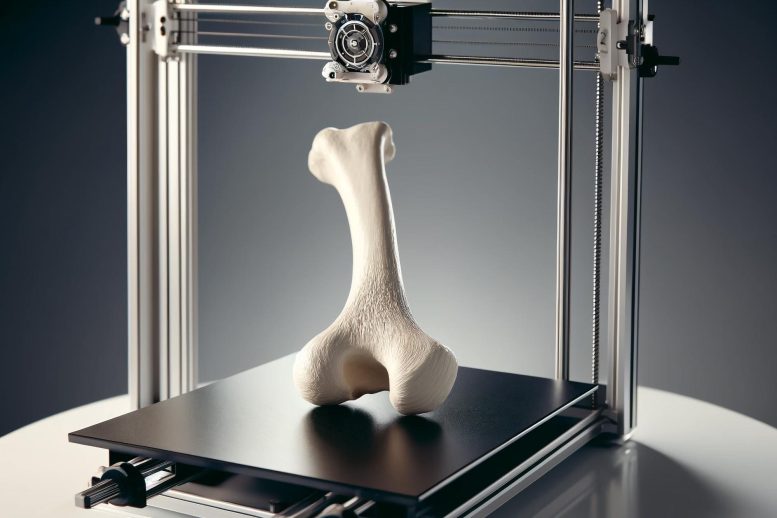
The Future of Synthetic Bones
Natural bones have an extremely effective approach in physical stress distribution, despite its extraordinary complex structures. This complex structure allows them to withstand various stresses perfectly. However, the design and manufacture of synthetic bones has created a big challenge to mimic this unique functionality and complexity of natural bones.
In turn, researchers at Illinois University Urbana-Champaign may have found a way to overcome this difficulty. They met machine learning and 3D printing technologies to understand this complexity and improve the design and production of synthetic bones. This is an important step to realize the design and production of synthetic bones more effectively and effectively.
Material Design with Machine Learning
The researchers decided to review the structure and physical properties of synthetic bones, using state-of-the-art tools and methods. In this process, advanced technology tools were used as a virtual growth stimulant and machine learning algorithms based on the information received from material databases. These reviews were made to learn the structure of synthetic bones and different physical properties of these structures and understand more effectively. This study was significantly separated from previous studies because a computational optimization algorithm developed to maximize stress distribution that we can control both architecture and stress. This algorithm takes into account various factors that will help the development of synthetic bones more effectively and efficiently.
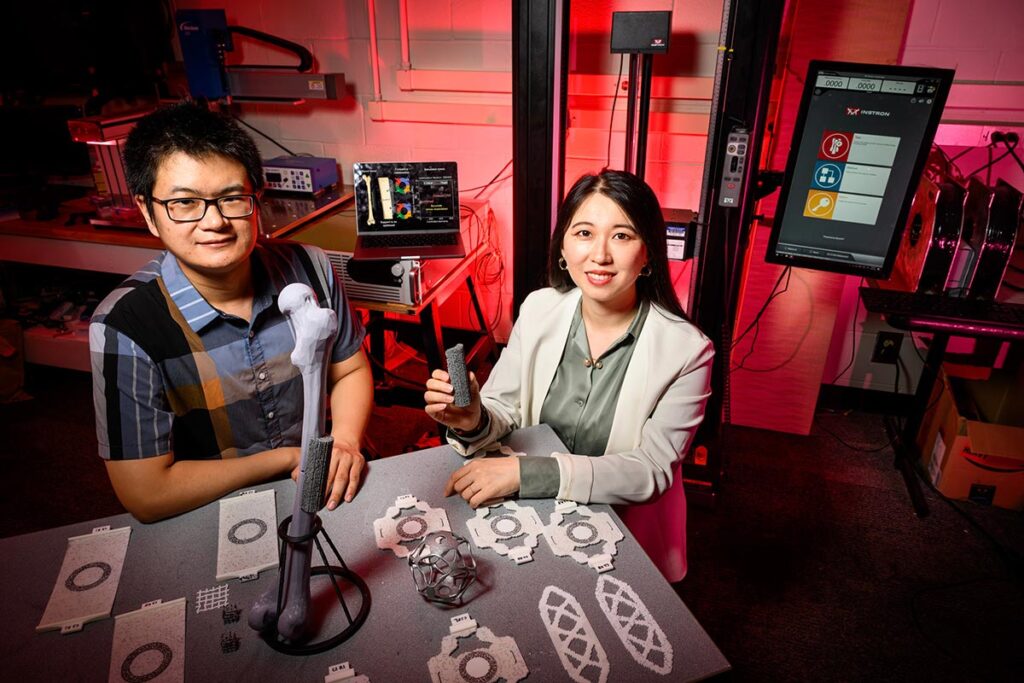
Graduate student Yingqi Jia, left, and professor Shelly Zhang used machine learning and 3D printing to fabricate a new bio-inspired material that may improve methods for healing broken bones. Copyright © 2019 Fred Zwick. All Rights Reserved.
Prototype Production with 3D Printing
Zhang’s team managed to produce a full-scale resin prototype, using 3D printing method, one of the advanced technologies used in the laboratory environment. This prototype is successfully bonded to a broken human femuru synthetic model, which means a big step in real world applications of these techniques. This kind of technique can be used in a wide range of applications such as various biological implants that require stress manipulation. This is especially when it comes to synthetic bones, it is potential to accelerate the healing process of patients and reduce the risk of complications. Therefore, the development and implementation of this technology can improve the quality of the patients' life and improve the overall effectiveness of medical procedures.
You may withdraw your relevant: Yeah Tarlaler with Artificial Intelligence: Smart Farming Revolution
Future Applications
This method has great potential in another area, not only in the field of orthopedic surgery, but also covering extensive medical applications. The powerful combination of artificial intelligence and 3D printing technologies has the potential to significantly contribute to the development of implants that provide more durable, personalized and fast recovery in the future. These technological innovations can open new ways to improve the quality of the patients and help determine the optimal treatment for each patient.
Creator2024'te Veri Hikayeleştirme ve Görselleştirme: Dijital Dönüşümdeki Kritik Rolü!


Google'ın yeni özelliği, endişeye neden oldu: "Son derece tehlikeli!"