In the world of artificial intelligence, especially large language models (LLM) are forgetting past information when processing huge data stacks, or the cost of remembering this information is to reach astronomical levels. Introduced by Google Research team Titans architecture and MIRAS frameTags "test-time memorization" (test instantly memorization) AI promises to bring a permanent solution to the long-term memory problem with its ability.
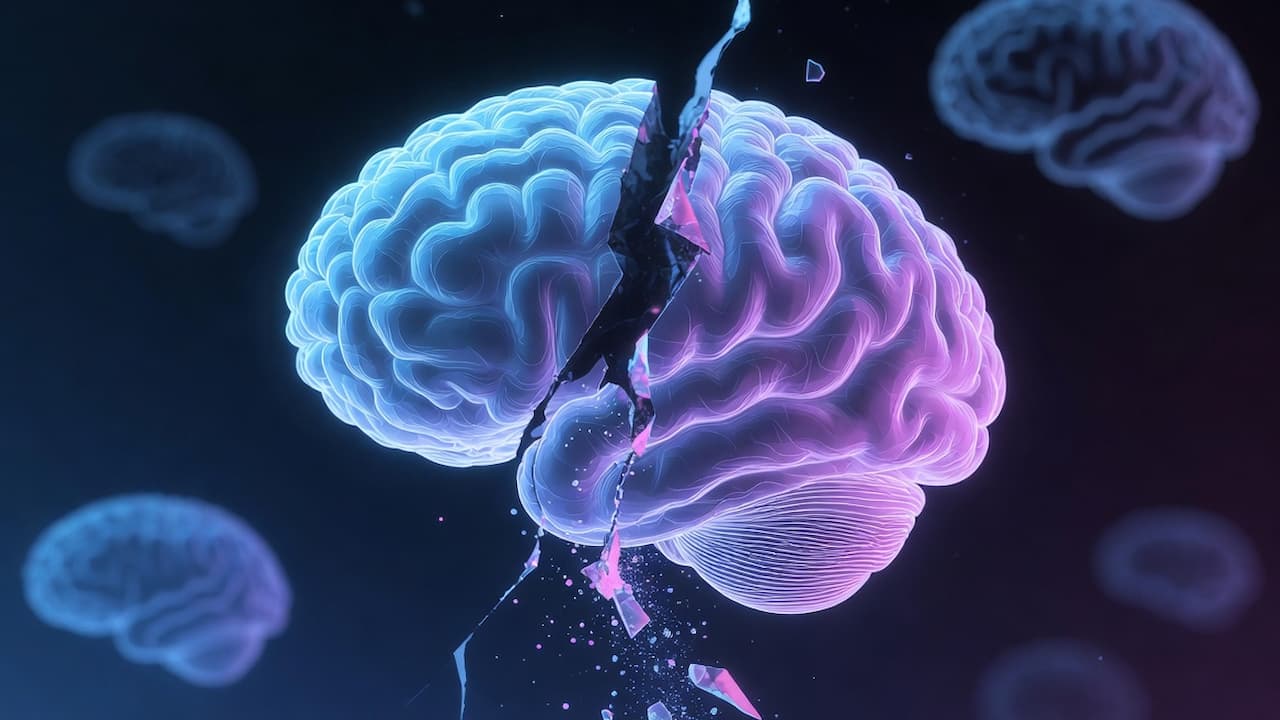
This new technology can process millions of token context (context) lossless and high speed by updating memory parameters actively while unlike standard Transformer models. In this article, we will review the technical depth of Titans and MIRAS, how AI converts the sequence modeling ability, and details based on academic resources of this innovation.
What is Titans and MIRAS? Technical Basics and Innovations
Traditional Transformer architecture, "attention" (kkat) offers an excellent short-term memory with the mechanism; but the calculation cost increases dramatically as the array length increases. Google researchers by Ali Behrouz, Meisam Razaviyayn and Vahab Mirrokni 4 December 2025 announced this studyTags RNN's (Norious Networks with Burning) combine speed with the accuracy of transformers.
- Titans Architecture: This is the "physical" tool of the system. Titans, unlike fixed-sized traditional RNN memory, summarizes past data using a deep nervous network (multilayer sensor - MLP).
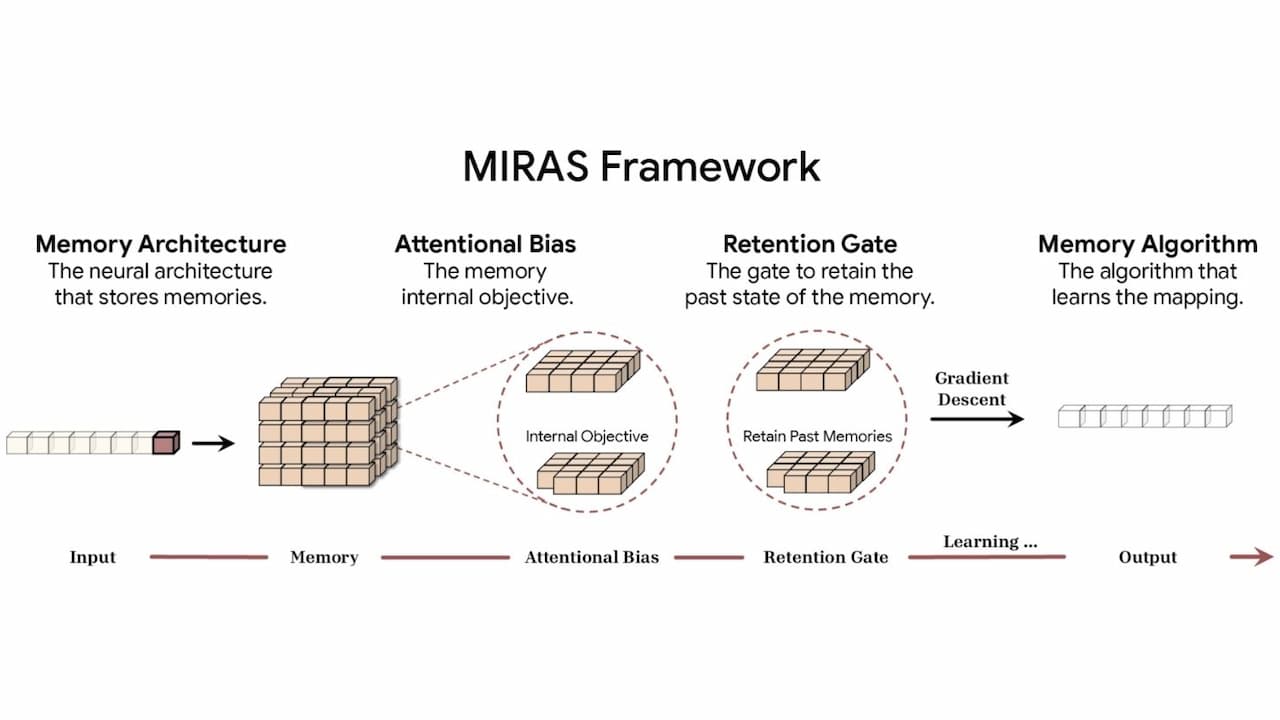
- MIRAS Frame: MIRAS (blueprint) is a theoretical framework developed to generalize these approaches. It defines the sequence modeling as a problem of "ditional memory" (associative memory) and distinguishes the memory architecture into four main components, including attention reflected (attentional bias), holding gate (retention gate) and memory algorithm.
How Titans Work? Active Learning with "Surpriz Metriği"
What makes Titans unique is to learn what to remember actively instead of storing data passively. In this process, the trend of "getting unexpected events" in human psychology is transformed into a mathematical model.
- Surprise Civilization (Surprise Metric): The model measures the difference between the new data and the current memory status. If the data fits a expected caliba (low surprise), memory is not updated. However, if data is unexpected (high surprise), this information is marked as "prepared" and is saved primarily to long-term memory.
- Momentum and Remember Gate: Titans uses a momentum mechanism that takes into account not only that momentary surprise, but also the flow of surprises in the past. It also applies adaptive weight degradation (forgetting gate) that no longer needs to manage limited memory capacity.
MIRAS Frame: Transition to Beyond MSE Paradigm
Most of the available models are based on standard methods such as Error Squares Average (MSE) or point palpitability when comparing the data. MIRAS offers the formats of "Unique targets" and new editing (regularization) that exceeds this restriction. Three special models were developed under this frame:
- YAAD: More resistant to errors (Uses the loss ofHuber), performs high performance in dirty or unconsistent data.
- Mobile: It targets a stable long-term memory using more disciplined rules and complex mathematical penalties (generated norms).
- MEMORA: They are hard to treat memory like a solid probability map to maximize memory stability.
What are the Test-Time Memorization and Performance Results?
Titans and MIRAS variants have been compared to sector-leading architectures such as Transformer++, Mamba-2 and Gated DeltaNet.
- Over Long Connect Recall: gigantic models such as Titans, GPT-4 in BABILong benchmark tests left behind, although it has much less parameters.
2 Million Token Limit: Research has proved that Titans can effectively scale larger context windows than 2 million tokens.Genomic and Time Series Success: Titans did not only be limited to texts; DNA modeling (GenomicsBenchmarks) and time series forecasting tasks also gave the best (state-of-the-art) results.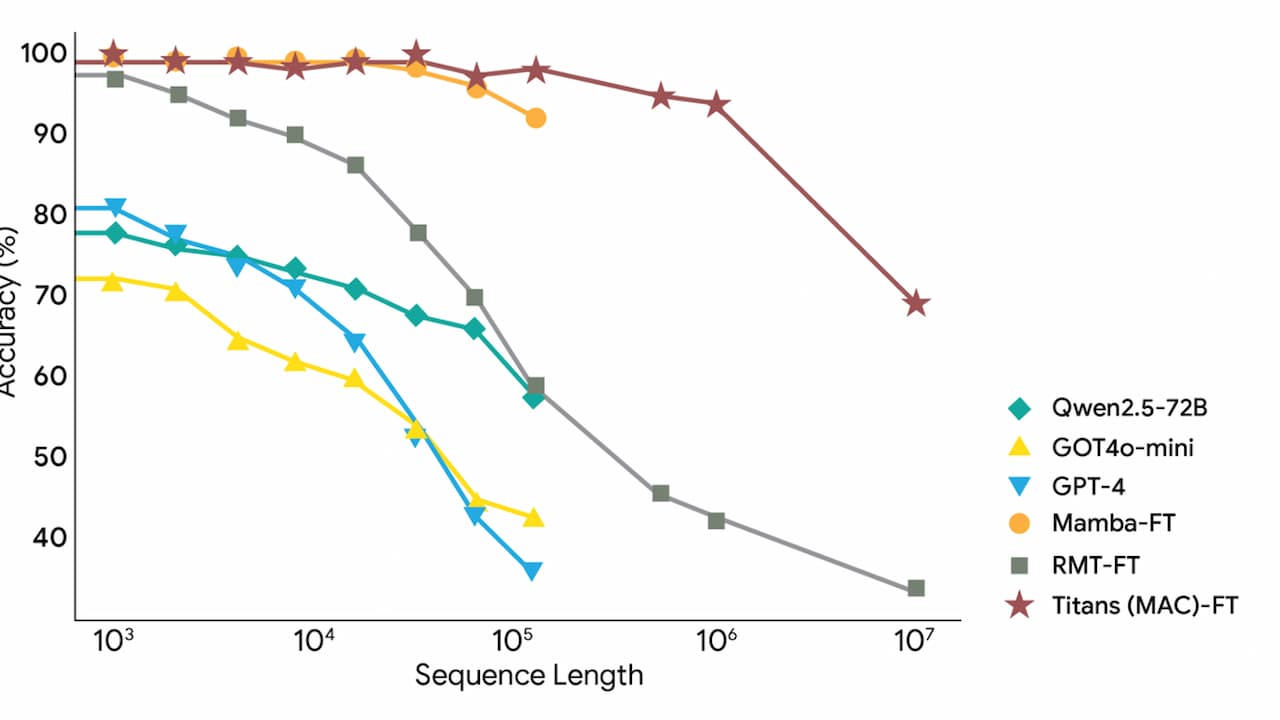
Why is Titans and MIRAS Artificial Intelligence of the Future?
Traditional models had to delete old information when they run huge documents or slow down or run context window. Titans architecture has shown that increasing memory depth (L M) reduces complexity and the model remains more "tutarlı".
The MIRAS framework has completed the lost ring between online optimization, relationship memory and architecture design by bringing theoretical unity to the artificial intelligence ranked modeling world. This means that artificial intelligence is not only a "not field" system that synthesizes and understands the entire story that reads.
This way the AI Long-term Memory problem will standardize the use of long context artificial intelligence (long-context AI) in many areas from genomic analysis to full document legal examinations. This revolution of Google Research opens a new page on artificial intelligence by combining RNN efficiency with transformer power.
In the world of artificial intelligence, especially large language models (LLM) are forgetting past information when processing huge data stacks, or the cost of remembering this information is to reach astronomical levels. Introduced by Google Research team Titans architecture and MIRAS frame Tags "test-time memorization" (test instantly memorization) AI promises to bring a permanent solution to the long-term memory problem with its ability. This new technology can process millions of token context (context) lossless and high speed by updating memory parameters actively while unlike standard Transformer models. In this article, we will review the technical depth of Titans and MIRAS, how AI converts the sequence modeling ability, and details based on academic resources of this innovation. What is Titans and MIRAS? Technical Basics and Innovations Traditional Transformer architecture, "attention" (kkat) offers an excellent short-term memory with the mechanism; but the calculation cost increases dramatically as the array length increases. Google researchers by Ali Behrouz, Meisam Razaviyayn and Vahab Mirrokni 4 December 2025 announced this study Tags RNN's (Norious Networks with Burning) combine speed with the accuracy of transformers. Titans Architecture: This is the "physical" tool of the system. Titans, unlike fixed-sized traditional RNN memory, summarizes past data using a deep nervous network (multilayer sensor - MLP). MIRAS Frame: MIRAS (blueprint) is a theoretical framework developed to generalize these approaches. It defines the sequence modeling as a problem of "ditional memory" (associative memory) and distinguishes the memory architecture into four main components, including attention reflected (attentional bias), holding gate (retention gate) and memory algorithm. How Titans Work? Active Learning with "Surpriz Metriği" What makes Titans unique is to learn what to remember actively instead of storing data passively. In this process, the trend of "getting unexpected events" in human psychology is transformed into a mathematical model. Surprise Civilization (Surprise Metric): The model measures the difference between the new data and the current memory status. If the data fits a expected caliba (low surprise), memory is not updated. However, if data is unexpected (high surprise), this information is marked as "prepared" and is saved primarily to long-term memory. Momentum and Remember Gate: Titans uses a momentum mechanism that takes into account not only that momentary surprise, but also the flow of surprises in the past. It also applies adaptive weight degradation (forgetting gate) that no longer needs to manage limited memory capacity. MIRAS Frame: Transition to Beyond MSE Paradigm Most of the available models are based on standard methods such as Error Squares Average (MSE) or point palpitability when comparing the data. MIRAS offers the formats of "Unique targets" and new editing (regularization) that exceeds this restriction. Three special models were developed under this frame: YAAD: More resistant to errors (Uses the loss ofHuber), performs high performance in dirty or unconsistent data. Mobile: It targets a stable long-term memory using more disciplined rules and complex mathematical penalties (generated norms). MEMORA: They are hard to treat memory like a solid probability map to maximize memory stability. What are the Test-Time Memorization and Performance Results? Titans and MIRAS variants have been compared to sector-leading architectures such as Transformer++, Mamba-2 and Gated DeltaNet. Over Long Connect Recall: gigantic models such as Titans, GPT-4 in BABILong benchmark tests left behind, although it has much less parameters. 2 Million Token Limit: Research has proved that Titans can effectively scale larger context windows than 2 million tokens. Genomic and Time Series Success: Titans did not only be limited to texts; DNA modeling (GenomicsBenchmarks) and time series forecasting tasks also gave the best (state-of-the-art) results. Why is Titans and MIRAS Artificial Intelligence of the Future? Traditional models had to delete old information when they run huge documents or slow down or run context window. Titans architecture has shown that increasing memory depth (L M) reduces complexity and the model remains more "tutarlı". The MIRAS framework has completed the lost ring between online optimization, relationship memory and architecture design by bringing theoretical unity to the artificial intelligence ranked modeling world. This means that artificial intelligence is not only a "not field" system that synthesizes and understands the entire story that reads. This way the AI Long-term Memory problem will standardize the use of long context artificial intelligence (long-context AI) in many areas from genomic analysis to full document legal examinations. This revolution of Google Research opens a new page on artificial intelligence by combining RNN efficiency with transformer power.






 Admin