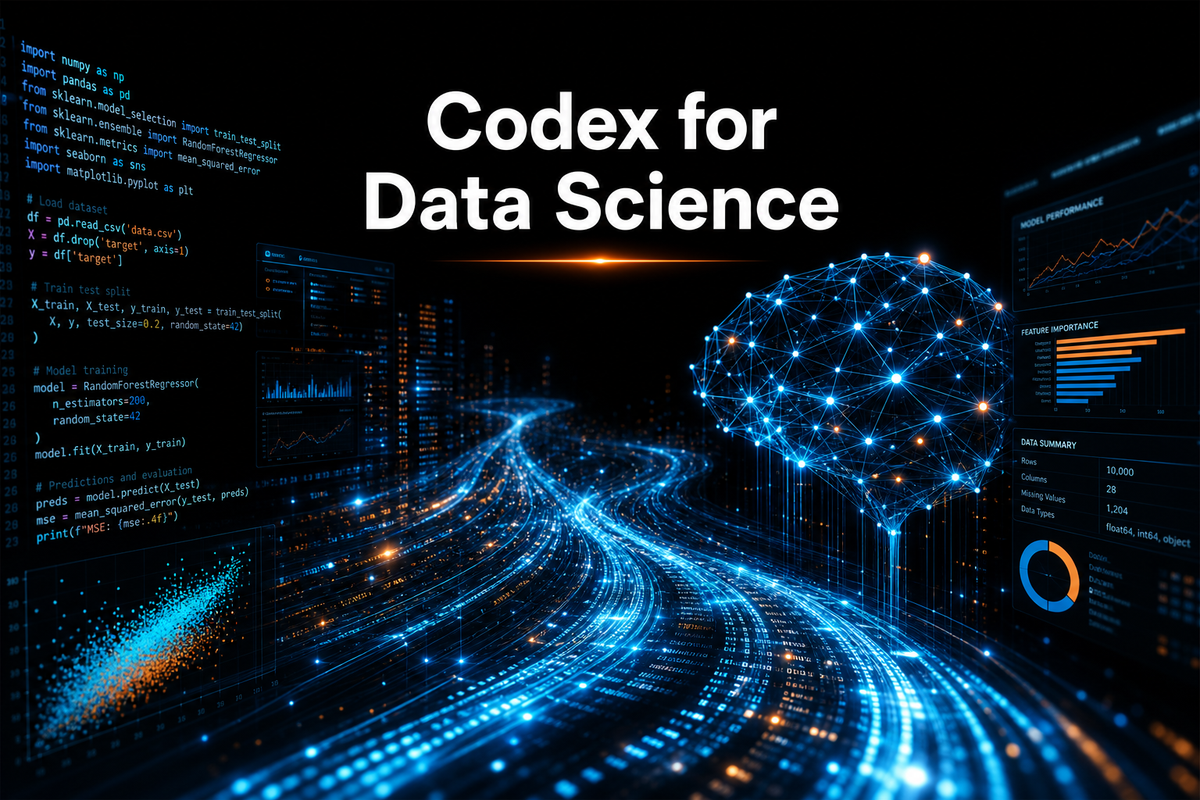
Codex for Data Scientists: Smart Analysis and Reporting
Automatically translated
 Admin
The AI Revolution in Data Science: What Is Codex?
Codex, developed by OpenAI, is an AI tool that fundamentally changes how data scientists work. This technology automates complex data analysis tasks, allowing teams to focus on more strategic and high-value work. Thanks to its natural language processing capabilities, Codex can understand written instructions from data scientists and turn them into code.
The data analytics sector in Turkey is growing rapidly, and companies are now turning to AI to make faster and more accurate decisions. Tools like Codex are among the leading solutions driving this change. For organizations making decisions based on financial reporting, e-commerce analytics, and marketing data in particular, this technology offers a critical advantage.
Core Features of Codex

Codex is proficient in most programming languages and data analysis libraries. Its ability to understand and use the most common languages in data science, such as Python, SQL, and R, makes it indispensable for data teams. In addition, this system can write code from natural language commands, which means even non-technical users can perform complex analyses.
What stands out about Codex is its contextual learning ability. The system analyzes previous work and can produce more accurate results on similar tasks. As a result, companies get a ready-to-use solution that does not require special training.
Root Cause Analysis: Understanding Problems in Depth
One of the most important tasks for data teams is finding the causes behind problems in a business. Codex dramatically speeds up this "root cause analysis" process. Starting from raw data, the system can automatically discover meaningful relationships.
Suppose sales drop on an e-commerce site. Codex examines the problem from several angles, analyzing connections between customer behavior, product categories, seasonal effects, and technical issues. As a result, the team can identify the real problem and the solution process becomes shorter.
Automated Report Generation
With traditional methods, root cause analysis can take weeks. Every step, from writing code to extracting data, creating visualizations, and writing reports, is done manually. Codex can cut this process by roughly 70%. Once the data scientist clearly defines the problem, the system can automatically write and run the necessary queries.
In Turkish enterprises, this automation can lower costs while improving quality. It is especially valuable for SMEs and startups, offering the chance to get more done with limited teams.
Impact Readouts: Grounding Decisions in Data
An impact readout is a report that measures the effect of changes on a business. Codex is very capable at producing these reports. When you want to measure the success of a marketing campaign, the system can automatically select relevant metrics and calculate them.
For example, when a new product launches, Codex can write code that calculates critical indicators such as customer acquisition cost, lifetime value, and return rate. This makes management decisions faster and more data-driven.
Real-Time Performance Monitoring
In systems where Codex is integrated, campaign and project performance can be monitored in real time. When performance crosses defined thresholds, the system can automatically generate alerts. This proactive approach helps problems be detected early, preventing major losses.
In important Turkish sectors such as finance, retail, and tourism, this feature provides a competitive advantage. When market conditions change quickly, making decisions based on up-to-the-minute data is critically important.
KPI Memos: Communicating Success Metrics in Business Language
KPI (Key Performance Indicator) memos are short, concise reports intended for the management layer. Codex can translate technical data into language that managers understand and prepare such a memo.
When a data scientist finishes a complex analysis, Codex can automatically generate an executive summary. A structured report is ready that answers questions such as which metrics declined, why they declined, and what should be done. This reduces strategic mistakes caused by communication gaps.
Visualization Suggestions
Nothing is as important as the visuals used in a good KPI memo. Codex can suggest the chart type best suited to the data being analyzed. Time series charts are automatically suggested for data that needs to show trends, and bar charts for data that needs comparison. Combining these features increases the impact of reports.
Scoped Analysis: The Art of Asking the Right Questions
One of Codex's less known but very powerful features is its "scoped analysis" capability. That is, it can perform in-depth analysis within a defined framework. Looking at a problem from too broad or too narrow a perspective can lead to misleading results.
When a problem is defined, Codex can intelligently determine the scope of analysis. It can make data-driven decisions about which variables should be controlled, which can be ignored, and how long the analysis period should be. This helps avoid misleading conclusions.
Hypothesis Testing and Validation
In data science, forming the right hypotheses is critical for the reliability of results. By reviewing preliminary research data, Codex can suggest hypotheses that need to be tested. It can then test these hypotheses using statistical methods.
For example, when a retail chain wants to understand which products could improve sales performance, Codex can analyze similar successful campaigns and propose hypotheses that can be tested. This methodological approach allows the company to run low-risk experiments.
Dashboard Specifications: Visual Management Panels
Codex does more than produce reports. It can also prepare technical specifications for interactive dashboards. A dashboard is an ideal tool for the core metrics that business people need to check every day.
The system can specify which metrics should appear on a dashboard, which filter options should be available, and which relationships should be established between charts. Software development teams can read this specification and build technically sound, user-friendly dashboards.
Sustainable Data Management
Dashboard specifications prepared by Codex remain sustainable over the long term. The system can also point out where the dashboard needs updating at set intervals. When the data schema changes or a new metric needs to be added, the system can automatically suggest the changes that need to be made.
This is a major gain for digital transformation projects in Turkey. Even if the initial investment is expensive, maintenance and update costs can be kept to a minimum over the long run.
Real-World Applications and Success Stories
Codex's practical benefits have been observed at many companies. Sectors ranging from fintech startups to large insurance companies are benefiting from this technology. Codex is especially transformative in sectors where data volumes are high and decision speed is critical.
The banking sector in Turkey performs intensive data analysis for risk management and compliance. Codex can increase the speed and accuracy of these analyses, making it easier to meet regulatory expectations.
Time and Cost Savings
Many organizations have reported saving 50-70% of time in their data analysis processes after adopting Codex. These time savings allow projects to be completed faster and make it easier to adapt quickly to market changes.
From a cost perspective, more projects can be carried out with fewer data analysts. This is an important advantage for startups and SMEs. In addition, the cost of wrong decisions resulting from analysis errors is also reduced.
Team Training and Adoption
Teams that start using Codex first spend time understanding the tool's capabilities. However, the learning curve can be quite steep. Within two to three months, the team can make the most of Codex's capabilities. In some companies this period can be shorter, because the system is quite intuitive.
Limitations of Codex and Points to Consider
Although Codex is a very powerful tool, it has limitations. The system cannot extract information that is not present in the data it is given. In other words, if data quality is low, the quality of Codex's output will also be low. For this reason, data cleaning and preparation steps remain important.
In addition, analyses performed by Codex should always be reviewed by a human. The system can make incorrect interpretations or miss context. The data scientist's critical thinking remains indispensable despite Codex's automation.
Ethics and Privacy
When using Codex, data security and user privacy must be taken into account. Especially when working with customer data, the sensitivity of the data sent to Codex should be evaluated. Corporate policies should limit what AI tools are able to learn.
For KVKK compliance, transparency should be ensured in how Codex is used. Customers should know that their data is being analyzed by artificial intelligence.
The Future of AI-Driven Data Science in Turkey
OpenAI developing tools like Codex is changing the global data science landscape. Companies in Turkey that quickly adopt these technologies and use them effectively will gain a competitive advantage.
State-supported projects and private sector partnerships can help increase data analytics capacity in Turkey. Universities can integrate tools like Codex into their curricula to prepare the next generation of data scientists.
Technology Infrastructure and Joint Investment
Effective use of cloud-based AI tools like Codex requires a solid IT infrastructure. Organizations in Turkey should continue investing in cybersecurity, data center services, and cloud infrastructure.
In addition, government incentive mechanisms should support domestic technology developers so that Codex-like tools can also be built in Turkey. This can increase technological independence.
Conclusion: A New Era in Data Science
OpenAI Codex is a turning point for data science. By automating core tasks such as root cause analysis, KPI reporting, and dashboard design, it allows data scientists to focus on more strategic and creative work.
Businesses in Turkey that adopt this technology early will be able to strengthen their market leadership. However, when using these tools, data quality, ethics, and human oversight must not be ignored. Codex does not replace human data scientists; it strengthens their abilities.
In the future, data science teams that work with hybrid models combining artificial and human intelligence will be the most successful. Demand for data scientists who know tools like Codex well and also understand business logic will keep growing for years to come.
Adminİş Operasyonları Ekipleri Codex ile Nasıl Çalışıyor?


Capex Döngüsü: 5 Trilyon Dolarlık AI ve Enerji Fırtınası