Weave Robotics Unveils Isaac 1 Home Robot
Automatically translated
 Writer
When people think of home robots, they usually picture humanoid machines from science fiction films, walking on two legs and carrying coffee around the kitchen. Across the industry, humanoid robot projects have already tried this approach. Weave Robotics, an ambitious startup that does not want to wait for designs that feel distant to consumers to enter our homes, has instead introduced a digital household helper that addresses our everyday problems directly: Weave Robotics Isaac 1.
So can Isaac 1, a mobile home robot designed specifically to leave the lab and pick up the mess in your living room, really make household chores easier?
A "Smart Vacuum with Arms" Awaits You: What Is Isaac 1?
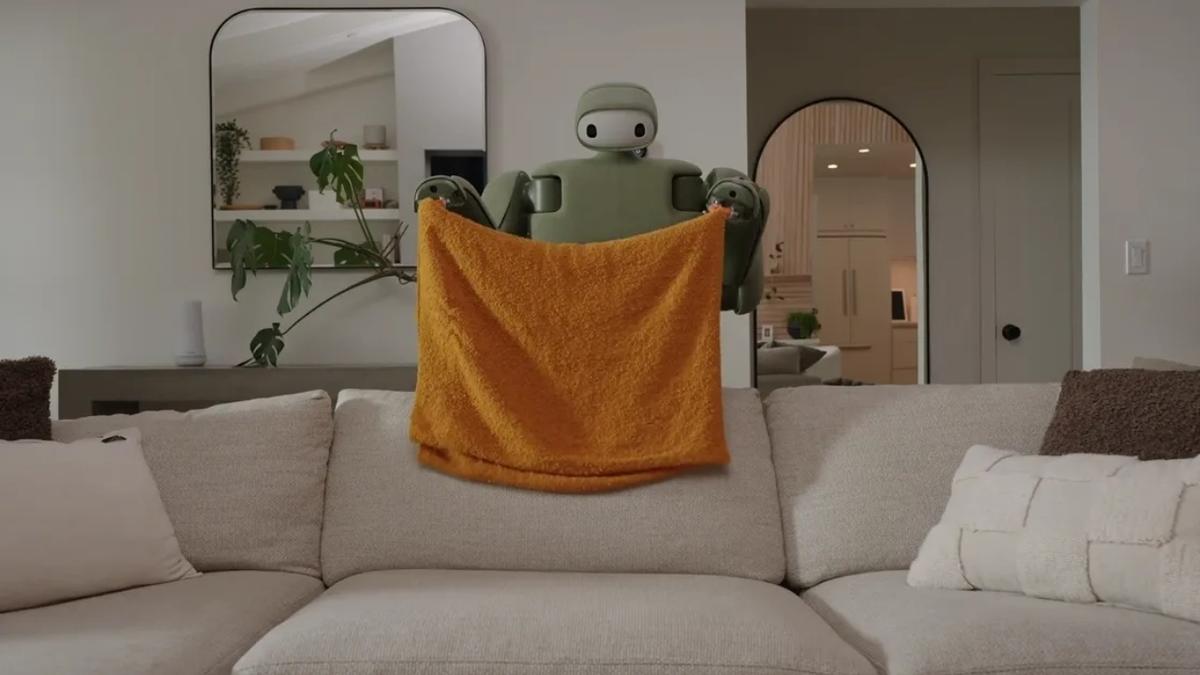
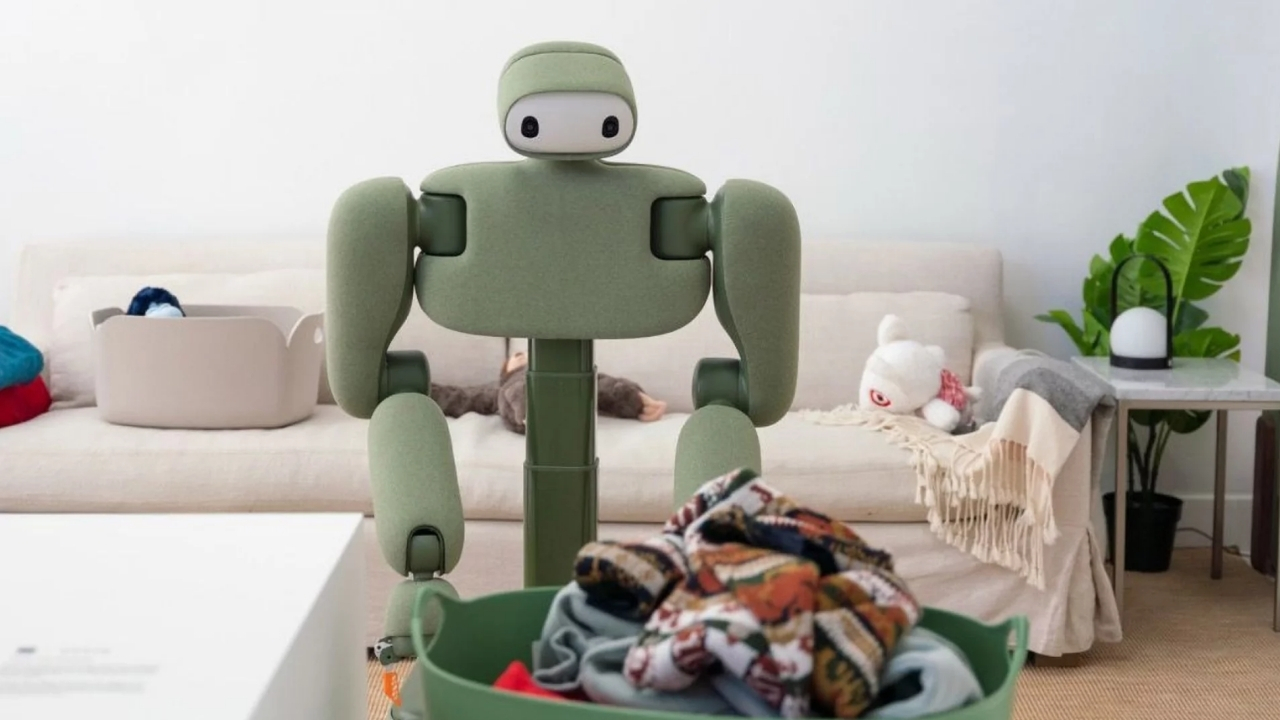
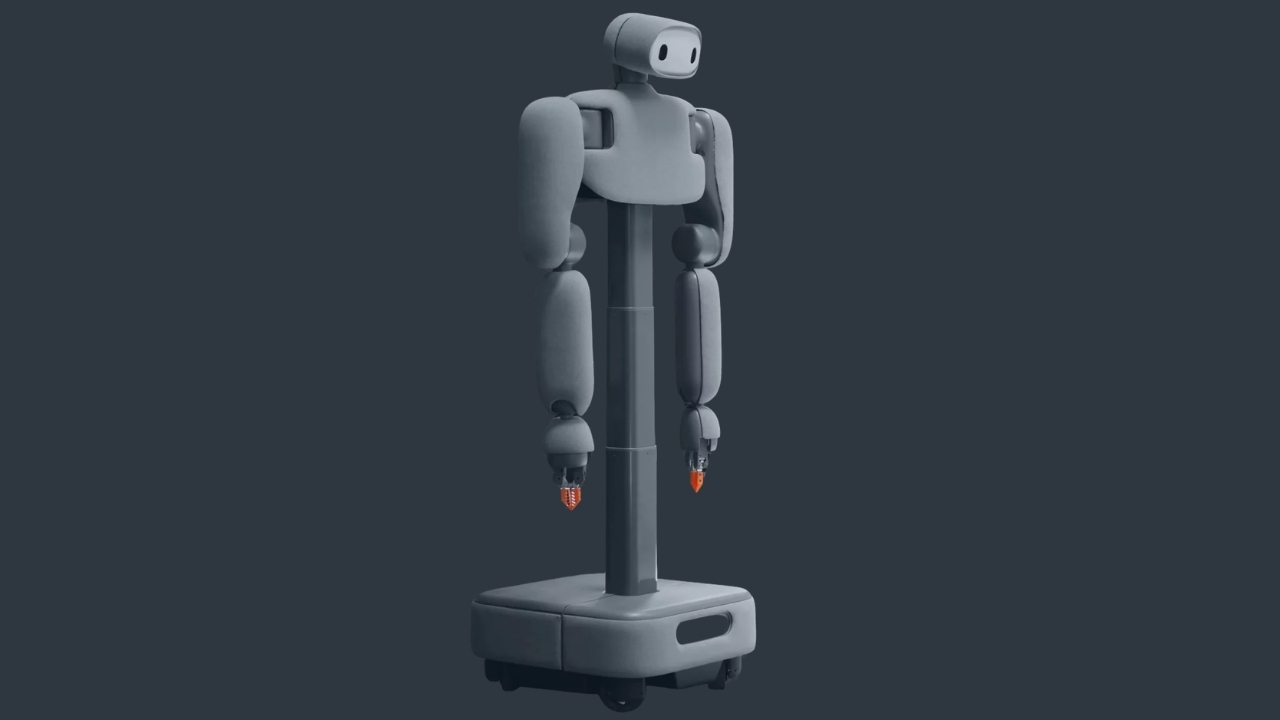
Unlike its two-legged humanoid rivals, the Weave team has put its budget into functionality rather than into the thousands of dollars of expensive sensors needed to keep a robot balanced, prevent it from falling, and let it take human-like steps. Viewed from the outside, Weave Robotics Isaac 1 has a fairly friendly face and a modern body with a soft fabric covering, specially designed so it never damages delicate furniture or wall corners. It moves very quietly on a wheeled base. This fabric covering gives the robot the look of a stylish household object rather than an industrial machine.
While waiting at its charging station in a corner of the living room, the robot pulls its body inward and shrinks into a compact size of about 90 centimeters (3 feet), so it does not get in the way. However, as soon as you give it a task from the smartphone app or a voice assistant, its body extends telescopically upward and can reach a height of 1.75 meters (5 feet 9 inches). This variable height design allows the robot to pick up toys from the floor as well as reach high wardrobe shelves.
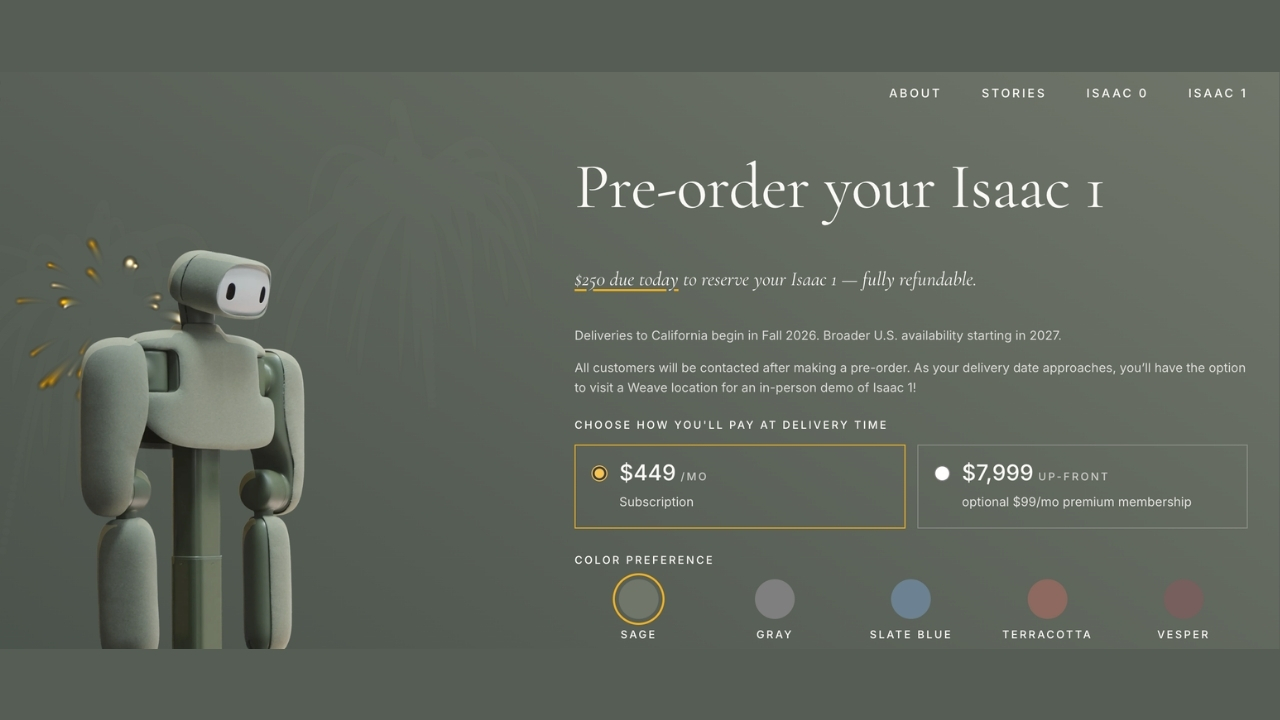
To blend with your home's decor and color palette, the device comes in five soft color options. Among them, modern tones such as sage green, terracotta, and slate blue stand out.
Instead of trying to mimic complex human fingers, this household robot grasps objects with two orange pincers, which handle the job more cleanly, reliably, and quickly. The device can operate for about 8 hours on a single charge, and it has the potential to fundamentally change the idea of practicality in the home robot market. Its advanced cameras and LiDAR sensor architecture map the home in three dimensions while it moves, which fully prevents it from bumping into pets, children who suddenly step in its path, or fragile glass objects on the floor.
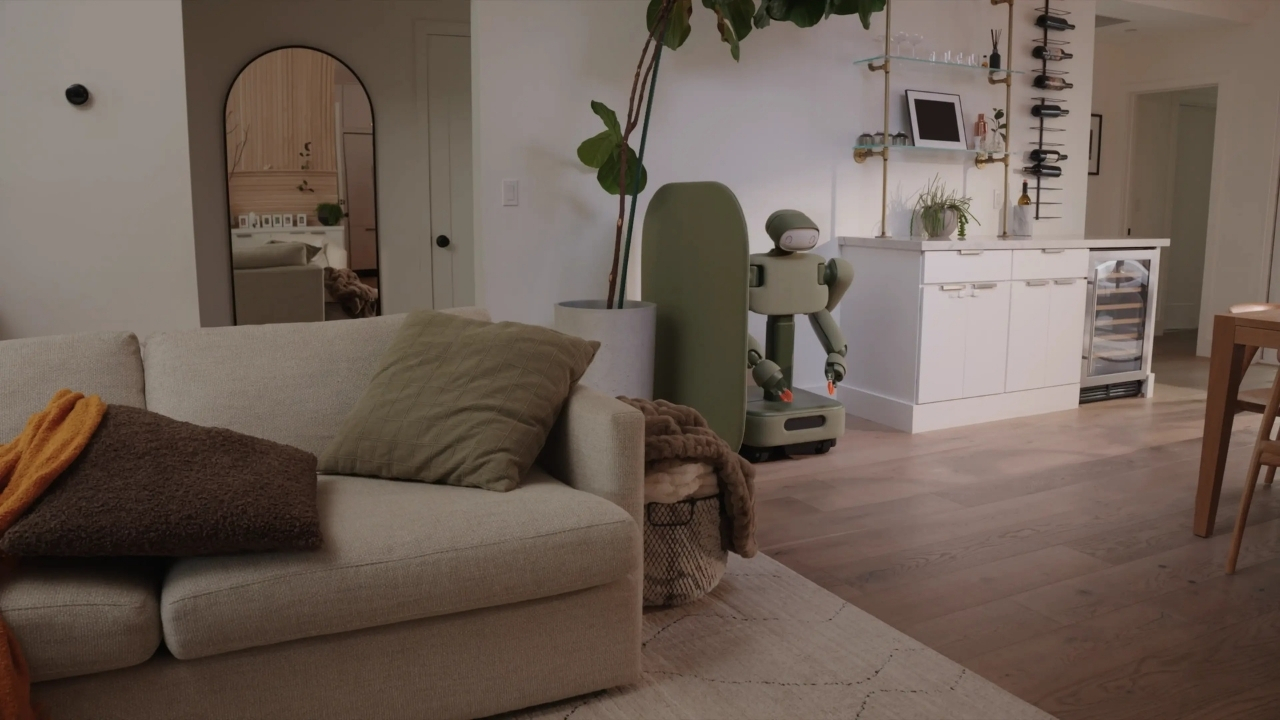
In fact, this budget-friendly, wheeled design approach is not unique in the industry. Instead of luxury humanoid prototypes, the logic of a wheeled assistant that spans from logistics to household routines, as previously tested in Reflex Robotics' project, A Robotic Revolution From Warehouse to Household Chores, clearly shows that the market has moved toward solutions that are far more grounded in practical reality.
A New Era in Household Chores: What Can Isaac 1 Do?
The biggest misconception in the technology world is expecting an autonomous machine to flawlessly do everything at once, from cooking to mopping floors, cleaning windows, and ironing. Weave Robotics engineers avoided this mistake by narrowing their target and focusing on three core household routines that take up the most of the household's time and that people get most tired of doing:
Laundry Folding and Organizing:
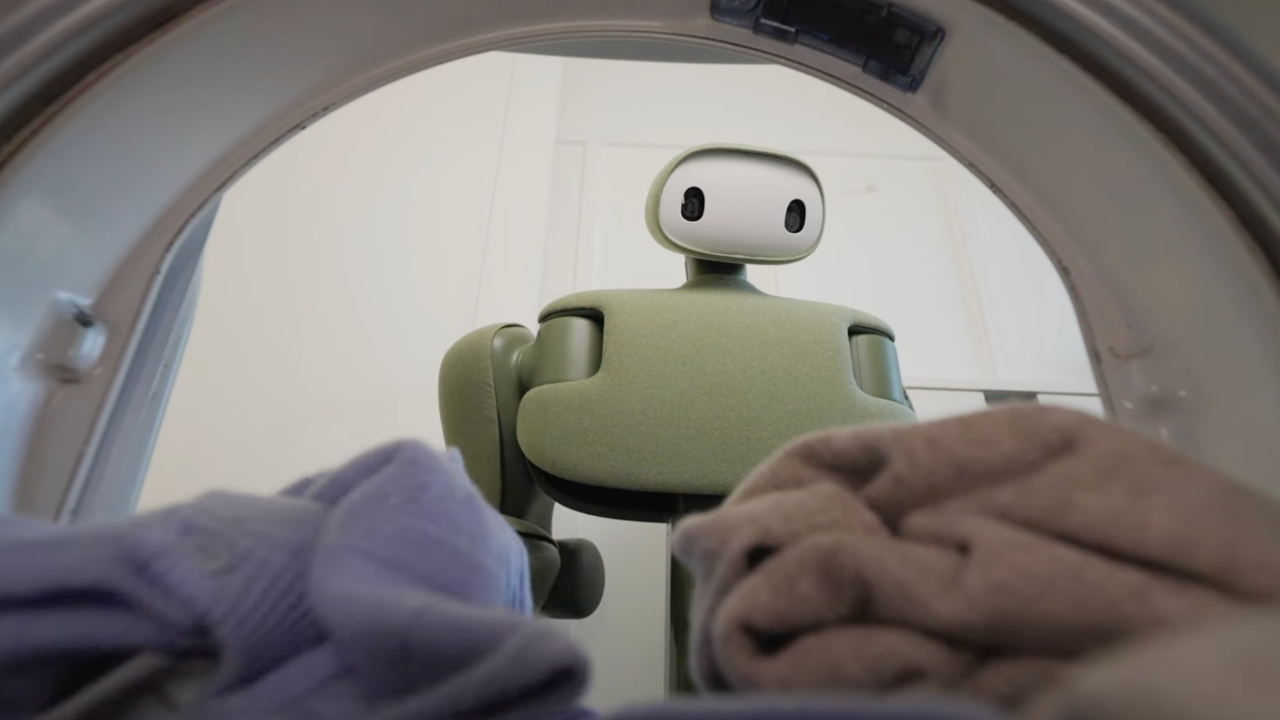
The most technically prominent aspect of the robot is that it can function as an independent laundry folding robot, Isaac 1. It autonomously gathers clothes scattered around the house or piled in a basket for days and carries them to the laundry basket one by one. It then sorts and folds clean laundry into categories based on fabric type, weight, and folding structure. The system successfully categorizes every clothing group according to its own standards, from long-sleeved shirts and t-shirts to shorts and trousers, from hand and body towels to pillowcases and duvet sets, and places them in their spots in the wardrobe with surprising neatness. For now, operating and programming the washing machine is not among the robot's abilities.
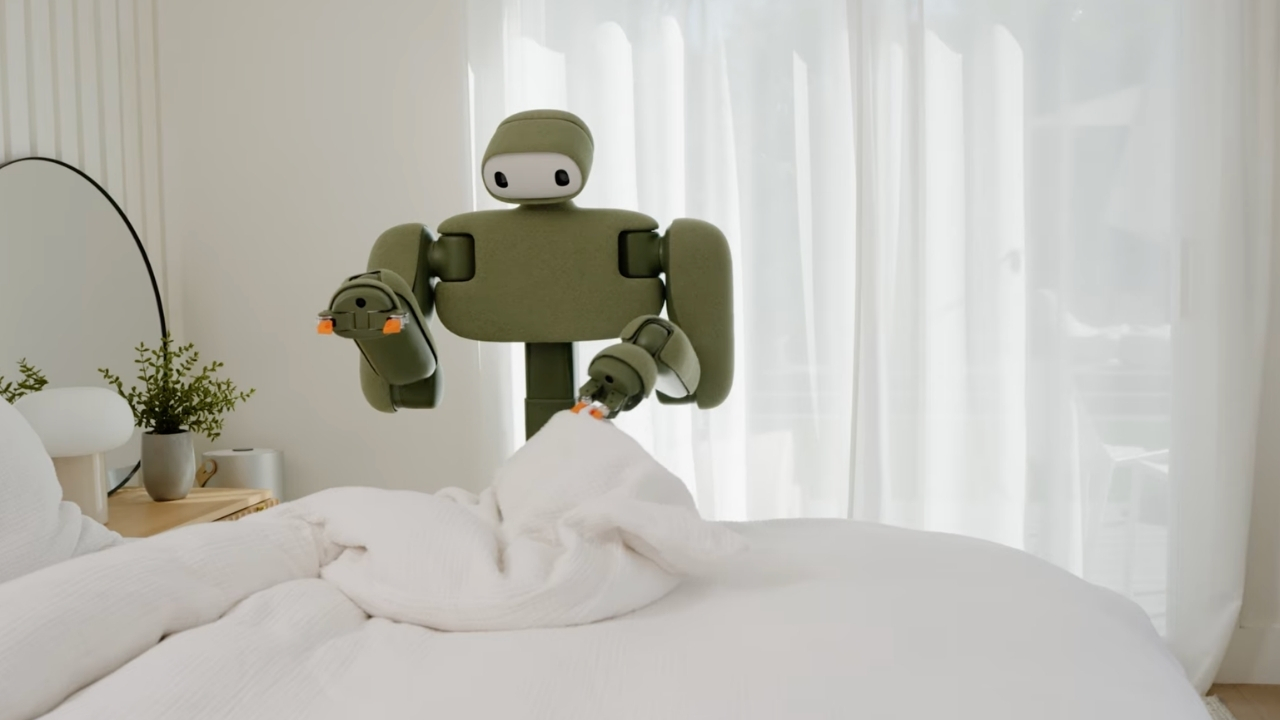
Bed Making and Order:
You can leave behind the rushed mornings when you get out of bed in a hurry and the messy scene you leave behind when heading out. Isaac 1 can enter the bedroom, fluff the pillows, and smooth the comforter and sheets to a precise finish, making your bed ready and smooth, much like a bed in a luxury hotel room.
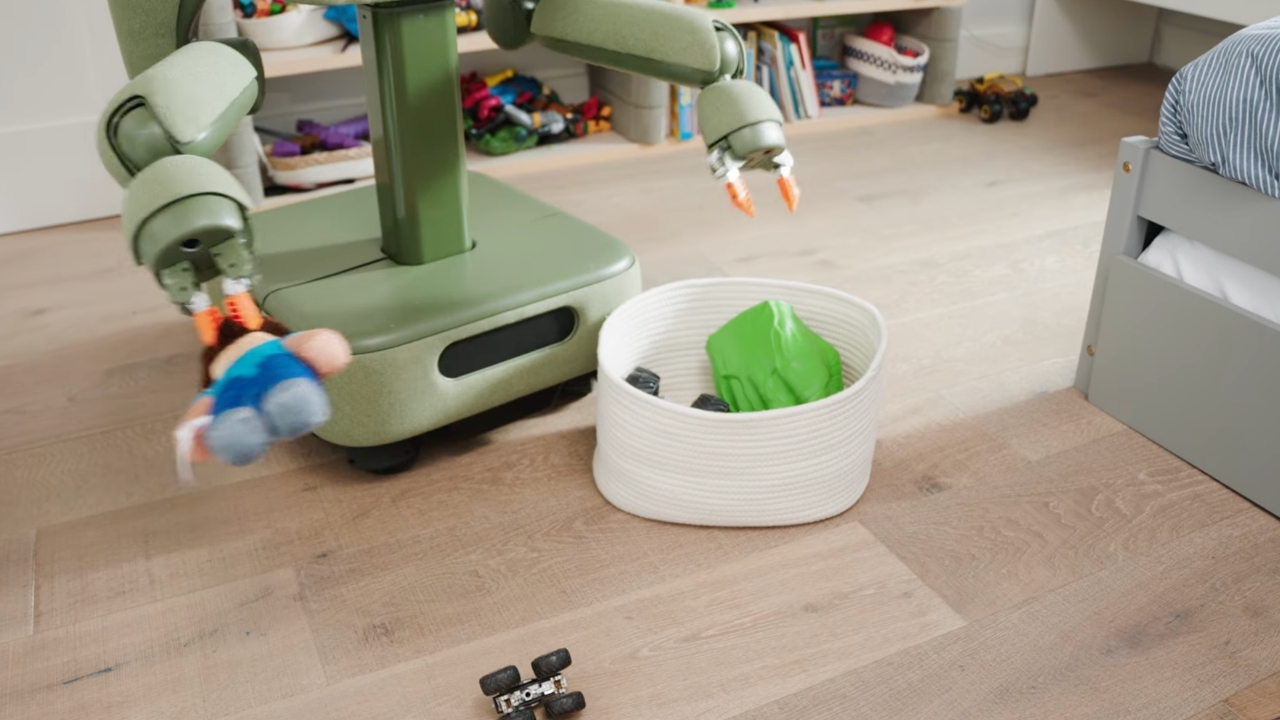
Clearing Clutter Around the Home:
Using AI-based object recognition models, it identifies toys scattered in the living room or child's room, clothes on the floor, pillows thrown onto sofas, and TV remotes one by one. It not only lifts them off the floor but also places them correctly into their boxes, baskets, or shelves.
Operating Architecture and Privacy
The most critical point here is the software and operating system architecture running in the background of the robot. Under normal conditions, the device scans your home with its autonomous cameras and handles routine tasks on its own using its local AI processor. However, when the robot encounters a very complex mess, or gets stuck on a challenging object folding or collecting task that it has never seen before and does not know how to grasp, the system triggers a "help request."
At this point, a professional remote human operator waiting at Weave Robotics' headquarters immediately steps in. Using virtual reality (VR) glasses and controllers, this expert views the scene through the robot's cameras and remotely provides real-time help to ensure the current task is completed safely and correctly.
The robot records the movement made by the human operator in its memory and learns to fold the same object on its own the next time. In other words, every intervention makes the robot smarter.
This raises the question: "Is my home being watched by an operator in the cloud?" The company has developed a strict end-to-end encryption and censoring mechanism to protect user safety and privacy. During remote sessions, just before the video stream is sent to the company's headquarters, the robot's built-in AI filter automatically blurs human faces in the home, personal photos on the walls, screens, and other private belongings. The remote operator can only clearly see the clothing or object that needs to be collected.
So How Much Does the Isaac 1 Robot Cost for Our New Home Helper?
In the robotics world, price tags are usually set at levels that users can never reach and that only corporate companies can afford. The fact that even the prototype costs of two-legged humanoid robots run into hundreds of thousands of dollars has kept this technology out of homes. Weave Robotics, however, has managed to bring production costs down to consumer electronics levels through its wheeled base and its design using pincers instead of complex fingers.
According to the official website, the Isaac 1 robot price is set at 7,999 dollars for upfront purchases. The company also offers a flexible monthly rental and subscription model of around 449 dollars for users who do not want to pay this amount at once or who want to test the device in their home before buying it.
The content of this subscription model is quite rich. The monthly payment fully includes hardware maintenance, the latest AI software updates, parts replacement coverage, and ongoing remote operator support. For a modern household that regularly hires professional cleaning or domestic help, this monthly budget can become a fairly reasonable technology investment that pays for itself over time and eliminates privacy risks.
When Is It Coming to Our Homes?
Right after its launch, which drew much attention in the technology world and on social media, the Weave team began collecting pre-orders through its official website with a 250-dollar deposit. According to the company's official timeline, the first deliveries will begin in September 2026 in California, which is considered the technology hub of the United States. Expansion of the model's logistics network to other US states is expected to reach 2027, while the timeline for Europe, Turkey, and the global market will become clear later, depending on the company's production capacity and local distribution agreements.
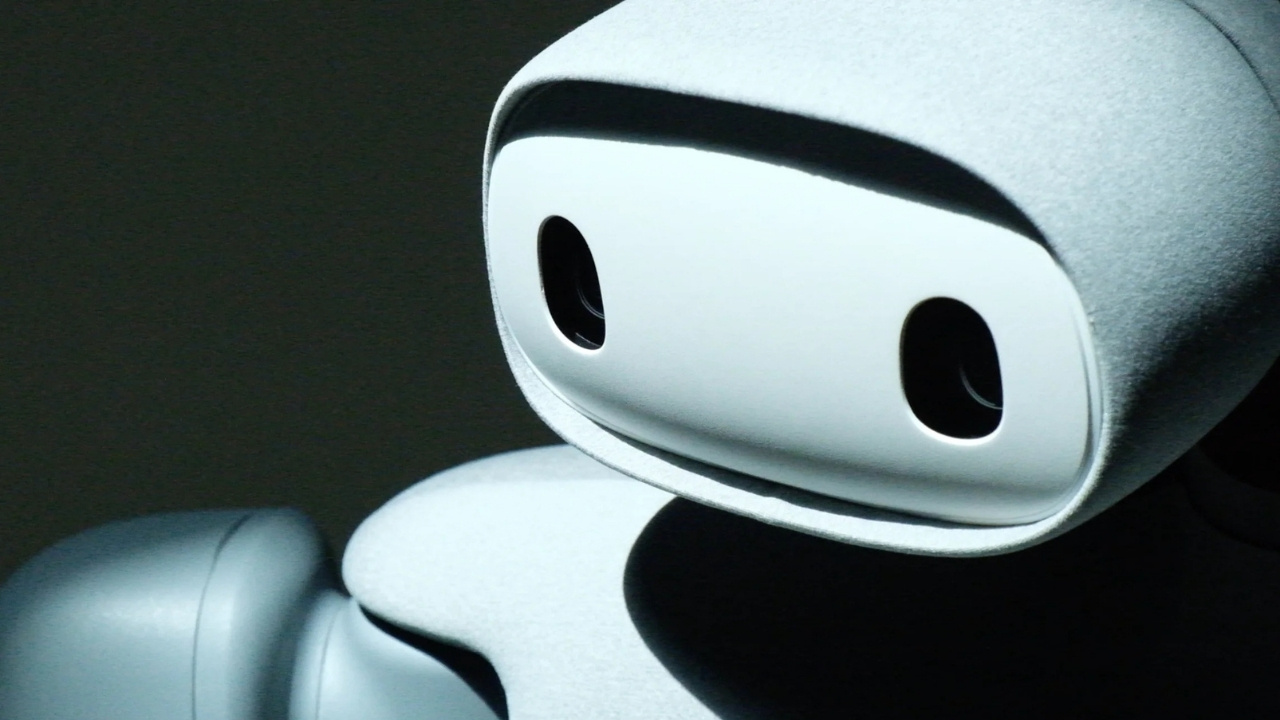
Weave Robotics appears to focus on the real needs of consumers who say, "Just fold my laundry neatly and clear up the mess in my home," rather than on consumers who choose the promises of humanoid robots that say, "I can do every chore in the house." Considering the home assistant concept previously tested in 1X Neo's first humanoid home robot experience from the OpenAI-backed company 1X, it is fair to say that the market is moving beyond laboratory fantasies toward more grounded, commercial, and practical solutions. Isaac 1, which will expand its in-home abilities and object recognition library with future software updates, is one of the most sensible and practical robotics steps this year for tech enthusiasts who are tired of household chores and want to integrate technology into their daily lives.
WriterBM'nin İlk Küresel Yapay Zeka Yönetişimi Diyaloğu Başladı


Android Virüs Temizleme: Belirtiler ve Adım Adım Çözüm