



What is Data Mining, Why Important? Methods and Samples
Automatically translated
 Creator
Yes, data mining is also important today: decisions such as fraud detection, demand forecast, customer segmentation and recommendation systems by revealing patterns and relationships in large data stacks. Statistics uses machine learning and database methods together; the purpose is to remove data from data, not the data itself. If you are working with personal data, you must comply with KVKK in Turkey.
Last update: 23.10.2026
1. What is Data Mining?
Data mining is the analysis step of the “information discovery” (KDD) process in the “data: the molds in large data sets find statistics, machine learning and database methods. The name is somewhat misleading; the scraping thing is not the data itself, but the information in the data. The difference from classical data analysis is the search for unknown molds instead of testing a pre-installed hypothesis.
1.1. Purposes of Data Mining
Descriptive analysis: To reveal current status, groups and distributions in the data.
Forecast based analysis: Estimate a future value or class by modeling past data.
Relationship discovery: Find events and rules seen together (e.g. products taken together).
2. 2. Data Mining Process
The most known framework in the sector is CRISP-DM, designed in 1996 and released in 1999. It consists of six stages and is usual to return between stages:
CRISP-DM stage | What to do? |
|---|---|
Understanding Business | The business question and success criteria will be determined. |
Understanding Data | Data sources are collected, first discovery and quality control are done. |
Prepare data | Cleaning, splicing, conversion; often the most time space stage. |
Modeling | Methods such as classification, clustering, regression are applied. |
Reviews | It is controlled that the result does not really answer the business question. |
Receiving circuit | Model or findings are transported to report, board or product. |
The following steps are the practical equivalent of this process:
2.1. Data Acquisition
Data collection is the first step of data mining. At this stage, data sources are determined and data collected. Data sources may include:
- Databases
- Websites
- Social media platforms
- Surveys and other research methods Home
2.2. Data Preliminary Processing
The collected data is generally raw and irregular. Data pretreatment is the process of making data suitable for cleaning, conversion and analysis. This stage includes:
- Completion of missing data
- Detection and correction of aggregate values
- Normalization of data
2.3. Data Analysis Home
Data analysis is the most critical stage of data mining. At this stage, data is analyzed using various techniques and algorithms. Common methods include:
- Classification: The data is divided into certain categories.
- Clustering: It is to group data with similar features.
- Regression: A numerical value (e.g. sales quantity or price) is modeling the relationship between variables to predict.
2.4. Evaluation of results
Evaluation of analysis results is important to control the accuracy and validity of the obtained information. At this stage, the meaningfulness and applicability of results are examined.
2.5. Interpretation and Reporting of Results
The interpretation of results is the ultimate purpose of data mining. The resulting findings are reported to be used in decision-making processes. At this stage, results are more understood using visual graphics and tables.
3. Data Mining Methods
Some common methods used in data mining are:
3.1. Category
Classification allows data to leave certain classes. For example, classification algorithms can be used to determine whether an email message is spam. Among the common classification algorithms are:
Decision trees : Decision trees offer a graphical representation in the tree structure modeling the decision-making process based on certain features in data. Each branch represents a decision or condition, each leaf indicates a final condition or outcome.
Support vector machines (SVM) : SVM is an algorithm that aims to find hyper plane that best distinguishes data points. This hyper plane is placed in the way that separates different classes to allow the widest area (margin).
Naive Bayes : Naive Bayes is a classification method installed on Bayes teoremi. The expression "Naive" (pure) comes from the fact that each feature of the algorithm is independent of each other.
3.2. Clustering
Clustering is used to group data points with similar features. This method is effective to explore natural groups in the data set. Among the common clustering algorithms are:
K-Means : K-means, data points k a number of clusters (cluster) are an algorithm that is grouped. Each set is represented by the average (merkezi) of data points in that cluster.
Collaborative clustering : Conical clustering is an algorithm that organizes data points, similarities or distances in tree structure (dendrogram). This method creates a hierarchy by distinguishing data points into subgroups.
DBSCAN : DBSCAN is an uncontrolled learning method that creates clusters by grouping data points according to their density. This algorithm groupes data points in these areas by identifying dense zones and evaluates less dense zones as noise (noise).
3.3. Regression
Regretion analysis is used to model the relationship between dependent and independent variables. For example, regression analysis can be done to understand how the price of a product changes with the request. Common types of regression include:
- Linear regression
- Logistics regression (also used in two-factor classifications such as yes/nounce)
- Polynom regression
3.4. Collaboration Rules
Together rules are used to explore the relations between data. For example, a customer can be used to determine which products together are tending to purchase. The most known algorithm in this field is Apriori, which Agrawal and Srikant recommends in 1994.
4. Data Mining Applications
Data mining has different application areas in many sectors:
4.1. Retail Industry
In retail industry, data mining is used to analyze customer behaviors, make sales forecasts and optimize inventory management. For example, union rules can be used to determine which products are purchased together in a market.
4.2. Finance Sector
In the financial sector, data mining fraud detection is used to develop credit risk assessment and investment strategies. For example, classification algorithms can be used in evaluation of credit applications.
4.3. Health Industry
In the health sector, data mining is used for early diagnosis of diseases, improving treatment processes and optimization of health care. For example, risk analysis can be performed through health history of patients.
4.4. Social Media
Social media platforms benefit from data mining to analyze user behavior, make content recommendations and ad targeting. For example, clustering methods can be used to provide content recommendations according to the interests of users.
You can attract attention: 2024 Nobel Physical Prize Artificial Nervous Networks Introduced
5. Ethics and Privacy in Data Mining
Data mining often works on data relating to the behavior of people, which brings the risk of privacy. When processing personal data in Turkey, it is necessary to comply with the Personal Data Protection Act (KVKK) No. 6698: you must process data from open consent or other legal reasons in Article 5. of the Law, as well as processed data until the relevant person will be illuminated (10. clauses) and are alone.
5.1. Data Privacy
Private qualified personal data (KVK 6. substance) such as health data are subject to strict rules. When possible, anonymous or alias (pseudonymization) clearly tells you that access limits and collects data for which purpose. Keep unnecessary personal data if model training is over.
5.2. Ethics Use
Ethical use means that the obtained information is not used to harm people. For example, if the biases that exist in past data are transported to the model, some groups may become disadvantaged to the wrong place in credit or recruitment decisions. So it is a good habit to check the results of the model for different groups.
Conclusion
Data mining continues to be one of the main ways of converting data into decision. If you start with the right question and follow a process like CRISP-DM, you can get benefits from large data sets. When working with personal data, it is integral part of work to comply with KVKK and control results against bias.
Frequently Asked Questions
What is the difference between data mining and data analysis?
Data analysis usually tests a pre-installed hypothesis or answers a known question. Data mining focuses on revealing previously unknown patterns and relationships in large data.
Is it the same thing to learn machine with data mining?
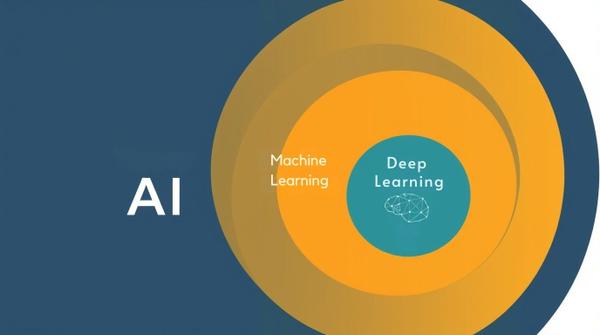
No but inside. The machine learning develops algorithms that learn from data; data mining uses these algorithms (such as mile trees, clustering, nerve networks) together with statistics and database techniques.
What tools are used in data mining?
If you write code Python (pandas, scikit-learn) and R most common options. If you want to start without writing code, you can look at open source tools such as KNIME, Orange and Weka. To attract data, you need to know SQL in almost every project.
Is data mining legal?
The method itself is legal; which data is important. If you use personal data, do not comply with the KVKK No. 6698 in Turkey, you need to illuminate data from a legal reason basis and the related contacts. Check the terms of use of this site while collecting data from other sites.
What should you know to learn data mining?
Basic statistics, SQL and a programming language (Python) is a good start. Then try classification, clustering and regression methods with a real set of data, teaches faster than theory.
Source: CRISP-DM process modelTags Law No. 6698
Creator2025'te Robotik Devrimi: Endüstriyel Üretimde 10 Büyük Değişim


10 Yeni Yapay Zeka Trendi: Sanatta AI’nın Yükselişi