Artificial Vision Applications
Automatically translated
 Creator
Ability to visually examine every element from high-speed lines artificial vision applications Automate industrial control with. Detect surface and measurement defects, conduct asset-proof controls, perform product type verification and read codes.

Artificial vision applications, erate industrial audit processes. It is possible to quickly and effectively visualize each element from high-speed production lines, optimize industrial audit processes.
- Detection of surface and dimensional defects: Artificial vision systems can accurately detect surface and dimensional defects of products, thus improve quality control processes.
- Asset-Containing Controls: Thanks to automatic inspection, the presence of products can be controlled quickly and reliably.
- Product Type Verifications: Artificial vision systems allow products to be found in the production line using advanced algorithms to verify the type of products.
- Code Readings: The ability to read codes on products makes artificial vision systems an important tool for traceability and verification in industrial processes.
Positioning and Robotic Routing

Robot control systems that directly determine parts positions and aspects optimize industrial processes. Learn how results are transferred to robots and position correction systems in this article.
The process of determining parts positions and aspects has become an important part of industrial automation. In this article, you will discover how SEO compatible robot control systems work and how results are transferred.
- Part Position Identification Technologies: Robot control systems use advanced technologies to determine precision positions of parts. In this way, accuracy and speed increases in production processes.
- Direction Detection and Optimization: Industrial robots can effectively work using special algorithms for routing parts. This increases process efficiency.
- Conclusion Transfer and Position Correction: SEO compatible systems transfer designated positions and redirects directly to robots or position correction systems. This makes processes more controlled and accurate.
Product and Parts Completion

In this article, Reading printed characters inside artificial vision applications (OCR), model matching and solving 1D or 2D barcodes in products covers topics like. Discover these important applications of artificial vision technology.
This article addresses an important aspect of artificial visual applications: reading printed characters (OCR) and solving barcodes in products. Also, topics such as model matching will also be examined.
- Printed Character Reading (OCR): Artificial vision applications can effectively read printed characters in text documents, which optimizes document processing processes.
- Model Matching: Model matching is a powerful feature of artificial vision systems with the ability to recognize similar objects or patterns.
- 1D and 2D Barcode Solving: Artificial vision applications that can solve barcodes in products play an important role in processes such as supply chain management and inventory tracking.
Accuracy of Measurement and Tolerances
This article, various geometric measurements from distances to the environment of geometric shapes from spots on an object Home address. They also examine the harmony of these measurements with tolerances. Continue reading for an in-depth guide on geometric measurement and control issues.
This article addresses geometric measurements, which play an important role in industrial processes and quality control, and harmony with the tolerances of these measurements. Starting from the distances between certain points of objects, it will focus on various geometric measurement topics.
- Interpoint Distance Calculations: Calculation of distances between two or more points on objects is a basic step in geometric measurements.
- Geometric Position Calculations: Measuring distances between certain geometric positions of points cover the processes of determining the position of objects.
- Environment and Area Calculations: Calculation of the environmental and space of geometric shapes helps to evaluate the overall size and shapes of objects.

Surface Perfect Controls Home
This article, Visually detect the defects such as pollution, scratch, crack, stain, color degradation, cavity, pit in quality control processes Home address. Discover important information in providing quality standards in manufacturing and production sectors.
This article addresses the critical role of visual error detection in quality control processes encountered in artificial vision applications. Accurate and effective detection of defects such as pollution, scratch, crack, stain, color degradation, cavity, pit is vital in providing quality standards in production.
- Pollution Detection: Visual error detection contributes to quality control processes by defining pollution in products.
- Scratch Control: It is an important step to protect quality standards by detecting scratches on the surfaces of the products.

Benefits of Artificial Vision System
Artificial Vision Systems plays a critical role to optimize production lines, minimize human intervention, secure quality and increase overall output. Due to its speed, accuracy and repeatability, high performance tasks are possible.
Artificial Vision Systems play an important role in production and assembly processes in today's industry. This technology is used to optimize production lines, minimize human intervention, secure quality and improve overall output.
- Fast Production and Repeatability: Due to its artificial vision systems, speed, accuracy and repeatability, it enables to perform repeated tasks with high performance.
- Optimized Production Line: This technology enhances productivity by optimizing production lines and allows processes to process more regularly and effectively.
- Image Processing and Object Inspection: High resolution cameras and image processing systems strengthen quality control processes by reviewing objects in production lines.
Artificial Vision Systems provide competitive advantage to businesses by making production smarter, fast and accurate in the way of becoming the industry’s pioneer. This technology will continue to play a critical role in determining future production standards.
Artificial Vision System Details
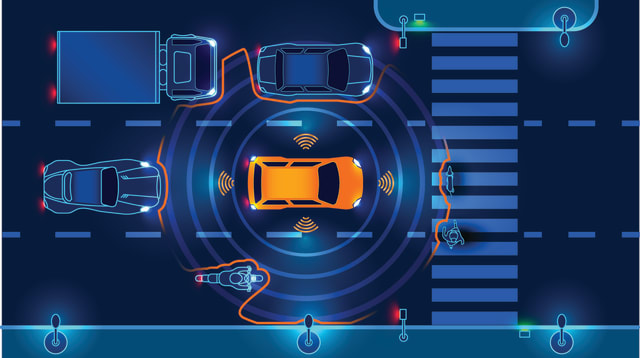
Artificial Vision Systems is a combination of industrial cameras, optical design and image processing software.The view area and pixel resolution to be examined when choosing camera for Artificial Vision System is taken into account. The feature of the app also plays an important role in the selection of cameras. For example, the camera to be used for robotic guidance should have the same different features of the camera to be used for surface control.
Optical selection for Artificial Vision Systems should be done according to the environment enlightenment, surface reflection and the feature of the application. The software, which includes image processing and analysis algorithms to be developed for Artificial Vision Systems, should be at the speed that can complete operations in milliseconds, easy to use, as well as accurate results.
Artificial Vision System Application Approaches

Finding the object or feature that is interested in the viewing area of the camera is the first step in all image processing applications. Finding interesting object often determines success or failure in results. If the image processing algorithms are unable to identify the target exactly within the image, it can not redirect the part, identify, examine, count or measure. Although it comes simple to find the object that is interested in the image, the differences in real production environments can make this step extremely difficult. By using advanced algorithms to guarantee success in all our applications, we set the goal clear and receive high performance results.
CreatorRobotik Makineler ve Yapay Zeka(AI) Geleceğin Teknolojileri


SQL Dil Mastery: Kariyerinizi Değiştirecek Ücretsiz ve Sertifikalı Eğitimler!