AI Impersonation Fraud: Three Seconds Is Enough
Automatically translated
 Admin
What Is Impersonation Fraud?
Impersonation fraud is a social engineering method in which an attacker takes the place of someone the victim knows or feels obliged to obey. The impersonated person may be a bank employee, a public official, the CEO of a company, or the victim's own child. The attack does not need a technical security flaw, because the target is people, not systems.
AI has changed this equation in three ways. According to findings compiled by Vectra AI from the 2026 International AI Safety Report, the tools that power these scams are free, require no technical knowledge, and can be used anonymously. The simultaneous removal of cost, skill and accountability barriers is cited as the reason AI-enabled fraud is growing faster than all other threat categories.
The raw material is also abundant. According to McAfee's research, a three-second clean speech recording is enough for a voice clone with 85 percent accuracy. A WhatsApp voice message, an Instagram video or a podcast guest recording easily meets that threshold. Voice cloning was once studio work; today it is accessible through the browser via commercial tools such as ElevenLabs. On the criminal side, harmful AI models with ethical filters removed have turned convincing phishing texts into mass production.
How Bad Is the Picture in 2026?
The most recent data showing the scale of the threat was published in the first half of 2026. The World Economic Forum's Global Cybersecurity Outlook 2026 report states that generative AI has widened the range of targets against which attackers can build convincing attacks. According to the report, 73 percent of organizations were directly affected by cyber-enabled fraud.
The most striking figure on the corporate side is the gap between awareness and preparedness. According to a Gartner survey compiled by Keepnet, 62 percent of organizations faced a deepfake attack in the past 12 months. The same compilation reports that only 10 percent of security leaders treat deepfake detection as a priority. Sumsub's 2025-2026 identity fraud report, meanwhile, states that deepfake attempts rose 94 percent year over year.
The clearest consumer-side data comes from the United States. According to data the Federal Trade Commission published on June 15, 2026, Americans lost 3.5 billion dollars to impersonation fraud during 2025. More than one million reports were filed, losses nearly tripled compared with 2020, and total losses across all fraud types reached 16 billion dollars. Of the impersonation losses, 2.1 billion dollars originated from contact that began on social media. These figures cover the 2025 calendar year, because the FTC publishes its data once a year; the full 2026 tally has not yet been released.
The trend line points up. According to a Deloitte projection, generative AI-enabled fraud losses in the US could rise from 12.3 billion dollars in 2023 to 40 billion dollars by 2027.

How Are Companies Hit by Fake Executive Voices?
The template of the corporate scenario became clear in one case. In January 2024, a finance employee at an engineering company in Hong Kong joined a video conference. The finance director on screen and all of the other colleagues were AI-generated. According to Adaptive Security, the employee sent a total of 25.6 million dollars to the attackers' accounts in 15 separate transfers. At first the employee had suspected phishing; the live image, synchronized mannerisms and familiar voices erased that suspicion entirely.
Failed attempts are more instructive. According to an analysis published in Forbes, in July 2024 the voice of Ferrari's CEO, including his accent, was cloned and used to reach an executive over WhatsApp. The attack collapsed when the targeted executive asked a personal question that only the real CEO could answer. The other party hung up. In May 2024, a similar video meeting attempt aimed at WPP was also stopped by a single employee's suspicion.
The shared lesson is this: the attack wins not at first contact but at the moment of approval. Money moves not because a system was compromised, but because a human pressed the authorization button. The Verizon 2026 Data Breach Investigations Report, which found that 62 percent of breaches involved a human element, points to the same vulnerability. Classic phishing training teaches you to spot typos and fake domains; it gives you no reflex for verifying a familiar voice.

What Scenarios Are Seen in Turkey?
In Turkey, the form that is spreading is more family- and investment-oriented than corporate transfers. Police units issued warnings in this direction in the first half of 2026.
Family emergency: According to a report published by Yeni Asır, officials at the Izmir Cybercrime Combat Branch Directorate reported a sharp rise in scenarios such as "I had an accident", "I'm in trouble" and "send money urgently". The voice of the victim's child or relative is cloned, and no second verification is made in the moment of panic.
Fake investment ads: Videos promising high returns, built using the image and voice of well-known people, are being circulated. Irfan Sezgin, a 56-year-old living in Sakarya, lost 2.5 million lira through fake ads made with this method.
Celebrity voice impersonation: Singer Serdar Ortaç described being targeted when he was called with his own cloned voice. The same technique is used in frauds that exploit the bond with fans.
Institutional impersonation: In calls where the caller poses as a bank or public official, money transfers are requested on the grounds of "protecting" the account.
Muharrem Baki, chair of the Cyber Security Commission of the Consumer Confederation, says that fraudsters now target the direct sense of trust rather than technical flaws. The advice from officials in Izmir fits in a single sentence: for any request for money made by phone, end the call and call the person back on their registered number.
How Is It Different From Classic Phishing?
Old phishing had flaws that a careful eye could catch: broken language, wrong domains, impersonal greetings. AI-enabled identity impersonation removes these flaws and moves the attack from the realm of visual skepticism into the realm of emotional response.
Criterion | Classic phishing | AI identity impersonation |
|---|---|---|
Channel | Email, SMS | Live voice, video call, multiple channels |
Preparation cost | Low, and low quality | Nearly zero, and high quality |
Raw data required | Email address | 3-second audio recording |
Detection clue | Spelling errors, fake domain | No obvious clue |
Targeted reflex | Carelessness | Obedience to authority and urgency |
Defense that works | Link checking | Out-of-band verification |
The difference is gathered in the last row of the table. You can hover over a link and see its destination; you cannot hover over a voice and see its source. Verification has to happen outside the conversation, not inside it.
How Can Companies and Individuals Protect Themselves?
Detection technology alone is not enough. Voice biometrics and liveness tests are improving, yet large transfers have continued to happen, because the broken link was the process, not perception. Gartner projects that by 2026, 30 percent of organizations will no longer consider identity verification solutions alone to be reliable.
The measures that work are architectural:
Out-of-band callback: Every payment, payroll change and password reset request that arrives by voice or video should be confirmed through a second, pre-registered channel. Verification through the same channel the request came from does not count as verification.
Four-eyes rule: High-value transfers should not rest on the approval of a single person. Insurers are looking in this direction too: under many policies, deepfake-enabled executive fraud is covered only if a callback protocol was documented at the time of the incident.
Family verification password: Choose a word that only family members know. Ask for it in any call that creates panic. This is exactly the corporate equivalent of what ended the Ferrari attack.
Limiting raw material: Sharing long, clear voice recordings on social media means producing a ready dataset for cloning.
Normalizing verification: As noted in Kaspersky's Turkish-language resource, calling back or consulting someone else should be a normal reflex, not rudeness. Legitimate people understand this, while a fraudster will try to block it. This behavior also serves as a test.
On the corporate side, AI security means protecting not only the model but also the identity that the model imitates. On the regulatory side, the timeline is moving: the transparency obligations in Article 50 of the European Union's AI Act take effect in August 2026 and require synthetic content to be labeled. In Turkey, the Artificial Intelligence Bill submitted to the Grand National Assembly envisages a similar labeling requirement and a deadline for content removal.
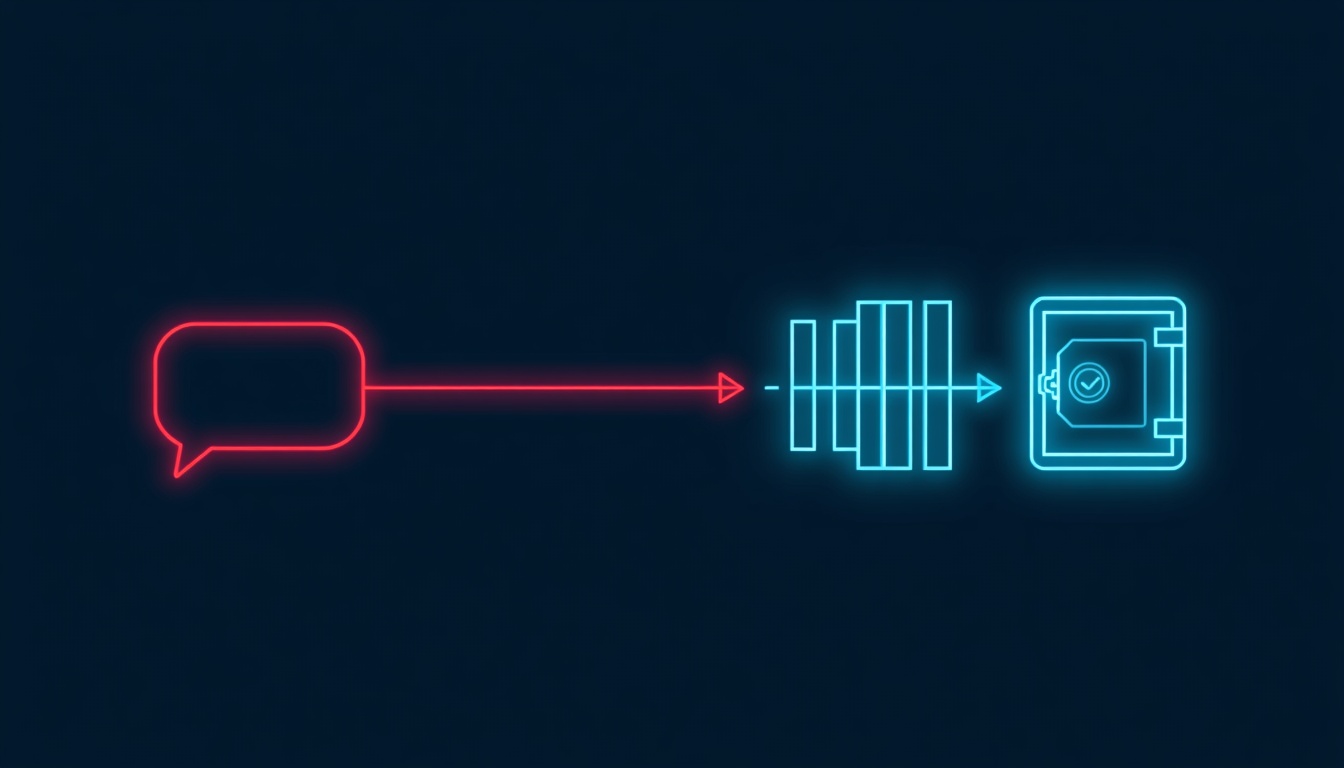
The individual checklist is short. Do not immediately believe someone who asks for money by phone, end the call and call the person back on their registered number, agree on a private verification question within the family, keep banking details out of phone conversations, and refuse remote access requests.
What Is the Community Saying?

Security communities are split on where the solution should be sought.
Those who trust detection technology argue that accuracy rates in synthetic voice and image detection are rising quickly, and that voice biometrics and liveness checks are being embedded in banking and call center processes. For this group, as labeling obligations and digital watermarking standards spread, synthetic content will become traceable.
The other side points out that laboratory success does not carry over to the field. The success of detection tools in controlled tests drops noticeably under real conditions, and attackers move a step ahead with each new model release. In this view the problem is architecture, not perception: rather than trying to tell whether a voice is real, the voice should be unable to authorize anything on its own. The fact that what ended the Ferrari attack was a question, not a detection software, supports this argument.
Frequently Asked Questions
What is AI identity impersonation fraud? It is when an attacker uses AI-generated audio or video to take the place of someone the victim knows. The aim is to get a money transfer, obtain credentials or bypass normal security steps. No technical vulnerability is used; the victim's trust and sense of urgency are exploited.
How much recording is needed to clone a voice? According to McAfee's research, a three-second clean speech recording is enough to produce a clone with 85 percent accuracy. A video on social media, a voice message or a podcast recording provides far more than that. The voice sample does not need to be long.
Is it possible to tell a fake voice by ear? Not reliably. Research shows that people can distinguish synthetic voices with only about 60 percent accuracy, which is only slightly better than a coin toss. Rely on out-of-band verification rather than detection by ear.
How can companies protect themselves from these attacks? The authorization step should be protected by design. Payment requests received by voice or video should be confirmed through a pre-registered second channel. Four-eyes approval should apply to high-value transfers. Finance and HR teams should run regular drills with fake executive scenarios.
What should you do after being defrauded? If the money has not yet been moved to other accounts, there is a chance of recovery, so speed matters. First call your bank to report the transaction, then file a criminal complaint with the prosecutor's office. Keep call records, messages and transfer details as evidence.
The era in which a voice served as proof of identity has ended. What comes next depends on whether institutions and families can turn verification from a matter of courtesy into a rule. What saved Ferrari was not an expensive detection system but a single well-timed question.
AdminGemini Android Auto Kullanıcılarını Neden Kaybediyor?


AI Veri Merkezi Krizi Küresel Yarışı Tehdit Ediyor!