



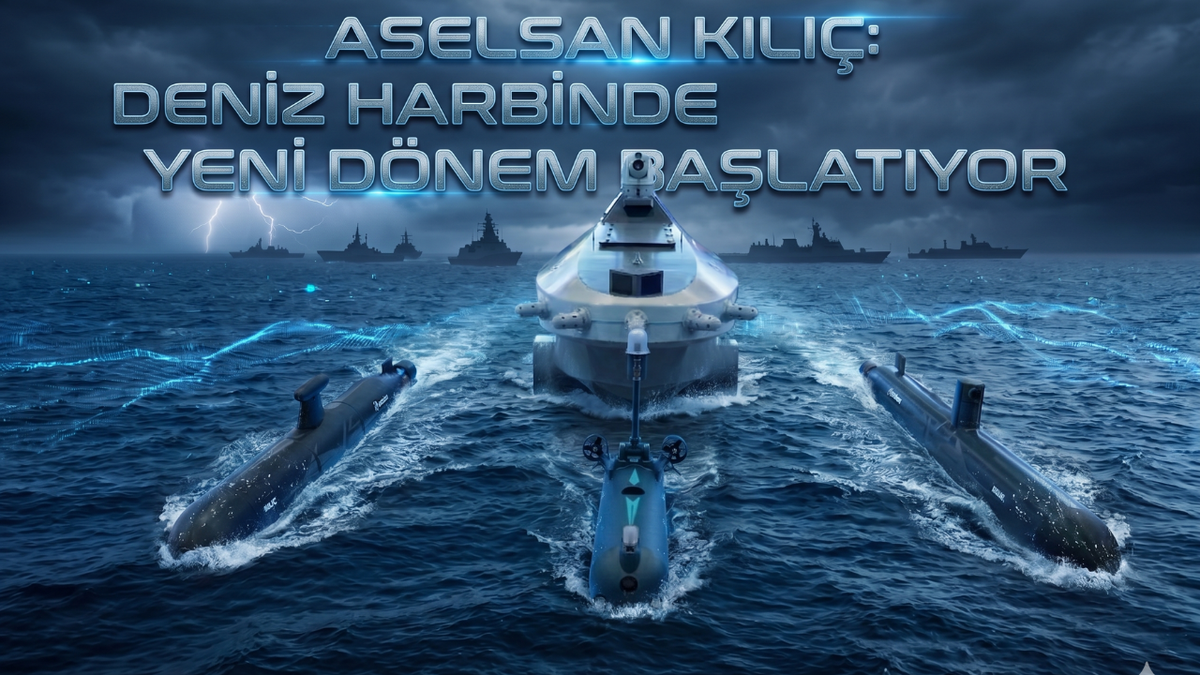
ASELSAN KILIÇ Opens a New Chapter in Naval Warfare
Automatically translated
 Writer
Global naval security scenarios have been fundamentally transformed since the Russia-Ukraine War. We are on the threshold of an era in which billion-dollar cruisers, frigates and amphibious ships can be rendered ineffective by unmanned platforms costing a few hundred thousand dollars. The Turkish defense industry is not merely a follower of this new era; with the doctrines and platforms it has developed, it is a game changer in its own right. Recently, a new system displayed in the background of the EFES 2026 exercise held in İzmir clearly announced the new underwater rules of naval warfare: ASELSAN KILIÇ.
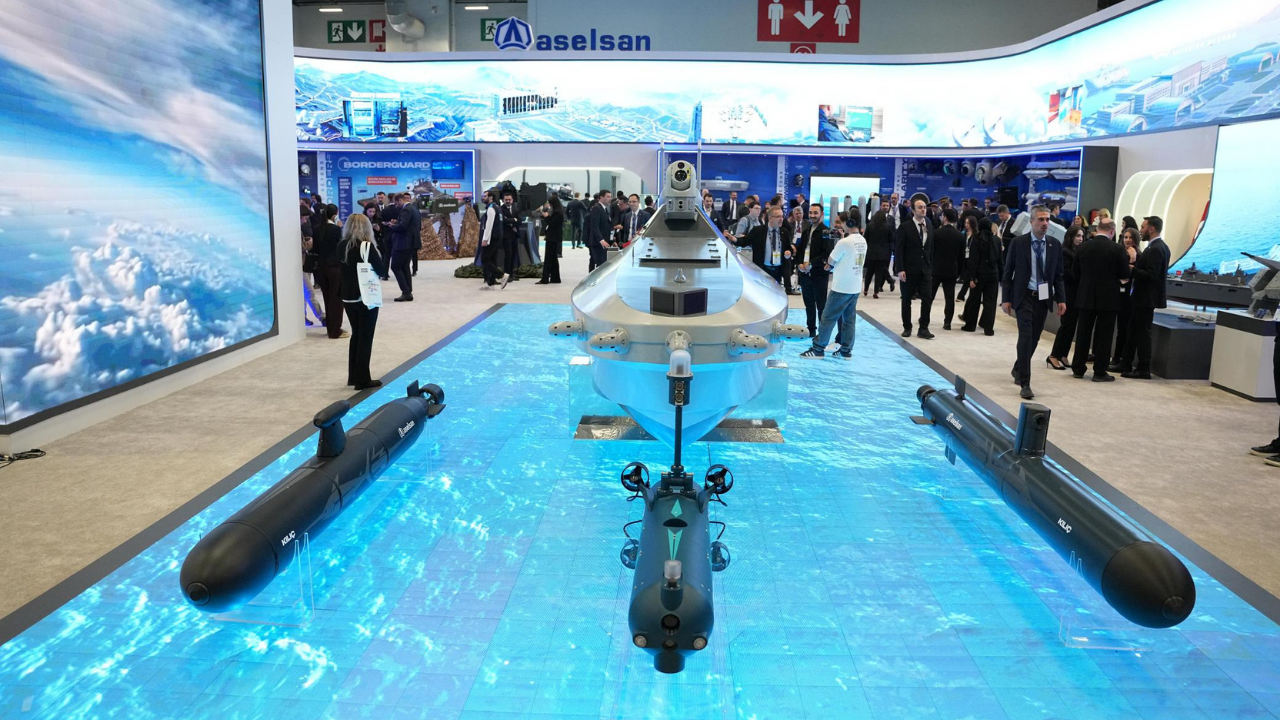
Showcased for the first time at SAHA EXPO, this family of kamikaze underwater drones became the focus of both domestic military decision-makers and foreign military delegations at EFES 2026. Combining the flexibility and network-centric warfare capabilities of modern autonomous systems with the bulk and high cost of traditional torpedoes, these platforms add an entirely new dimension to the unmanned maritime vehicle ecosystem.
What Is a Kamikaze Underwater Drone and Why Is It Critical?
The traditional ways of destroying a target in naval warfare are well known: guided missiles fired from surface ships, heavy torpedoes launched from submarines, or coastal anti-ship missile systems. However, all of these systems require massive logistical infrastructure, and the cost of each shot is measured in millions of dollars. More importantly, the platforms that fire these weapons are themselves priority targets for enemy radars and sonars.
The concept of the kamikaze underwater drone completely reverses this risk equation. Designed fundamentally as an autonomous underwater vehicle but carrying a high-explosive warhead in its hull, these systems are programmed to covertly reach an enemy unit's keel and detonate. The biggest difference between KILIÇ and a traditional torpedo is that it does not have to follow a straight course directly toward the target after launch. It is an intelligent munition that can lie in wait underwater for hours, select targets, dynamically update its route and, most importantly, operate as a swarm to saturate enemy air and naval defense systems.
While Ukraine's damage to the Russian Black Sea Fleet with unmanned surface vessels is still fresh in memory, early warning radars and machine gun platforms developed to counter threats on the surface can be entirely helpless against a covert cyber-physical threat coming from below the water. This is exactly the doctrinal gap KILIÇ is being deployed to fill.
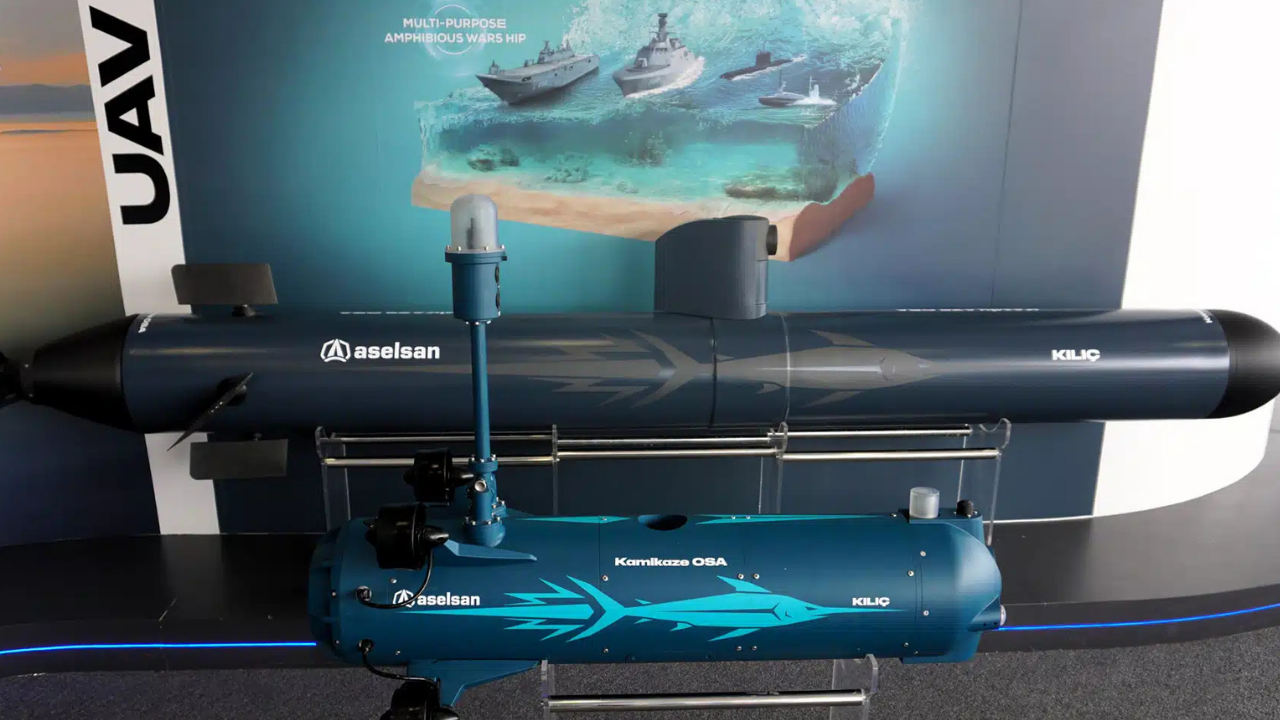
How Does ASELSAN KILIÇ Work? Technical Architecture and Swarm Capability
It is clear that ASELSAN engineers studied global naval warfare trends very closely while designing the KILIÇ architecture. While moving fully submerged, the system has a silhouette so low that it is not detected by surface units on radar or electro-optical systems. However, the most critical engineering achievement here lies in its communication and target tracking mechanism.
While the vehicle continues its covert autonomous course underwater, an extremely thin and optimized mast structure on the upper part of the hull remains just above the water surface or is raised to the surface when needed. Compact sensors on this structure track surface targets, while the system can connect to the command and control center via three different channels, depending on the situation and operational needs:
Wired Control:
Especially in shallow waters, at harbor entrances or in areas under intense electronic warfare, it provides secure communication while leaving zero RF (Radio Frequency) signature.
RF Communication:
Offers uninterrupted data transfer in close-range operations within line of sight (LOS).
Satellite Communication:
In open seas, it enables the munition to be guided globally in operations against targets hundreds of nautical miles away.
This hybrid communication capability allows KILIÇ to be commanded from a single center or from another unmanned surface vehicle in the area. Review of ASELSAN's vision graphics clearly shows that these systems are not only launched from the coast but can also be integrated into larger unmanned surface vehicles, carried into open seas and released from there. The swarm structure formed by multiple KILIÇ units communicating with each other through AI-based algorithms has the potential to lock onto the sonar systems of an enemy frigate group and collapse its defensive line.
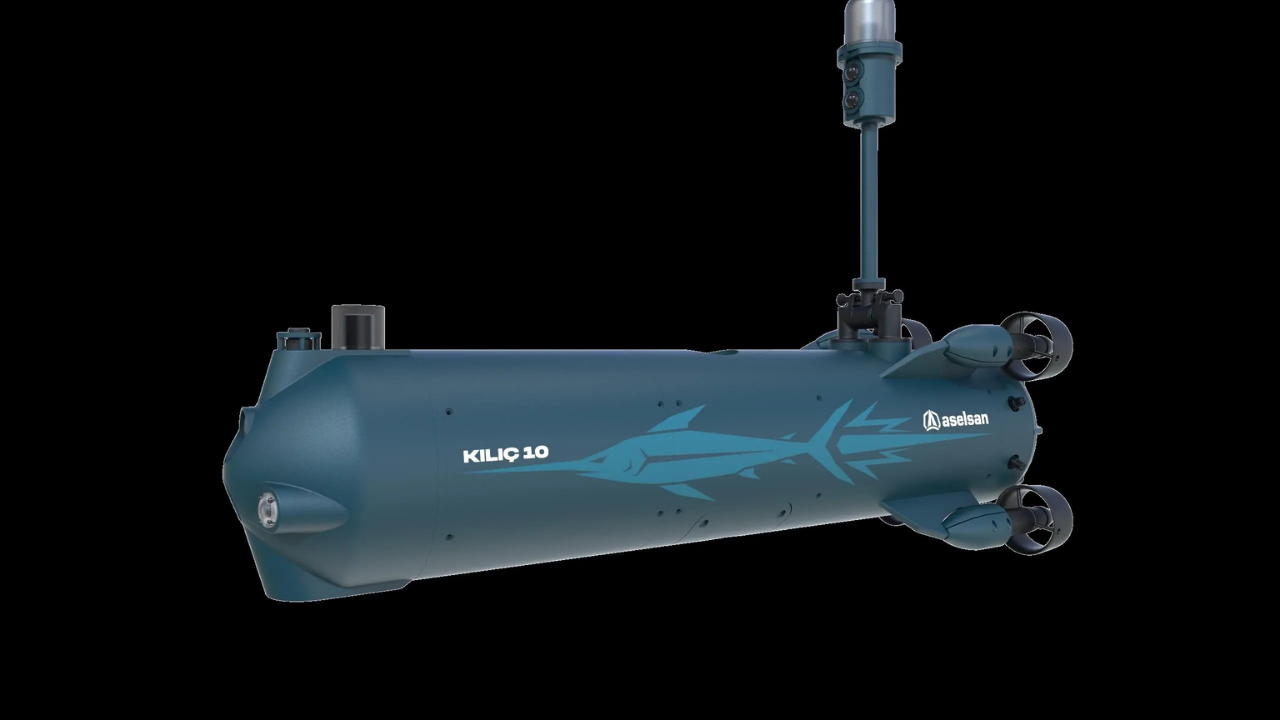
KILIÇ 10 and KILIÇ 200: Mission Profiles and Variant Analysis
To provide operational flexibility, ASELSAN is developing the KILIÇ series in variants with different range and payload capacities. Two main models stand out in this family, whose details became clearer at EFES 2026: KILIÇ 10 and KILIÇ 200. The numbers in the variant names directly indicate the systems' operational range capabilities.
Feature | KILIÇ 10 | KILIÇ 200 |
Operational Range | 10 Nautical Miles | 100 - 200 Nautical Miles |
Main Use Area | Harbor defense, shallow water operations, base protection | Open sea operations, strategic target destruction, area denial |
Control Mechanism | Mainly Wired and RF | RF and Advanced Satellite Communication (SATCOM) |
Launch Platform | Coastlines, small boats, USVs | Large USVs, corvettes, frigates |
KILIÇ 10 is primarily a tactical protection and strike munition. It is ideal for stopping enemy submarines attempting to infiltrate our territorial waters, frogman teams, or amphibious units that have come close to a harbor entrance. Thanks to its low cost, it can be produced in very large numbers and deployed around critical base areas like an almost invisible underwater minefield.
KILIÇ 200, on the other hand, is a strategic force multiplier. Its range of up to 200 nautical miles means this munition can be launched from strategic bases in the Aegean or Eastern Mediterranean and reach the enemy's main naval bases in depth, as well as high-value targets anchored in harbors (aircraft carriers, logistics support ships, command and control ships). With its larger warhead and advanced SATCOM integration, KILIÇ 200 is by itself an asymmetric deterrence element.
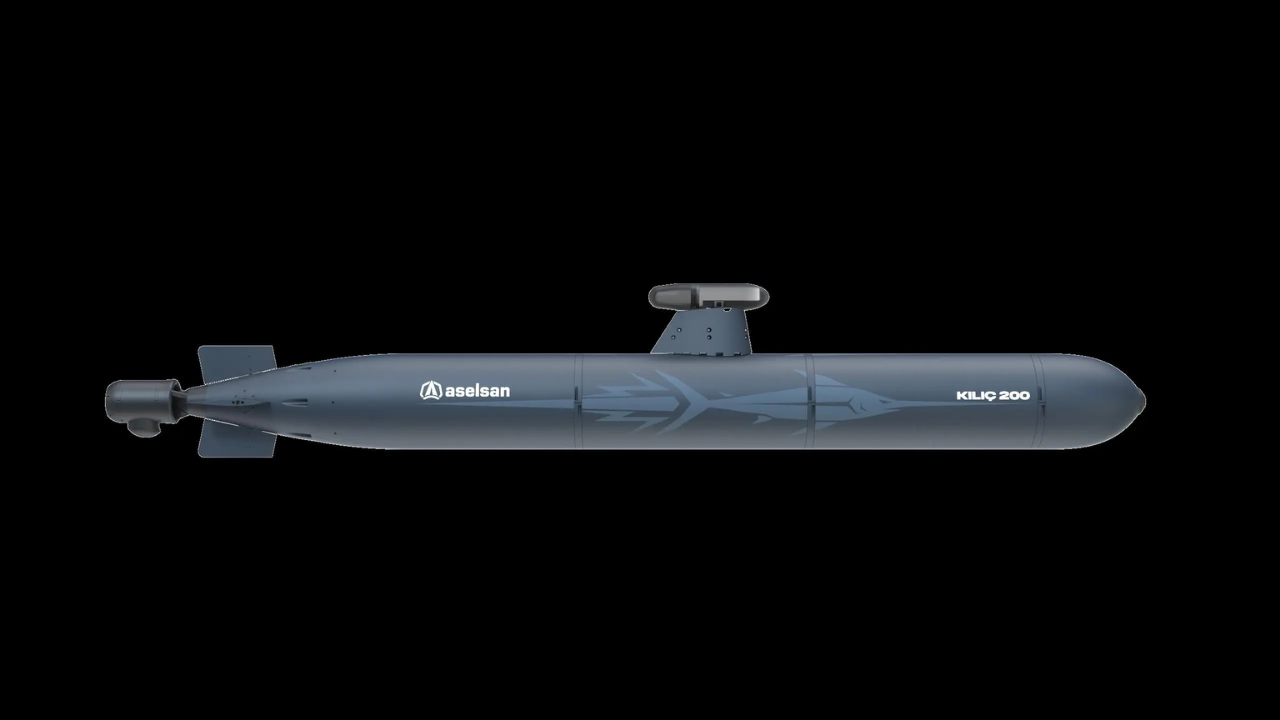
How Are Unmanned Naval Vehicles Changing Warfare Doctrine?
The concept known in military literature as "Distributed Maritime Operations" aims to distribute tasks across many cheap, small and expendable platforms instead of loading all capabilities onto a single massive and expensive one. ASELSAN KILIÇ is the underwater counterpart of this doctrine.
In the past, the effectiveness of a naval power was measured by the number of frigates or submarines it had. However, in today's network-centric warfare environment, these large ships have become open targets for long-range anti-ship missiles and smart underwater munitions. Thanks to systems like KILIÇ, it is now possible to turn the sea areas where an enemy fleet would operate into "forbidden zones" without risking a navy's main ships.
The moment an enemy fleet knows that dozens of kamikaze drones are present, hidden somewhere underwater, nearly impossible to detect because they do not emit active sonar, it loses its freedom of action. Beyond psychological pressure, this forces the enemy to continuously apply costly and time-consuming anti-submarine warfare (ASW) procedures, which is one of the most effective ways to wear down a navy logistically and operationally.
The Ecosystem from Albatros USV Experience to KILIÇ
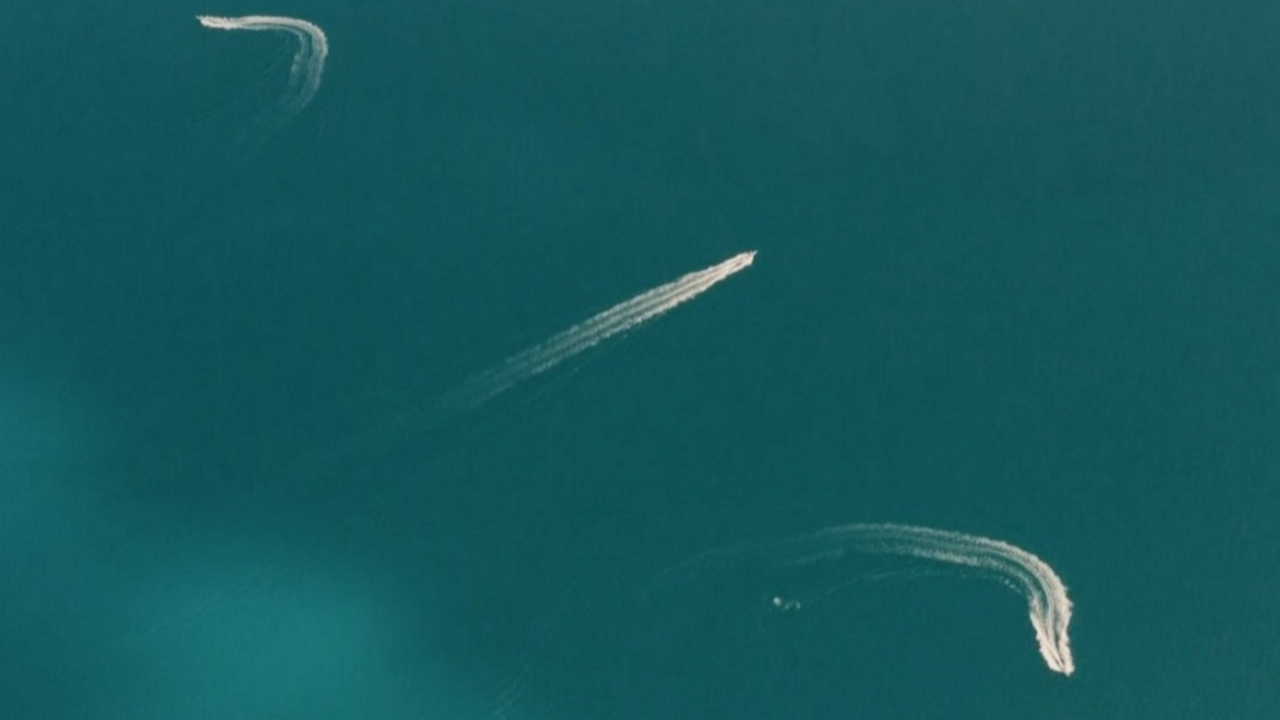
ASELSAN's success in developing kamikaze underwater drones is neither a coincidence nor a process started from scratch. The company first proved its maturity in this field on the surface. As may be remembered, in 2023 during a highly complex naval exercise in the Eastern Mediterranean, a swarm of eight Albatros Kamikaze USVs struck a target ship with precision and sent it to the bottom of the Mediterranean. That test was the first concrete proof in Turkish naval doctrine that unmanned swarms can sink a ship.
The KILIÇ series is a refined adaptation beneath the water of the swarm algorithms, target locking software and command and control experience gained from the Albatros project. Moreover, ASELSAN already had serious hydro-acoustic and navigation experience in underwater autonomy through reconnaissance and surveillance-focused autonomous underwater vehicles (AUVs) such as DERİNGÖZ. When DERİNGÖZ's covert surveillance capability is combined with Albatros's destructive kamikaze concept, the result is a deadly hybrid force like KILIÇ.
The next stage of this integration will be large-scale Turkish-made unmanned surface vehicles such as MARLİN or MİR carrying KILIÇ drones on their backs, almost like torpedo tubes. In this way, without putting any crewed unit at risk, shock strikes could be carried out against an enemy harbor hundreds of miles away using underwater kamikaze drones launched from an unmanned surface vehicle.
Why Was the EFES 2026 Exercise a Critical Stage?
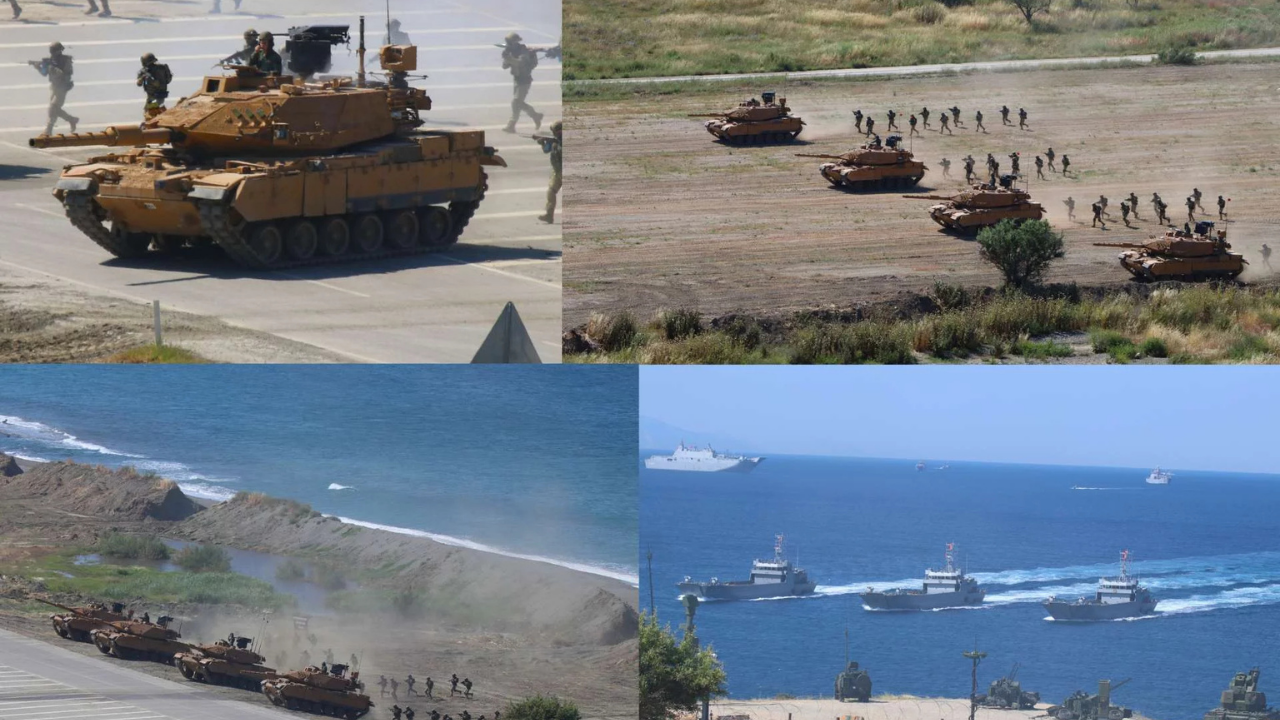
EFES Exercises are not only among the largest and most prestigious joint live-fire exercises of the Turkish Armed Forces, but also massive live showcases where domestic defense industry products are presented to the global market. EFES 2026 was particularly an organization that hosted dozens of official delegations from the Middle East, North Africa, Turkic Republics and the Asia-Pacific region, along with general staff level participation.
ASELSAN highlighting the KILIÇ 10 and KILIÇ 200 models in the exhibition areas and scenario presentations around this exercise is a strategic marketing move. Traditional coastal defense missile systems (CDCM) have a very large logistical footprint, with both launchers and radar stations, and can be easily detected by satellites and destroyed. KILIÇ, however, can be transported to the operating area even behind a pickup truck or on a small civilian-looking harbor boat. For countries that want to protect their coastlines but cannot afford billion-dollar frigates or expensive missile batteries, or that need asymmetric solutions due to their geography (archipelagos and deeply indented coastlines), KILIÇ is quite literally a tailor-made solution. The fact that foreign military experts visiting the exercise asked the most questions about KILIÇ's operational flexibility and cost-effectiveness at the ASELSAN stand was a clear indicator of this.
A New Threshold in the Blue Homeland Strategy and Export Potential
Turkey, as a country surrounded by seas on three sides, shapes its geopolitical security through the Blue Homeland doctrine. Given the debates over island sovereignty in the Aegean Sea and the energy-sharing disputes in the Eastern Mediterranean, it is essential for the Turkish Navy to maintain a deterrent presence everywhere at all times. KILIÇ promises Turkey a tremendous asymmetric advantage in these geographies. Especially the shallow and complex underwater topography of the Aegean offers an excellent natural camouflage area for KILIÇ 10 and KILIÇ 200 to carry out covert operations.
Looking at the export dimension, the Turkish defense industry is now transferring the perception of a "brand of unmanned systems" it built over the past decade with UAVs such as BAYRAKTAR TB2 and ANKA to the naval domain. KILIÇ is a visionary product that will be added to the inventories not only of countries seeking cheap munitions, but also of modern and technologically advanced navies looking to ease their logistical burden. ASELSAN's vertical integration strength in sensors, sonar, electronic warfare and communications will make it easier for these systems to be produced in high volumes and exported without foreign dependence and without being affected by embargoes.
In conclusion, the vision presented at EFES 2026 is the clearest evidence that the Turkish defense industry is not only localizing existing technologies but is beginning to dictate new ways of operating to global military literature. The KILIÇ beneath the water has been unveiled; the cards in naval warfare are being redealt.
Frequently Asked Questions (FAQ)
1. Is ASELSAN KILIÇ a torpedo?
No, KILIÇ is far more than a traditional torpedo. Torpedoes are munitions fired from a specific platform that rush toward the target in a straight or acoustically guided path. KILIÇ, on the other hand, is an intelligent kamikaze autonomous underwater vehicle that can navigate autonomously, lie in wait underwater for long periods, update its route and operate in swarms.
2. How are KILIÇ drones controlled while underwater?
Depending on the mission scenario, KILIÇ has three different communication modes. Wired control is used in shallow waters and under intense electronic warfare for zero signature, radio frequency at close range, and satellite communication through the mast structure raised to the surface in open seas and long-range missions.
3. What are the differences between the KILIÇ 10 and KILIÇ 200 models?
KILIÇ 10 is a tactical model with a range of 10 nautical miles, optimized mainly for harbor, base and shallow water defense. KILIÇ 200 is a long-range system with a range of 100 to 200 nautical miles, incorporating satellite communication and designed to destroy strategic enemy units in open seas.
4. From which platforms can KILIÇ be launched?
The system has a very flexible launch infrastructure. It can be launched from coastlines, harbor facilities and small boats, and it can also be released in open seas when integrated into unmanned surface vehicles (USVs) such as MARLİN, MİR or ALBATROS.
WriterLexus Elektrikli Otomobil Planı Neden İptal Edildi?


Sahte FIFA Siteleri Dolandırıcılığına Karşı FBI Uyarısı


