Natural Language Processing (NLP) Date
Automatically translated
 Creator
Today, it is based on the history of Natural Language Processing (NLP) that we often encounter in areas of machine learning and artificial intelligence. It is based on the midst of the 20th century. The foundations of NLP, which are mostly encountered with artificial intelligence models, were laid out with Turing Test, which Alan Turing introduced in 1950. This test was one of the important steps to start the development process of artificial intelligence.
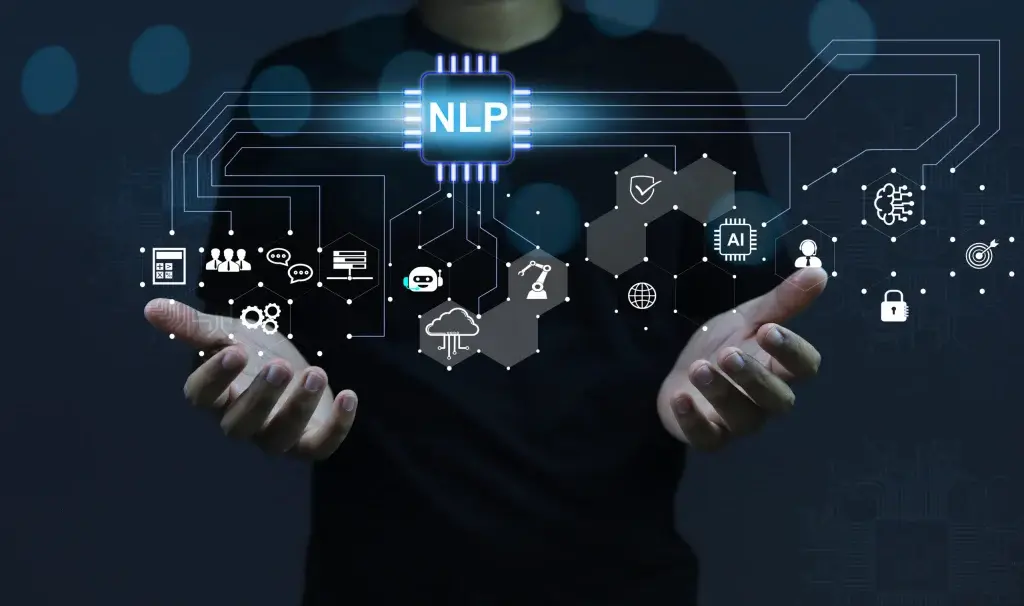
Natural Language Processing Technology (Natural Language Processing) is a technology that significantly helps to provide relationship and communication between computer-insan. It allows the computer to respond to people with their comments, after analyzing people according to feelings, thought and intention.
1950-1960 Term
In 1950, Alan Turing introduced Turing Test, which is based on machine intelligence, designed in order to create human chat-like in an article. With tests over 10 years, NLP’s foundations were assigned. The most effective and promising experiment for this process was Georgetown experiment. Because this experiment was an important test that more than 60 Russian sentences are successfully translated into English.
1960-1980 Period
Two systems have been developed to be pioneered in NLP in 60s. Developed by Terry Winograd, SHRDLU had the ability to understand the natural language. The ELIZA developed by Joseph Weizenbaum was a psychotherapy system, i.e. giving answers to human queries like a psychotherapyist. ALPAC report was published in 1966 by USA. This report argues that AI and language processing technologies need much more development and human interpreters are more effective than computer translation. The report has also been cut off the financing aid of some projects in the next process. However, this was not to significantly stand out of language processing research, but in recent years, it caused further deepening of research and technologies in this field. In this period, machine translation was also improved, but the first machine translation was simple. He writes the opposite of words in the human language according to the queue in the sentence. But even with the rules written by hand, this technology was made. Developers have understood that they need to do more studies on this technology, but also complex.
1980-2000 Period
During this period, the natural language processing (NLP) algorithms were approached to algorithms by moving away from human hand-generated rules. It started to teach real language data to the machines. 90s were introduced by machine learning techniques and the process was faster. Machines began to automatically learn and improve their skills on language. In this period, with the presence of the internet, NLP has given an incredible resource to its systems and thus the systems began to develop rapidly. In addition, N-Grams and LSTM recurrent nervous network (RNN) models were created and played an important role in processing online text flow.
2000s
In 2001, Yoshua Bengio and his team developed neurological language models using advanced nerve networks.
During this period NLP search engines were online with tools such as voice assistant, and more users have access to NLP systems. NLP has taken a more complex state with its growth. Different from 80 and 90 years, NLP systems have made more soft decisions. Support Vector Machines (SVM) and Hidden Markov Models (HMM) have become more useful in this way, systems have become more useful. One of the NLP-based translation systems in this period Google TranslateLaunched in 2006.
2010
Google announced BERT model (Bidirectional Encoder Representations from Transformers) in 2018. This model analyzed the sentence in two-sided way by using the transformer layers denser, increasing the rate of understanding human language. In 2000s, NLP started to change in 2010. With this change, NLP systems used in different functions were revealed. These systems are:
- Word2Vec (2013): Tomas was invented by Mikolov and its team.
- Cross to Nöral Models in Translation Services (2017): Along with this development, Google Translation is far from the statistical context and the sentence is allowed to translate words. In this way, more accurate and precise results are started.
- Long Short Time Memory (LSTM) Networks: LSTM systems have come to the forefront thanks to the ability to understand language. Google Translation and Apple Siri systems have been used.
- Introduction of Transformer Model (2017): Transformer model that optimizes data processing and improves performance and speed.
All these studies and tests have created the Natural Language Processing (NLP) Technology that we are currently using.
Natural Language Processing (NLP) Technology Today
GPT model was developed during this period. The GPT model has provided results in high accuracy with less training data because it is a pre-trained model. Today NLP training, software, facilitates everyday life, has become able to serve many amacas like understanding human language. When we look at the previous periods, NLP has significantly increased its performance.
- Language Understanding and Text Classification: Feeling queries, thinking, intent analysis allows the user a meaningful return.
- Chat Robots and Virtual Assistants: Chatgpt integrates applications to facilitate human life in artificial intelligence models such as Deepseek, Qwen.
- Information: You can get thousands of resources in a very short time.
- Speech Recognition and Language Translation Services: They understand the spoken word and sentence patterns and can provide translations to different languages.
Natural Language Processing (NLP) technology, which is based on simple systems that can translate only a few words about 75 years ago, has now reached a structure that can fulfill many advanced functions such as understanding, providing information, speaking recognition and text classification. Initially, this progress, which is seen as impossible, was supported with artificial intelligence and machine learning, has been a major transformation. NLP is still a field that continues to evolve and will take human-machine interaction to a more advanced point with more contextual, more accurate and ethically stronger structures in the future.
CreatorNasıl Öğrenilir? Doğru Öğrenme Yöntemleri


Fidye Yazılımı (Ransomware) Nedir? Nasıl Korunursun?