Industrial Autonomy: Small Language Models and Self-Correction
Automatically translated
 Admin
Industrial production lines have long operated on predefined automation rules. However, control policies that change dynamically with natural language commands are fundamentally transforming this field. A recently published study takes industrial autonomy a step further with rule-aligned small language models (SLMs) and multi-agent self-correction mechanisms. This new approach promises production processes that run more efficiently and with fewer errors.
A New Era in Industrial Autonomy
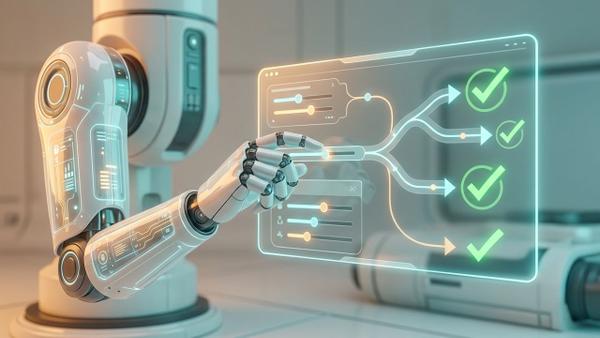
Recently published on arXiv, the paper "Closed-Loop Control with Rule-Aligned Small Language Models and Multi-Agent Self-Correction" marks a critical milestone on the path to autonomy in industrial operations. The study explores the ability of AI agents to automatically generate and reconfigure control policies from natural language requirements. This approach aims to optimize production processes by minimizing or entirely eliminating human intervention. The paper emphasizes that facility-aware verifiers, such as digital twins, improve reliability by checking AI-generated actions before they are executed. The goal is to overcome inference delays in traditional systems through the faster, more efficient operation that small language models naturally offer.
What Is Closed-Loop Control and Why Does It Matter?

Closed-loop control is a principle that forms the foundation of automation and motion control systems. These systems continuously measure the output, compare it against the desired target, and automatically apply corrective actions whenever there is a deviation. This feedback mechanism allows systems to maintain their precision, repeatability and disturbance rejection despite real-world conditions such as changing loads, temperature drift or friction. In industrial settings, these systems improve production quality, optimize energy efficiency and raise safety standards.
The Rise of Small Language Models (SLMs)
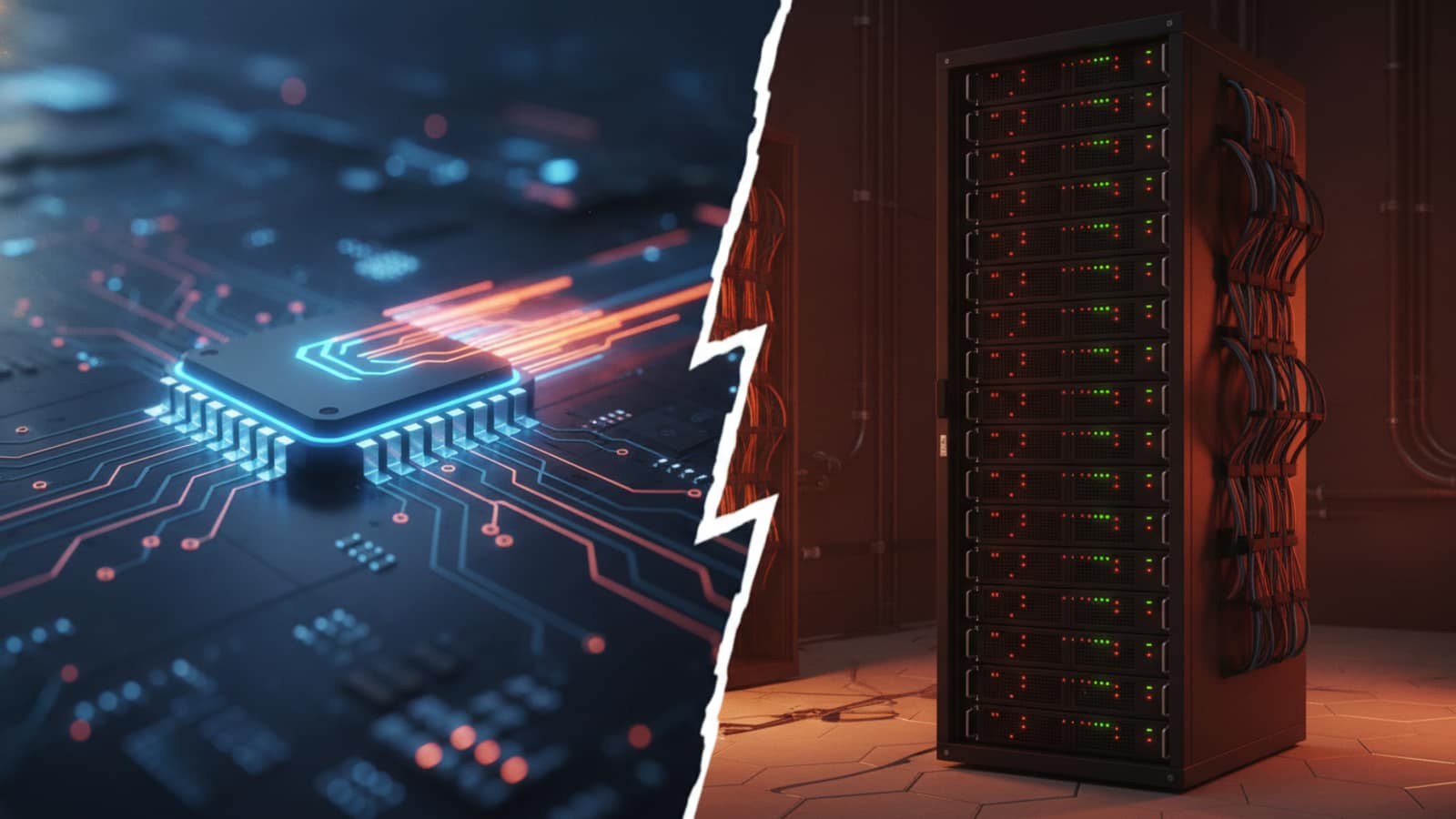
Small language models (SLMs) are AI systems that typically have between 100 million and 20 billion parameters. Compared with large language models (LLMs), they require fewer resources, which makes them attractive for industrial applications.
Advantages:
Efficiency and Low Latency: SLMs run inference faster, have lower operating costs, and consume far less compute power and energy. These properties enable millisecond-level response times, especially in real-time industrial applications.
Edge Computing Capability: They can typically run offline on resource-constrained devices such as smartphones, Internet of Things (IoT) systems, embedded platforms and industrial gateways. This means critical operations can continue uninterrupted in industrial environments with intermittent or no connectivity.
Security and Privacy: By processing data locally, they keep sensitive industrial data from leaving the facility and reduce security risks.
Specialized Performance: When fine-tuned for a specific domain or narrow tasks, SLMs can perform better than or comparably to LLMs in those specific areas.
Being "rule-aligned" means SLMs generate control policies that conform to specific guidelines and requirements. Unlike broad-coverage language models, this makes them more successful at adhering to strict industrial rules.
Multi-Agent Self-Correction Mechanisms
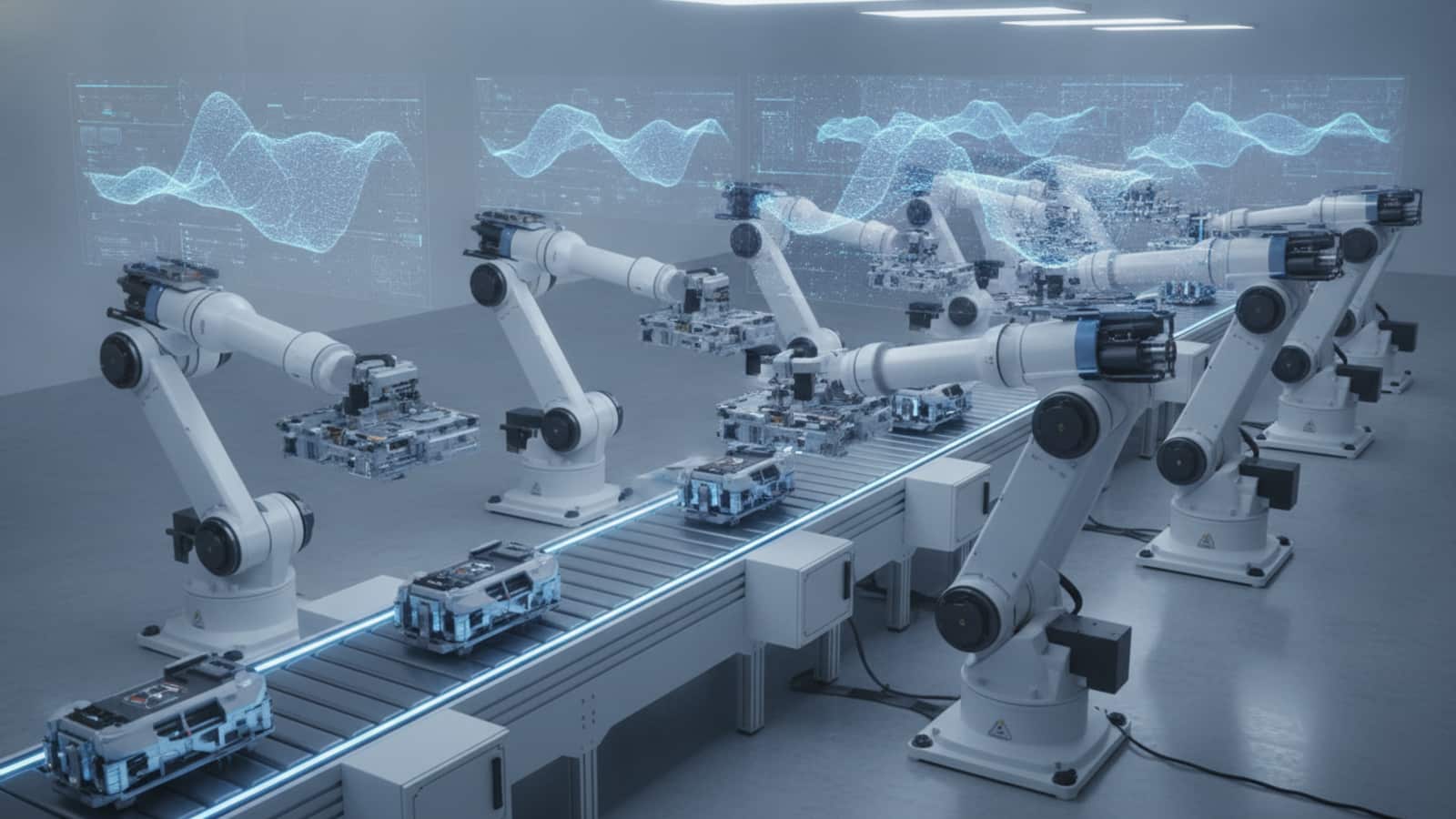
Multi-agent systems consist of multiple autonomous computational entities that cooperate to reach individual or collective goals. Because errors in these systems can cascade and spread, self-correction capability is critically important.
Self-Correction Methods:
Structured Critique Loops: Systems produce output, evaluate it, and regenerate it according to quality thresholds.
Metacognitive Frameworks (MASC): Performing real-time, unsupervised step-level error detection, they trigger a corrective agent when an error is identified, ensuring information is fixed before it propagates through the system.
Semantic Routing and Symbolic Guardrails: Constraints that route tasks to the right agents and enforce strict rules the system must follow, such as "the output must be strictly JSON." When these guardrails are violated, a self-correction loop is triggered. Required rules are enforced this way.
Self-Taught Self-Correction (STaSC): Enables SLMs to learn self-correction through iterative fine-tuning using only data they generate themselves.
AI Agents in Autonomous Industrial Operations
In smart factories and industrial automation, AI agents represent a shift from rigid automation to intelligent, self-managing systems. These agents can perceive their environment, analyze complex patterns, coordinate with other systems, and optimize production without continuous human supervision. 29% of organizations already use agent-based AI, and 44% plan to implement it within the next year. Gartner predicts that by 2028, 33% of enterprise software applications will include agent-based AI.
Application Areas:
Production planning and scheduling
Adaptive process control
Equipment diagnostics and predictive maintenance
Supply chain optimization
Quality control and root cause analysis
Real-time energy optimization
These systems offer productivity gains, fewer errors, lower operating costs and better decision-making. They also provide benefits such as proactive problem solving and preventing knowledge loss by capturing the know-how of experienced workers.
What the Community Thinks
Supporters
The integration of rule-aligned SLMs into industrial autonomy is attracting broad support because it can significantly improve operational efficiency and reliability. Supporters especially highlight that the low latency and edge computing capabilities of SLMs meet the critical requirements of real-time industrial applications. Multi-agent self-correction mechanisms, meanwhile, offer a solid foundation by allowing systems to learn from errors and recover even without human intervention.
Critics
Some experts are concerned about the complexity and upfront costs of these new approaches. Integration challenges with existing infrastructure may pose an obstacle, particularly for organizations running legacy systems. There are also questions about possible ethical issues and cybersecurity risks in fully autonomous decision-making by AI agents. Debate continues over the long-term consequences of completely removing human oversight from the development of fully closed-loop control systems.
Frequently Asked Questions
Will Rule-Aligned SLMs Replace Traditional Control Systems?
Rule-aligned SLMs represent a development that complements existing traditional control systems. Rather than fully replacing them, they will make current systems more flexible and intelligent, particularly through natural language processing and adaptive learning capabilities. They can offer a significant advantage, especially in situations that require fast response and edge computing.
Why Is the Role of Digital Twins Critical?
Digital twins allow AI-generated control policies and actions to be tested on a virtual model before they are executed in a real environment. This provides a vital verification layer that helps identify potential errors and risks in advance, increases system reliability and accelerates optimization processes.
How Does This Technology Affect Industrial Safety?
This technology has the potential to improve industrial safety by automatically detecting and correcting errors. However, it may also create new security concerns, such as unexpected behavior caused by the AI agents themselves or the risk of cyberattacks. For this reason, robust security protocols and continuous oversight integration are of great importance.
Are Small Language Models Always Better Than Large Language Models?
No, small language models are not better than large language models in every case. SLMs can perform better on specific, narrow tasks and in resource-constrained environments (low latency, edge computing), while LLMs are more successful in broader tasks, complex language understanding and scenarios requiring general knowledge. The choice depends on the specific requirements of the application.
The future of industrial automation is being shaped by AI becoming increasingly intelligent and autonomous. The combination of rule-aligned small language models with closed-loop control and multi-agent self-correction mechanisms is taking efficiency, reliability and adaptability to a new level across many areas, from the factory floor to the supply chain. These developments pave the way for production that is not only faster but also smarter and more self-sufficient.
AdminYUKTI: Dil Modelleriyle Sağlam ve Doğrulanabilir Kararlar


GPT Live Nedir? OpenAI Canlı Ses Modu Özellikleri