What Is GPT Live? OpenAI's Real-Time Voice Mode Explained
Automatically translated
 Writer
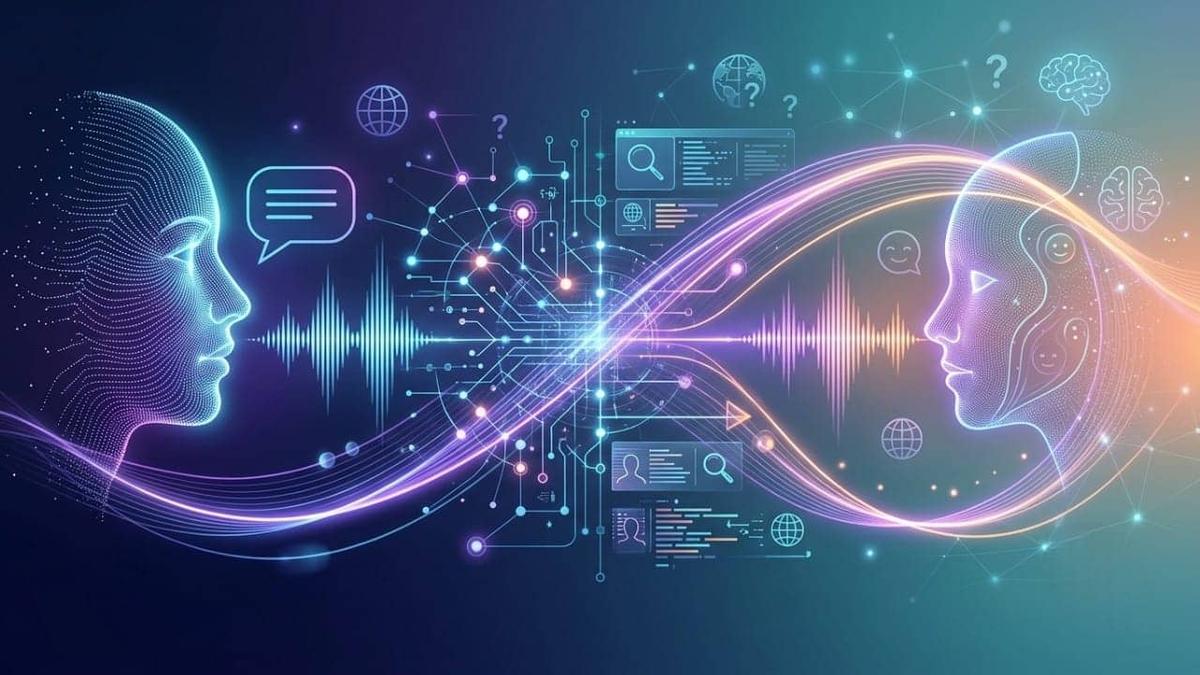
GPT Live is a next-generation conversational technology developed by OpenAI that makes voice interaction with AI real-time. Unlike traditional voice assistants, which only detect commands and respond to them, GPT Live follows the flow of the conversation. It listens to the user, analyzes context, and can join the dialogue naturally when needed. As a result, communication with AI moves beyond predefined question-and-answer patterns and offers an experience closer to everyday conversation between people.
From a technical standpoint, GPT Live is built on OpenAI's real-time speech-to-speech AI architecture. In earlier voice systems, the user's speech was first converted into text, then processed by a large language model, and finally converted back into speech. Although this method produced good results, each conversion step added some delay and partly reduced how natural the conversation felt.
GPT Live handles this process within a single unified model, so it can analyze speech directly and generate spoken responses. As a result, the wait between the user and the AI is significantly shorter, and conversations feel smoother, more natural, and uninterrupted. The system evaluates not only the words spoken but also the pace of speech, pauses, shifts in emphasis, and contextual relationships, which allows it to produce more meaningful responses.
One notable feature of this new architecture is support for two-way communication. In everyday conversation, people do not stay completely silent while the other person speaks. They give brief feedback, join in at appropriate moments, and adjust to the rhythm of the conversation. GPT Live takes a similar approach: while the user is speaking, it can keep listening, respond at a suitable moment without cutting the user off, and preserve the natural flow of the conversation.
The Origins of GPT-Live: A New Architecture for Voice AI
OpenAI announced a new generation family of voice models that fundamentally renews the voice conversation experience in ChatGPT. According to the company's official statement, GPT-Live was built on a full-duplex architecture that can listen while it speaks. This means the model can give the impression that it is listening during a conversation, with short acknowledgments such as "mm-hmm" or "I see," engage in quick back-and-forth exchanges, and stay silent when needed.
What Does Full-Duplex Architecture Mean?
Traditional voice assistants worked as a three-part process: a model that converted speech to text, a language model that processed that text, and a third layer that turned the response back into speech. This chained structure could cause delays and loss of information. The later Advanced Voice Mode ran on a single model and reduced latency, but it still relied on a turn-based structure. It waited for the user to finish speaking and could mistake a short pause for the end of a sentence. GPT-Live overcomes this limitation by processing speech continuously rather than splitting the conversation into separate message turns. The model makes the decision "should I speak, keep listening, or interrupt?" many times per second.
Conversational Interruptions and Overlaps: When the user interrupts the AI at any moment, the system does not treat this as an error code or a system glitch, but as a basic part of natural communication. It immediately stops its own speech and adapts to the new input.
Pauses and Acoustic Analysis: Human hesitations during speech, such as "uhm" or "like," filler words, or moments of thinking, are filtered out by the system within the semantic context or interpreted according to the direction of the sentence. When the user corrects themselves mid-sentence, the AI catches the change immediately.
Natural Flow of Thought: The voice mode can follow complex lines of thought and sudden changes of idea that the user expresses aloud, and it can continue the dialogue without losing logical continuity.
GPT Live1 Features: What Has Changed?
The GPT-Live family has two members: GPT-Live-1, offered to paid subscribers, and GPT-Live-1 mini, which free users get by default. One of the model's most notable abilities is that, instead of answering complex questions on its own, it can hand these tasks off to a more powerful model running in the background.
Task Handoff and Collaboration with GPT-5.5
When a question requires web search, deep reasoning, or agent-based actions, GPT-Live passes the task to the GPT-5.5 model in the background and brings the result back into the conversation when it is ready. Meanwhile, it keeps talking with the user, which prevents the flow from breaking. The silence that used to occur while waiting is largely eliminated. In voice chats, users can choose Instant for quick responses, and Medium or High for situations that require deeper reasoning.
Visual Cards and Multimodal Support
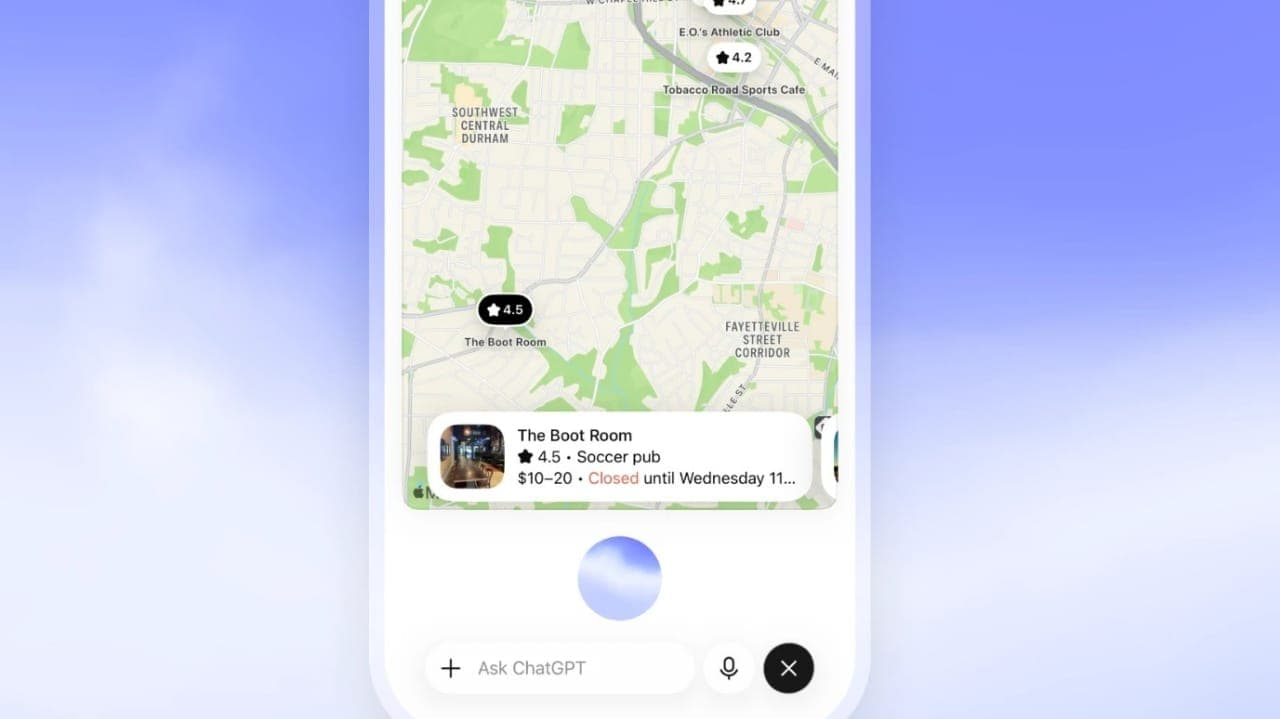
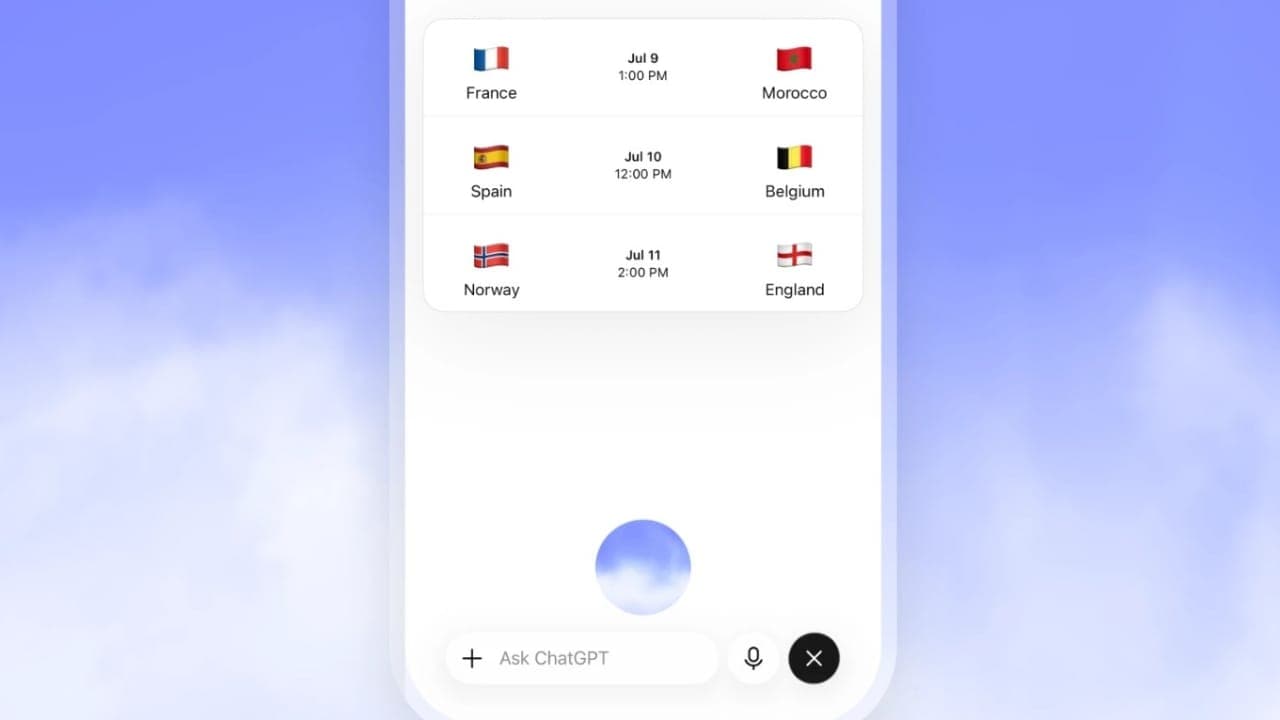
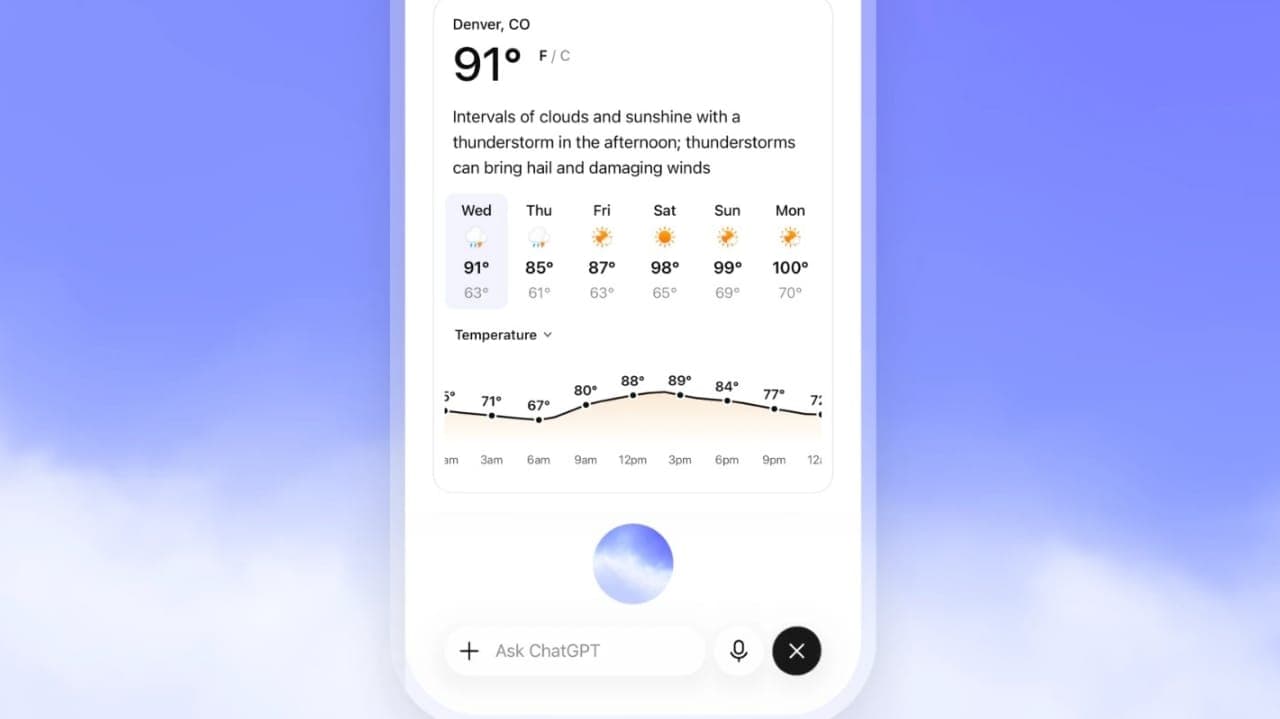
GPT-Live is not limited to an audio upgrade. When a user asks a spoken question about a topic such as weather, stock market data, or sports results, ChatGPT can display visual cards on screen. This allows the voice experience to work alongside existing ChatGPT capabilities such as search, memory, image uploads, and file support. However, at launch, simultaneous use with video or screen sharing is not yet supported.
Previous Advanced Voice Mode | GPT-Live Models |
• Turn-based processing that waits for the speech to end | • Full two-way, simultaneous listening and speaking |
• May mistake short pauses for the end of a sentence | • Natural verbal acknowledgments create a sense of active listening |
• Conversation flow can be interrupted during complex questions | • Complex tasks are handed off to GPT-5.5 in the background |
• Less fluid live translation experience | • Better suited for live translation and real-time scenarios |
Simultaneous Reasoning and Live Information Integration
The system can solve complex logical problems simultaneously while the acoustic data stream continues. During a voice exchange, the AI can run web searches in the background and weave the up-to-date information it finds into the flow of the conversation naturally. For example, while verifying chronological data for a researcher's presentation, it can also check disruptions in real-time transport networks and provide a simultaneous weather analysis. This demonstrates the system's cognitive flexibility in handling multiple tasks.
Acoustic Translation Capability
One of the biggest leaps brought by the GPT Live 1 model is its ability to build instant, dynamic bridges between languages. The system acts as an interface between speakers of different languages and can translate in real time while preserving speakers' intonation, emotional emphasis, and contextual nuances. This shows that not only words but also cultural and rhetorical styles can be encoded and conveyed.
Conversation Dynamics and Social Awareness
The model has a fine-grained social awareness mechanism that can sense when to speak and, more importantly, when to stay quiet and leave the focus to the user. By analyzing the speed of speech, changes in pitch, and the user's emotional state and urgency, it optimizes its response timing and tone accordingly.
Performance Tests: From Scientific Reasoning to Web Search
In human evaluations shared by OpenAI, GPT-Live-1 and GPT-Live-1 mini were clearly preferred over the previous Advanced Voice Mode in matched conversations lasting five to ten minutes. The model outperformed its predecessor on GPQA, a test that measures expert-level scientific reasoning, and posted strong results on BrowseComp, which measures the ability to find hard-to-locate information through agent-based web search. A similar advantage was observed on τ³-Voice Telecom, which evaluates realistic multi-turn telecom support scenarios.
Opportunities | Limitations and Risks |
• More natural and uninterrupted long conversations | • Accent and fluency gaps in some languages |
• Improved fluency for live translation and language practice | • Cannot work simultaneously with video or screen sharing |
• Benefits from background intelligence on complex tasks | • Long-term monitoring needed for the risk of emotional dependence |
• Voice experience enriched with visual cards | • Possible access delays due to phased rollout |
Safety Measures and Parental Controls
OpenAI states that it ran voice-specific safety evaluations during GPT-Live's development. The model was tested separately in sensitive areas such as self-harm, psychosis and mania symptoms, emotional dependence, violence, and sexual content. When risky content is detected, the system is steered toward a safer response, and in very high-risk situations it has the authority to end the conversation directly. Through parental controls, families can turn off voice mode entirely on child accounts, and parents are notified when conversations suggest a teen may be at risk of self-harm. The company also emphasizes that it uses predefined voice sets to prevent imitation of a real person's voice.
OpenAI GPT Live Turkey: Access and Availability
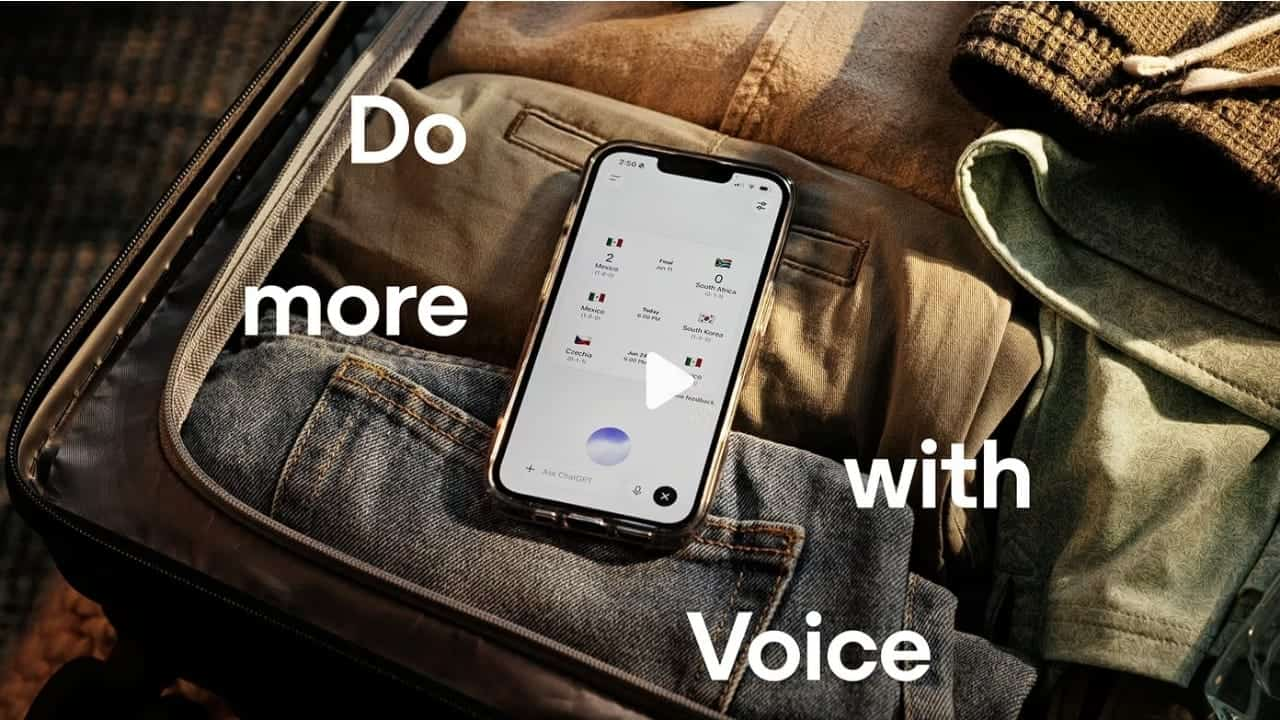
GPT-Live is currently available to users worldwide on iOS, Android, and ChatGPT. GPT-Live-1 is the default voice chat model for Go, Plus, and Pro subscribers, while GPT-Live-1 mini is positioned as the default option for free users. Because OpenAI usually rolls out new features gradually, the feature may take a few days or weeks to appear in the apps of users in Turkey. The company has also said it plans to make the model available to the developer community via API in the near future.
Spring 2024: The first Advanced Voice Mode was introduced; latency was reduced with a single-model architecture, but the turn-based structure was retained.
July 2026: OpenAI announced the GPT-Live-1 and GPT-Live-1 mini models, which have a full two-way architecture, and began rolling them out globally.
Near Future: Plans include bringing GPT-Live to the API and adding support for video and screen sharing.
Where Does Voice AI Fit in the Conversation?
GPT Live architecture developed by OpenAI, and the new ChatGPT Live voice mode, the most dynamic output of this ecosystem, represent far more than a simple interface update in the history of human-machine interaction. This technological leap has transformed AI from a passive tool that only processes the data it is given into an active communication partner that senses micro-variations in our tone of voice, reasons alongside us in real time, and, most importantly, can take part organically in human dialogue. The temporal continuity brought by full-duplex technology has made the boundary between digital systems and human minds almost invisible, narrowing the distance between human thought and artificial neural networks more than ever before.
This transformation shows that the cold, mechanical, command-based nature of technology has been left behind and replaced by a flexible, cognitive layer of intelligence that adapts to human nature. Whether in global contexts or in regional integration processes that will redraw linguistic boundaries, this new voice partnership with AI will fundamentally change not only how work gets done, but also the bridges humanity builds with knowledge and with the world. Rather than written lines of code hidden behind screens, the future will take shape in this new auditory universe, where humans and algorithms meet freely on a shared frequency and with the timeless power of words.
WriterEndüstriyel Otonomi: Küçük Dil Modelleri ve Otokoreksiyon


Yapay Zeka Hafıza Zehirleme Tek E-postayla Mümkün