Future of Electric Tools: 2026 Technological Transformation Guide
Automatically translated
 Writer
The automotive world lives one of the biggest breaking points on its date. Electric cars seen as an alternative to a few years ago have become the main vector of the global market today. The number of vehicles in the roads according to the international Energy Agency data is increased, thanks to technological innovations and infrastructure investments, the future of electric vehicles is from 2026 to a full maturity period. Now, beyond being environmentally friendly, these tools are preferred to offer performance, otonomi and smart grid integration.
What Are Global Trends in Electric Vehicle Market in 2026?

2026 year is considered to be the only transportation vehicle of the car for the automotive industry and to be a mile, which turned into a wheelchair smart device. During this period, 2026 EV market trends are shaped under the main titles:
Rise of Economic and Accessibility Models: Electric vehicles are now just the top segment or luxury choice. Manufacturers entered a competition in the market with economic models installed on modular chassis, suitable for the purchasing power of large masses.
Strategic Transformation of Giant Brands: Volvo’s 2030 full electric brand’s stability and the goal of Volkswagen’s 70% market share is reflected in concrete sales figures as 2026. The 33% of Ford’s sales prove that they become the main current of the market.
Veda Scenarios from internal to Sided Motors: Hyundai and many other manufacturers have shifted all R&D resources to electrical platforms by stopping internal combustion engine development. This situation leads the market share of fossil fuel vehicles quickly.
Software-Oriented Vehicle Experience (SDV): In 2026, consumers are no longer interested in motor power or comfort. Integration of tools with software update speed (OTA), cyber security standards and digital ecosystem has become the most critical parameters in purchasing preferences.
Energy Efficiency and Carbon Neutral Solutions: Combining battery systems with e-fuel technologies of giant groups such as Stellantis with a hybrid approach, carbon neutral targets moved to a more realistic and sustainable ground.
How to Remove Solid State Batteries (Solid-State) Range Problems?

Range anxiety, the largest psychological barrier in front of electric vehicles, solid-state battery technology (solid-state) with history. This technology, which replaces traditional lithium ion batteries, provides both safety and density advantages using solid layers instead of liquid electrolytes.
As of 2026, solid-state batteries carried out from prototype stage to mass production belts allow vehicles to drive over 1000 kilometers with one charge. Moreover, while these batteries minimize the risk of burning, they approach the charging times as well as fuel filling speed. Investments in this area of giants such as Toyota and BMW significantly relieve environmental waste load while doubleing battery life.
New Generation Standards in Autonomous Driving and Electric Vehicle Integration

Autonomous driving and electric vehicleshas become two integral parts that complement each other. Digital architecture of electric vehicles, AI based offers the most ideal platform for the integration of driving assistants. In 2026, "Level 3" and "Level 4" autonomous driving properties are considered part of the new generation EV standards.
Thanks to advanced LiDAR sensors and 5G connection technology, tools can not only detect each other and traffic infrastructure. This integration also improves energy consumption while aiming to reduce traffic accidents by 90%. Tools completely removes the load on the drive by determining the most efficient route and the most convenient charging point through artificial intelligence. Also based on research, Up to 2030 25% of cars sold worldwide will be electric cars and estimated to exceed 80 million vehicles worldwide.
Turkey’s Electric Vehicle Infrastructure and 2026 Energy Strategies Home

Turkey is a regional electric vehicle base. Turkey’s charging station infrastructure has reached the level to offer uninterrupted transportation even in the most ucra corners of the country, not only in large cities when it comes to 2026. Togg domestic production acceleration, which started with, turned into a huge sector with charging network management.
Government incentives and tax regulations accelerate the transition of individual users as well as logistic fleets to electric vehicles. Turkey’s 2026 energy strategies focus on renewable energy sources to meet this growing demand. Smart charging stations integrated with solar and wind power plants are the basis of a sustainable transportation network while reducing dependence on energy imports of Turkey.
Role of "Carten Network" (V2G) Technology in Sustainable Transportation

Sustainable transportation strategies of the future are not only consuming tools, but also as a unit that produces and store energy. "Carten Network" technology is one of the most remarkable innovations of 2026. With this system, electric vehicle owners can sell the battery energy they need to the grid in intensive hours.
This cycle provides additional income to both vehicle owners and prevents the crash against the sudden loads of energy grid. Electric vehicles are now a mobile power bank. This technology, active role in energy management of cities, minimizes the need for fossil fuels, literally seeks the doors of a green future.
2026 year is not a transition period for electric vehicles, a year of admission and standardization. This technological transformation with economic, quiet and environmentally friendly makes our living spaces more soakable and quiet. Being a part of this change to catch the future is no longer a choice, but it becomes the requirement for a sustainable life.
WriterConventional Commits Kullanımı: 2026 Yazılım Standartları

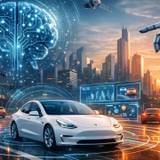
Tesla Tam Otonom AI Sürüş Yazılımı: Kontrol Yapay Zekada