
Depth-Focused Sensitivity Analysis in MoE Models
Automatically translated
 Admin
As Large Language Models (LLMs) grow ever more complex, keeping their performance and efficiency intact has become critical. Mixture-of-Experts (MoE) architectures achieve this balance through sparse activation, but the relative importance of each MoE layer to the overall model has not been well understood. In particular, there was a lack of in-depth analysis in the context of model compression. A new study published in August 2026 fills this gap by presenting a comprehensive layer-wise sensitivity analysis on the Qwen3.6-35B-A3B model, taking an important step toward the future optimization of LLMs.
What Is Depth-Focused Sensitivity Analysis in MoE Models?
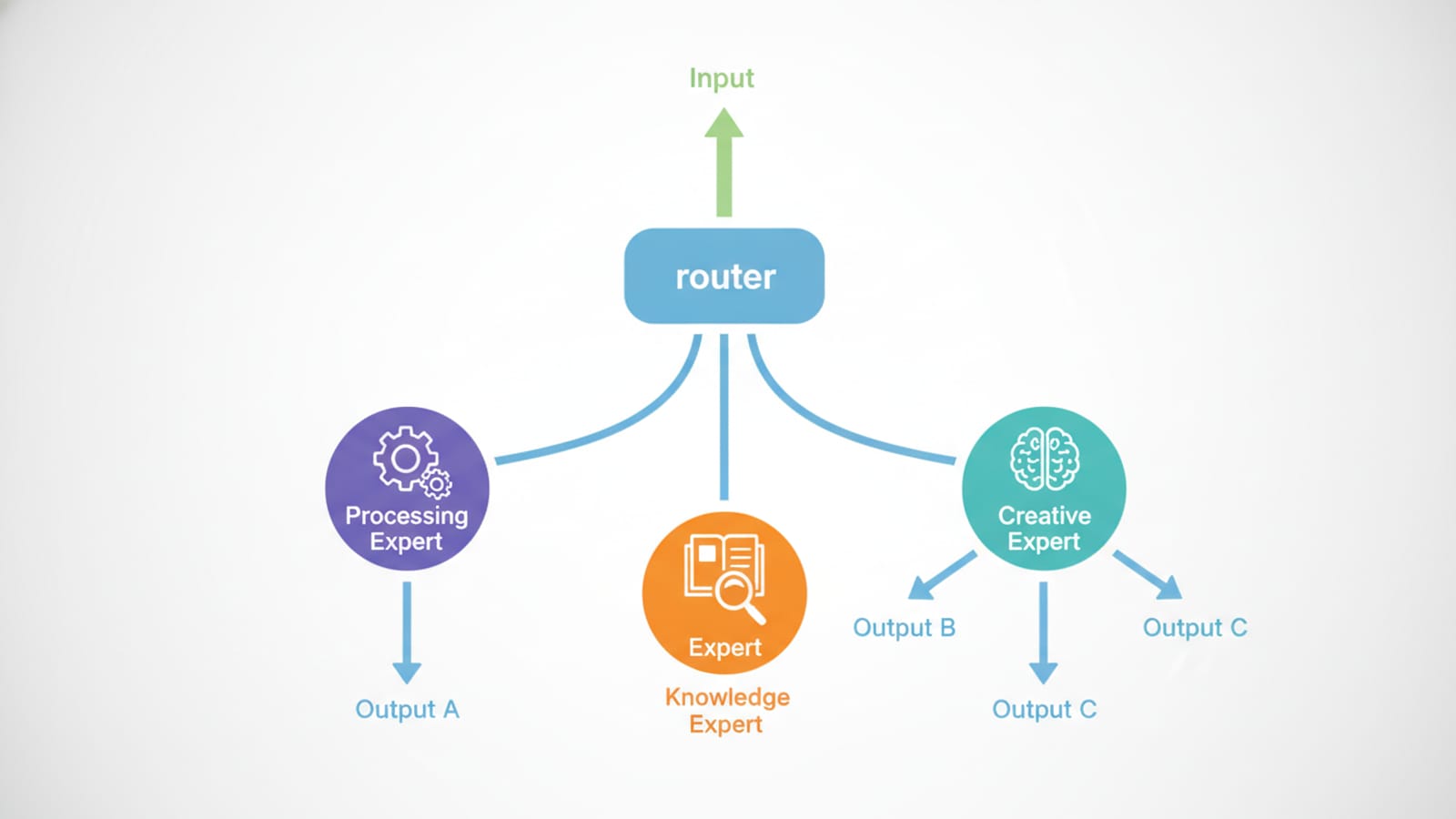
"Depth-Focused Sensitivity Analysis" is a methodology that systematically examines how the different layers of Mixture-of-Experts (MoE) models, and the experts within those layers, affect the overall performance of the model. The goal is to identify which parts of the model are most critical, so that you can find ways to build smaller or faster models without losing performance. In complex MoE structures such as Qwen3.6-35B-A3B, this analysis determines the importance of each layer and expert based on their weight (magnitude) values.
Mixture-of-Experts (MoE) Architecture and How It Works
MoE is an innovative structure that splits a large AI model into multiple smaller, specialized subnetworks (expert networks). Each input, such as a piece of text, is routed through a router mechanism to only the most relevant expert networks. This sparse activation approach increases the total number of parameters in the model without proportionally increasing computation cost. Compared to traditional (dense) LLMs, it offers up to 70% lower computation cost and faster training and inference. For example, the Qwen3.6-35B-A3B model examined in the paper has 40 MoE layers, 256 experts per layer, and a "top-8 routing" structure in which the best 8 experts are selected for each token. Experts typically specialize in finer-grained tasks such as linguistic operations or semantic functions.
The Importance of Compression in Large Language Models (LLMs)

Today's LLMs reach billions of parameters and display remarkable capabilities. However, this scale creates high computation, energy, and memory costs that make deploying them in real-world applications difficult. Model compression techniques are vital for easing these challenges and allowing LLMs to run more efficiently with fewer resources. The main compression methods are:
Quantization: Model size and speed are improved by converting parameters to lower-precision data types (e.g., FP16 to INT-8).
Pruning: This involves permanently removing less important parameters or connections from the model. It reduces the model's complexity and resource usage.
Knowledge Distillation: Compression is achieved by transferring the knowledge of a larger "teacher" model to a smaller "student" model.
Sensitivity Analysis and Magnitude-Based Expert Masking
The layer-wise sensitivity analysis described in the paper aims to determine which MoE layers or experts have the greatest impact on model performance, for the purposes of model compression and performance optimization. Analyses like this are important for understanding the model's internal workings and identifying its most critical components. The term "Magnitude-Based Expert Masking" refers to a pruning or analysis technique that evaluates the importance of experts according to the size of their weight values and masks or disables the less important ones. This approach is one way to optimize the existing sparsity of MoE models or to create additional sparsity.
Industry Context: Qwen3.6-35B-A3B and MoE Usage
The Qwen3.6-35B-A3B model analyzed in the study is a member of the Qwen (Tongyi Qianwen) large language model family developed by Alibaba Cloud. The Qwen family is built on Transformer-based architectures and is known in particular for its multilingual capabilities and strong performance on Chinese and English language tasks. This 35-billion-parameter variant contains 40 MoE layers and 256 experts per layer. Qwen models come in different sizes and performance tiers, such as Max, Plus, and Turbo. The MoE architecture is also used today in leading models such as Mixtral 8x7B from Mistral AI, Grok-1 from xAI, DeepSeek-V3, and DBRX from Databricks.
What the Community Thinks
Supporters
Supporters of the Mixture-of-Experts (MoE) architecture emphasize the computational efficiency and scalability potential these structures offer compared to traditional dense models. MoEs make even models with trillions of parameters more manageable, enabling faster training and inference times. This opens the way for larger and more capable LLMs to be used across a wider range of applications.
Critics
Some experts and critics, however, point to the complexity of MoE models and the subtleties of their training. Getting the router mechanism to work correctly, having experts specialize efficiently, and optimizing the model as a whole pose a demanding engineering challenge. In addition, the sparse structure of MoE models can prevent them from being used at full efficiency on some hardware architectures.
Frequently Asked Questions
Why are MoE models so popular?
MoE models are popular, especially in the field of Large Language Models (LLMs), because of their ability to build high-performing and computationally efficient models. Thanks to sparse activation, models with billions of parameters can run with fewer resources and perform fast inference.
Why is model compression critical for LLMs?
Model compression is critical for reducing the high computation, memory, and energy costs of today's massive LLMs. These techniques allow models to run on smaller devices, such as mobile phones, and reduce deployment costs, helping AI reach a broader audience.
What features does Qwen3.6-35B-A3B have?
Qwen3.6-35B-A3B is a Large Language Model from Alibaba Cloud's Qwen family. This 35-billion-parameter variant has 40 Mixture-of-Experts (MoE) layers, 256 experts per layer, and features such as "top-8 routing," and it is designed to be efficient and to perform well especially on multilingual tasks.
What does Magnitude-Based Expert Masking mean?
Magnitude-Based Expert Masking is a technique that evaluates the importance of experts in MoE models according to the size of their weight values and temporarily or permanently disables the less important experts. This method helps determine which experts can be pruned or prioritized during model compression and optimization.
The future of Large Language Models is shaped not only by growing their size but also by making them smarter and more efficient. Depth-focused sensitivity analysis of MoE models may be an important milestone on this path. Understanding how much each layer and expert contributes to performance opens new doors for developers to build more agile, more powerful, and more sustainable AI systems. Research like this offers critical insights that will accelerate the integration of AI technologies into our daily lives.
AdminABD Özel Şirketlere Siber Operasyon Yetkisi Verdi


Yapay Zeka Mühendisliği Olan Üniversiteler 2026