Claude Sonnet 5: New Age in Artificial Intelligence Economy
Automatically translated
 Writer
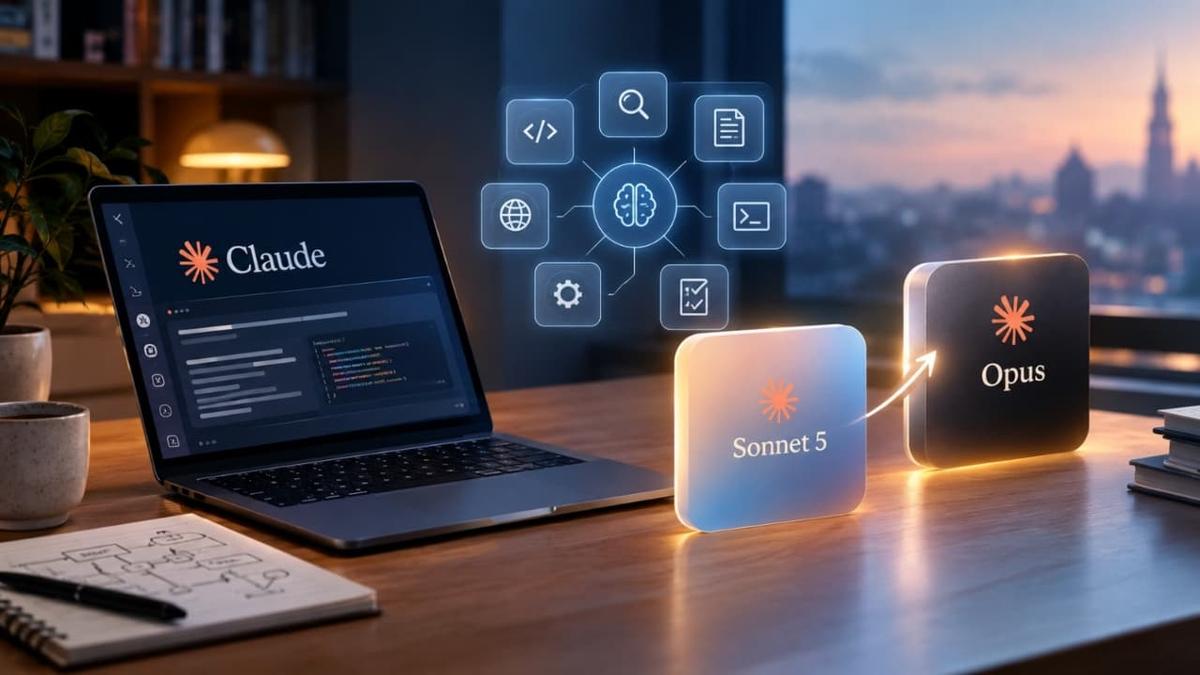
Some conversions on technology are not with noise, but with a quiet change of price tag. AnthropicClaude Sonnet 5 full of Claude Sonnet announced on June 30, 2026: the most agencyal Sonnet model that the company did so far with its own expression, meaning not only responds to the question. A model that divides the task into pieces, using the scanner and the terminal, continues to work without touching the man's shoulder in every step.
What is the Difference Between Claude Opus with Claude Sonnet?
Home Sonnet and Opus represents two models lines that respond to different needs for a long time. While Opus is positioned for jobs requiring more complex and intense reasoning, Sonnet aims to carry strong performance into wider usage areas and lower costs.
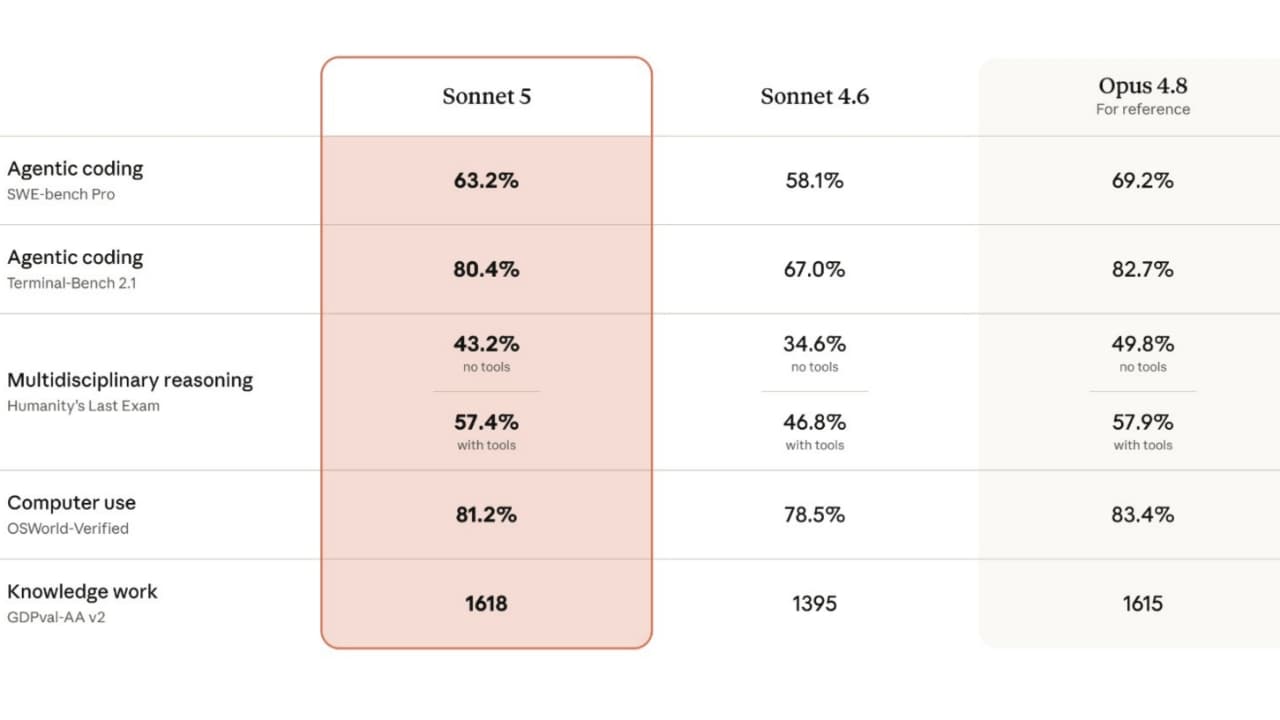
With the emergence of Sonnet 5, the limits of this separation are slightly more uncertain. Anthropic, the performance of new model Home Claude Opus It states that it is close to 4.8. Specifically, the agent-oriented tasks such as coding, vehicle usage, reasoning and information work are expressed by significant improvements on Sonnet 4.6.
This situation brings a simple but important question to developers: Do you need really the most expensive model for a task?

Why is the Distance Between Sonnet and Opus?
Anthropic represents the Sonnet speed and cost balance in the model family, carrying the load of everyday work. Opus is the upper layer separated for deep reasoning, multi-step complex tasks and parallel-powered agent kits. To date, this distinction was a clear line in the mind of the developer: Sonnet, hard work Opus.
Sonnet 5 blurs this line. Anthropic's interior tests leave the model selefi Sonnet 4.6 behind the big difference. In agencyal coding and computer use, Opus is approached to 4.8, while information works are passing through it.
Price and Performance: Opus 4.8 Comparison with Sonnet 5
Lansmanda Anthropic applied a valid promotional price up to 31 August (at 2 dollars per token, 10 dollars out). This period ends. The standard tariff valid today is $ 3 and $ 15. Opus 4.8's tariff for comparison $ 5 and $25.
Measurement Tags | Claude Sonnet 5 | Claude Opus 4. 8 |
|---|---|---|
Price (input/out) | $3/29 | $5 / $25 |
Positioning | Medium layer "icra motor" for agents | The most difficult and very stepd tasks |
Strong areas | Agencyal coding, computer use, information work | Deep reasoning, parallel agent kits |
Access | All plans; default on Free and Pro | Top layer plans and API |
Chamfer: Setting Between Cost and Accuracy
One of the most practical sides of Sonnet 5 can adjust the effort level of the developer. The same task can be solved with a greater effort to cheaply, so a part of the work that requires Opus price is in Sonnet tariff. In high effort, the consumption of tokens increases, so the main question is the question "Is the last 5 high effort, the Opus is still cheap without low effort?".
What Does Understanding Come For Artificial Intelligence Agents?
Artificial intelligence agentsIt produces hundreds of small steps instead of a single answer: search, read, dener, fix. The model price is the main limit, which determines the scale of the agent, thus means each step token. Sonnet 5 extends this limit. 1 million token context window strengthens memory of assistants working on long-term automations and large code bases.
Model Claude applications can be used in Claude Code, Claude Platform and API via claude-sonnet-5 ID. Anthropic also announced that Chat, Cowork, Claude Code and Platform raises the limits of use.
Anthropic Sonnet states that the text is used an updated token that changes the format of division into tokens in 5. This means that the same text may consume different numbers of tokens according to old models.
Software developers and system architects were able to build autonomous systems, time compelling due to budget constraints. With Sonnet 5, this table varies from root.

Featured Agent Skills:
Data Analysis and Research: High accuracy rate in scan, summarize and meaning processes of large data clusters.
Autonomous Code Coding: The ability of logical loop that can analyze and correct assembly errors by itself.
Cost Event: Thanks to its budget-friendly API structure, millions of query operations are able to make companies sustainable system costs.
Safety and Limits: Shadow of the Bright Side
Sonnet 5, lower than the system card published by Anthropic hallucination exhibits, more resistant to manipulation attempts. However, the company clearly writes that Opus 4.8 and Claude has a slightly higher unmatched behavior based on Mythos Preview. It is also noted that there is no special training for cybersecurity tasks and its dangerous cyber capabilities are much lower than current Opus models.
Opportunities
Close performance to Opus, lower cost
Default model in Free and Pro plans
Adjustable effort level
1M token context and increased usage limits
Attentions
Increased token consumption in high effort Home
Finance that can change due to new tokenizer Tags
Unmatched behaviour rate is slightly higher than Opus 4.8
Opus is still a separate option in the most difficult tasks
Short Time Chart
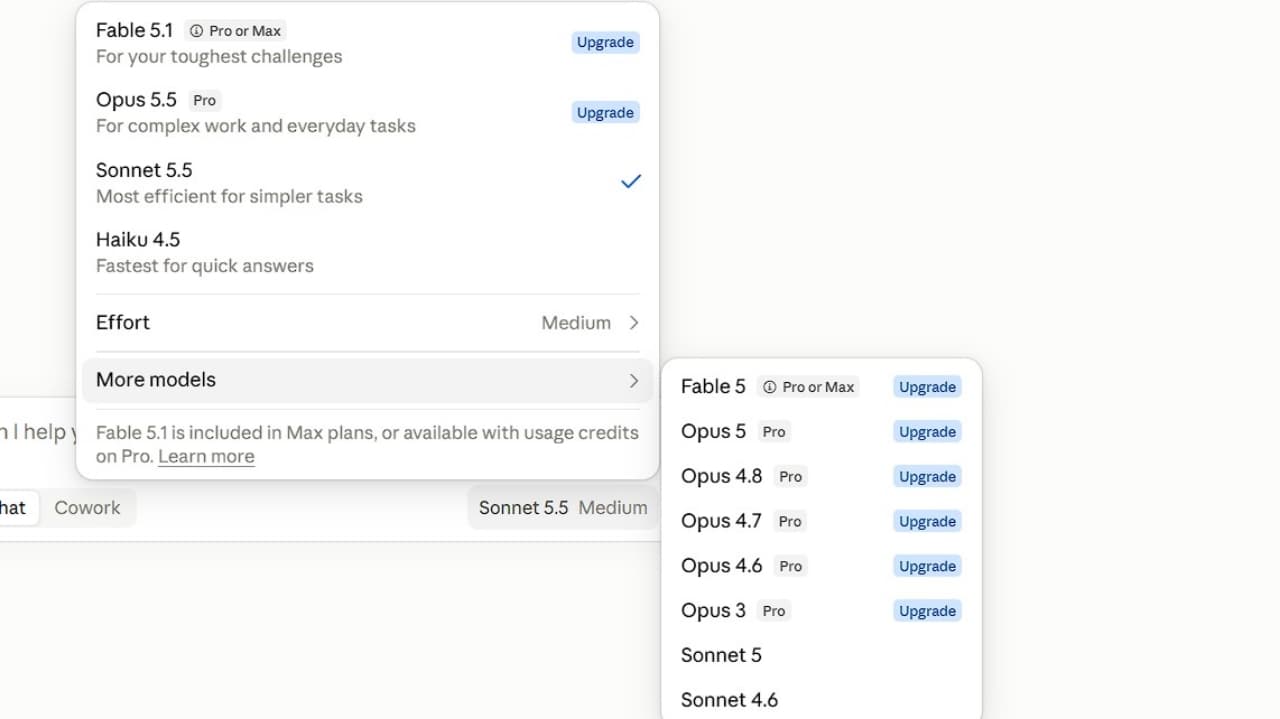
30 June 2026: Anthropic announced Claude Sonnet 5 in all plans.
1 July 2026: Sonnet 5 was the default model for Free and Pro users.
31 August 2026: The promotional price ended; the standard tariff entered into force.
Reflection of Skills to Smart Performance and Models
Sonnet 5 is only possible to read as a product news but three conceptual frameworks are more meaningful in the context of artificial intelligence researches.
Cost Supply with Accuracy
The concept of the Pareto limit borrowed from the literature of Economics describes the points that a system has to give up from the other while improving a measure. These two axes in large language models are the cost per task and per task. The graphics published by Anthropic are in this axis of Sonnet 5 Sonnet 4. 6It shows that Opus 4.8 approachs its curve as it goes beyond a step and increases the effort level. Therefore, the main innovation is not only healing of a single point, but in favor of the developer of the entire curve.
Excitation Time Calculation
Çaba dial is based on a fikre that is located in the focus of research in recent years. The amount of calculation spent when generating a model respond can also determine success. So intelligence is not only purchased during training, it can be rented by spending more steps and more tokens at the time of use. It converts the difference between Sonnet and Opus into a set issue that is not an absolute hierarchy.
Talent Spread and Restriction Bird
The ability of the upper layer is a familiar image on technology history, leaking into the bottom layer over time. It is expensive yesterday, tomorrow comes standard. But here you need a methodology alert. The large part of the results compared to Sonnet 5 is based on the internal tests of the company. When a measure comes to the goal, it is important that there is a good measure, independent assessments and developers will try to do in their own task set so it is indispensable.
New Limit of Logic and Cost Treaty in Artificial Intelligence
The development of artificial intelligence technologies is not only by increasing the calculation capacity, but it enters a new universe measured by how accessible and sustainable this power is. Anthropic, Claude Sonnet 5 moves with architectural depth and budget discipline, which has been more than ever since.
This new version, offering high-cost Claude Opus performance with a developer-oriented pricing model, autonom artificial intelligence agents, complex code structures and in-depth data analytics projects a new standard. This balanced power that Anthropic Claude ecosystem offers, combined the creative potential of human intelligence with the cold logic of the algorithm and looking for the doors of a more inclusive, efficient and transformational future in artificial intelligence economy.
WriterWalmart'tan AI Fiyatlandırma İçin Dikkat Çeken Karar


Chrome AI Modelleri Bilgisayarınızda 20 GB Yer Kaplayabilir